
US revives H Canyon uranium plant as advanced-fuel plans meet cleanup duties
Its Cold War-era inventory could serve new reactors, but radioactive-waste obligations remain part of the site’s work.
Why it matters: Reusing stored uranium could add a domestic source of advanced-reactor fuel, but it does not remove the site’s long-term waste and safety responsibilities.
Up to 22.8 tonnes — potential HALEU recovery from material stored at Savannah River Site.
50 tonnes a year — US Department of Energy estimate for domestic HALEU demand by 2035.
US$2.7 billion — value of DOE contracts awarded in January 2026 to strengthen domestic uranium-enrichment capacity.
75% — share of uranium delivered to US reactors in 2025 from Canada, Kazakhstan and Australia.
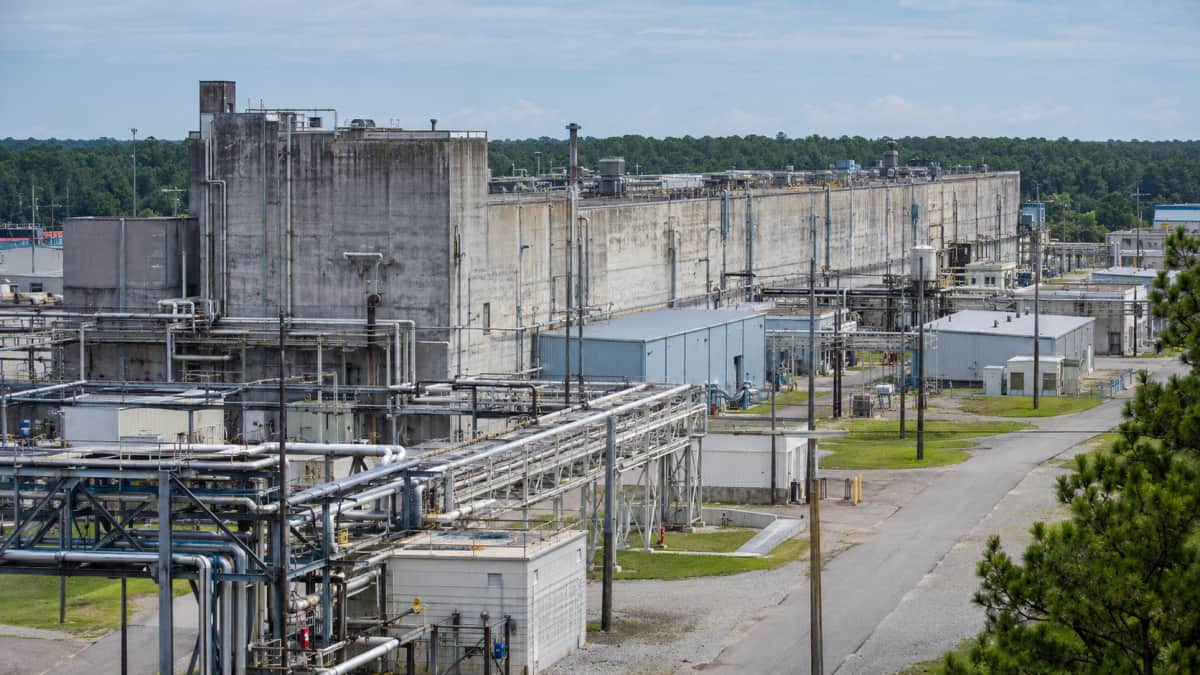
The US Department of Energy is preparing the H Canyon complex at Savannah River Site in South Carolina to recover up to 22.8 metric tonnes of high-assay low-enriched uranium (HALEU) from used nuclear fuel and other stored materials. The DOE confirmed a further step in the preparation work on November 24, 2026.
The potential quantity is the total for a multi-year project, not an annual production commitment. The effort is intended to supply fuel for advanced reactors while making use of nuclear material held for decades.
A Cold War facility returns to uranium recovery
H Canyon began operating in the early 1950s and later took on roles in nuclear-material recovery and the treatment of legacy waste. It is the only US chemical-separation facility of its kind still operating at industrial scale, according to the DOE.
The department authorized the resumption of uranium-recovery operations in February 2026. Since then, technical teams have carried out maintenance, upgrades, testing and operational assessments. Preparation is set to continue during fiscal 2027, which began on October 1, 2026.
The work is part of a broader effort to rebuild US capabilities across the nuclear-fuel cycle. In January 2026, the DOE awarded contracts worth US$2.7 billion to expand domestic uranium-enrichment capacity, supporting fuel supply for existing reactors and prospective nuclear technologies.
HALEU supply remains a constraint
Many small modular reactor, microreactor and other advanced designs require HALEU. Its higher assay can support compact reactor configurations and longer operating periods between refuelling in some designs, but commercial supply remains limited.
DOE projections put US demand at about 50 tonnes a year by 2035, with additional requirements expected in subsequent years. Material recovered at Savannah River could contribute to early supply as advanced reactors move toward commercial deployment; it would not replace the need for uranium mining, processing or fuel fabrication.
The country also remains reliant on overseas uranium suppliers. Canada accounted for 32% of uranium delivered to US reactors in 2025, Kazakhstan for 28% and Australia for 15%. Together, they supplied three-quarters of deliveries, highlighting the role of international producers even as Washington pursues domestic capacity.
Recovery does not end waste obligations
Reprocessing stored material may reduce some waste requiring long-term management, but it does not eliminate radioactive-waste generation or the need for secure handling, transport and monitoring. H Canyon must continue to meet radiation-safety and environmental-protection requirements as it undertakes recovery work.
The plan comes as the US nuclear sector faces rising interest from data centres, industrial electrification and proposed advanced-reactor projects. The DOE also reported that US uranium production more than tripled in 2025 from the previous year, reaching its highest level since 2017; exploration included 1,824 drill holes and more than 304,800 metres of drilling.
How much H Canyon ultimately contributes will depend on the multi-year recovery programme and its operational and safety requirements. The facility’s preparation work is continuing during fiscal 2027.
More in Resources
Iraq pushes for a larger OPEC+ oil quota as capacity estimates diverge
Baghdad wants future allocations based on a higher benchmark, while a technical review points to a lower sustainable ceiling.
Diesel supply risk in 2027 puts Chile's copper miners' costs in focus
Open-pit fleets depend on a fuel market where crude availability and refinery output are diverging.
Gazprom’s 400 MW gas-station plan faces a test: compressor capacity is not power output
Russia’s data-centre expansion is colliding with regional power gaps, while Gazprom’s candidate assets were built to move gas.