
Diesel supply risk in 2027 puts Chile's copper miners' costs in focus
Open-pit fleets depend on a fuel market where crude availability and refinery output are diverging.
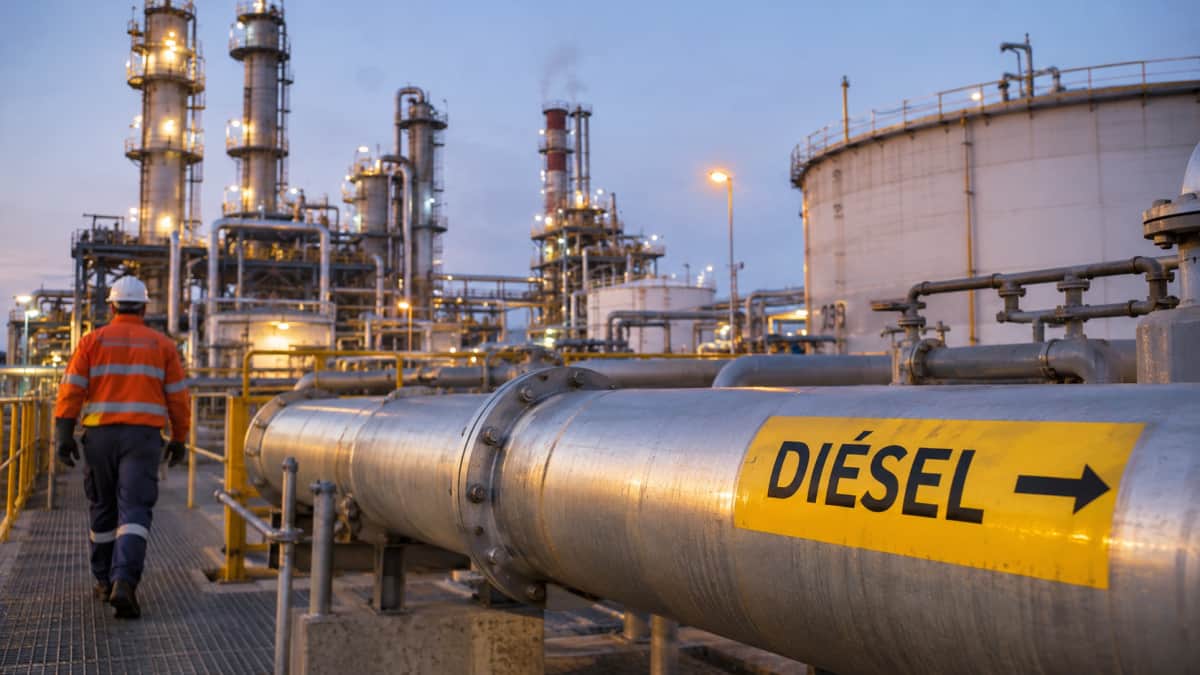
Why it matters: Diesel availability and pricing could add cost pressure for Chilean copper mines as deeper pits and longer hauls increase energy demands.
1.3 million barrels per day — projected 2027 refinery processing shortfall against trend.
19% — year-on-year decline in gasoil stocks in the Amsterdam-Rotterdam-Antwerp hub.
93% — diesel's share of fuel consumption in Chile's copper mining sector.
210.6 petajoules — energy consumed by Chilean copper mining in 2025.
Projections as of November 27, 2026, point to a renewed global diesel supply deficit in the second quarter of 2027, after only a limited recovery early in the year. The risk is that refinery constraints, disrupted exports and low inventories will keep refined fuel tight even if crude oil supply exceeds demand.
That distinction matters to Chile's mining sector, where diesel powers much of the equipment used to move ore and waste. A sustained rise in fuel costs could affect extraction, haulage and industrial logistics, particularly at open-pit operations.
Crude supply does not guarantee more diesel
Global oil supply in 2027 is projected at about 108.1 million barrels per day, compared with demand of approximately 104.3 million barrels per day. But a crude surplus would not automatically translate into more diesel: refineries need available processing capacity, suitable facilities and logistics to deliver refined products to buyers.
Russia and the Middle East accounted for more than 28% of global diesel exports in 2025. Russian exports have fallen from about 800,000 barrels per day to roughly 200,000, while Middle Eastern gasoil shipments remain near one-third of pre-conflict levels, despite a partial recovery in crude flows.
Planned refinery maintenance and disruptions in Russia could leave global refinery processing 1.3 million barrels per day below trend in 2027. In the ARA storage and distribution hub, gasoil inventories are down 19% year on year. US distillate stocks began to recover after reaching their lowest level since 2003 in late October 2026, but low inventories leave markets less able to absorb another supply interruption.
Chile's mines are highly exposed to fuel costs
The mining of copper in Chile consumed 210.6 petajoules of energy in 2025, up 27.3% from 2015. Diesel accounted for 93% of the sector's fuel consumption, and fuels slightly exceeded electricity in its energy mix for the first time in the assessed statistical series. Copper production reached 5.39 million tonnes in 2025, while the sector's energy intensity increased 36% between 2015 and 2024.
Extraction trucks are the main diesel-consuming equipment at open-pit mines. Deeper deposits, longer haul distances and declining ore grades increase the energy required to move material. The impact of higher fuel prices would vary by operation, but could raise production costs and squeeze margins. Import dependence also exposes Chile and other Latin American markets to international prices, shipping costs and exchange-rate movements.
Electrification offers a gradual alternative
Trolley-assist systems, electric haul trucks and conveyor belts can reduce reliance on diesel, alongside route optimisation, fleet automation and digital tools to improve transport efficiency. Adoption requires investment in electrical infrastructure and equipment changes, and replacing diesel at scale remains challenging where operating conditions constrain the use of these technologies.
For miners, supply contracts, supplier diversification and inventory planning may become more important cost-control measures. The scale of any second-quarter shortfall will depend on international stock levels, refinery recovery and the stability of trade routes.
More in Resources
Iraq pushes for a larger OPEC+ oil quota as capacity estimates diverge
Baghdad wants future allocations based on a higher benchmark, while a technical review points to a lower sustainable ceiling.
Gazprom’s 400 MW gas-station plan faces a test: compressor capacity is not power output
Russia’s data-centre expansion is colliding with regional power gaps, while Gazprom’s candidate assets were built to move gas.
Mahanadi Coalfields lists as India’s coal reliance meets energy-transition risk
Coal still generates more than 70% of India’s electricity, while investors must price a long-lived asset against a changing power mix.