
Iraq pushes for a larger OPEC+ oil quota as capacity estimates diverge
Baghdad wants future allocations based on a higher benchmark, while a technical review points to a lower sustainable ceiling.
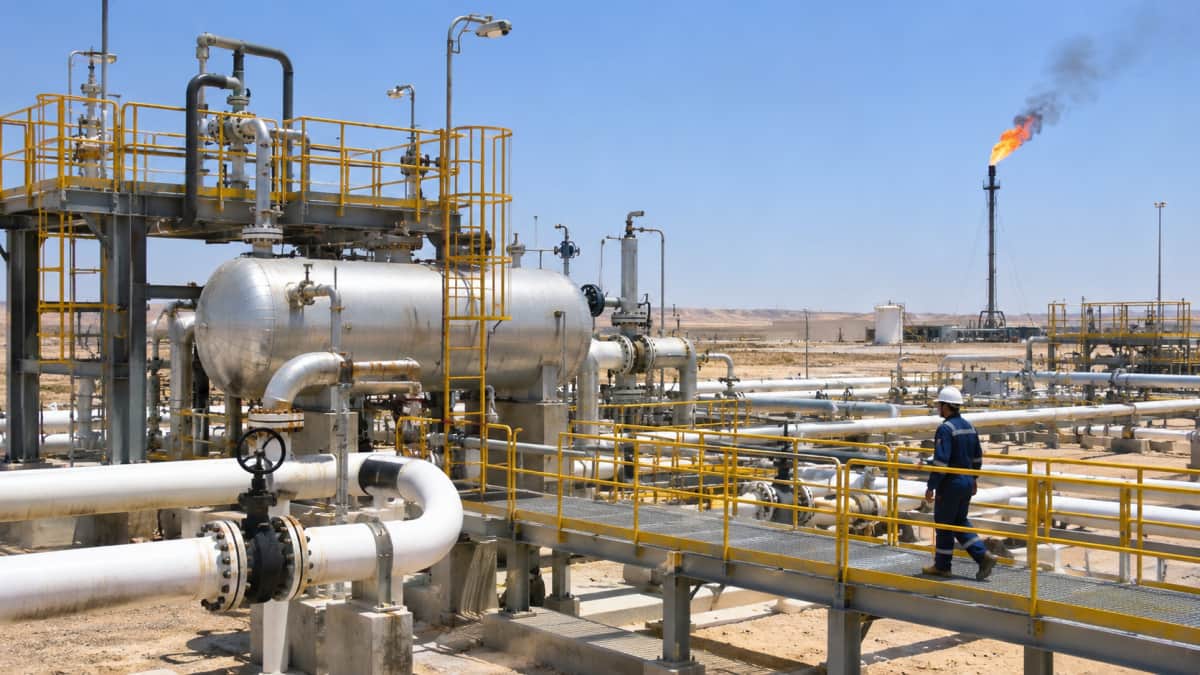
Why it matters: Iraq’s quota negotiations could determine how much of its production capacity it can use to support oil-export revenue and influence OPEC+ supply in 2027.
4.431 million barrels per day — Iraq’s current production quota.
6 million barrels per day — capacity benchmark Baghdad wants used for future allocations.
4.9 million barrels per day — independent estimate of Iraq’s sustainable capacity.
3.6 million barrels per day — recent level of Iraqi oil exports.
Iraq is negotiating with OPEC+ for a larger crude production quota, seeking to have future allocations based on capacity of 6 million barrels per day. An independent technical assessment commissioned by the group puts the country’s sustainable capacity at about 4.9 million barrels per day, leaving a gap at the centre of the talks ahead of the OPEC+ meeting scheduled for 29 November.
Baghdad’s current quota is 4.431 million barrels per day. Recognition of a higher capacity could improve Iraq’s position in future quota allocations, but it would not automatically authorize production at the requested level. Oil Minister Basim Mohammed Khudair confirmed the negotiations on 27 November 2026, according to the Iraqi government.
Capacity estimates shape Iraq’s quota bid
The OPEC+ review is intended to establish comparable technical benchmarks for how much each member can sustainably produce. The distinction matters: a capacity assessment may inform the distribution of future quotas, while the quota itself determines the volume a country is permitted to produce under the group’s arrangements.
Iraq, the bloc’s second-largest producer after Saudi Arabia, is also pursuing a longer-term goal of exceeding 8 million barrels per day of capacity. Reaching that level would require substantial investment in fields and infrastructure. The immediate negotiations, however, concern the benchmark used in allocations, not an agreed increase to the country’s production limit.
Kazakhstan has also sought an upward revision to its recognized capacity, highlighting the competing national interests facing OPEC+. The group could leave production targets unchanged during the first quarter of 2027 as it weighs producers’ requests against the risk of adding supply faster than demand can absorb it.
Export recovery does not remove infrastructure constraints
Iraq’s request comes as exports have recovered to about 3.6 million barrels per day, from roughly 200,000 barrels per day in May, when trade and logistics restrictions sharply curtailed sales. Oil exports generated US$8.8 billion in October 2026, providing revenue for a government heavily reliant on petroleum to fund public services, infrastructure and state salaries.
Production capacity and export capacity are not interchangeable. The volumes Iraq can sell also depend on the performance of pipelines, marine terminals and storage facilities. The government is seeking international investment to modernize facilities and develop reserves, while the sector faces technical needs including work on mature fields, associated gas treatment and water availability for enhanced oil recovery.
A larger production allowance could help Iraq make greater use of existing assets, but the fiscal benefit would depend on prices as well as volumes. More exports would not necessarily mean higher revenue if additional supply coincided with a substantial fall in the oil price.
OPEC+ decision carries implications beyond oil producers
Any change to Iraq’s allocation would feed into wider supply expectations for 2027. Additional barrels could contribute to surplus supply if demand is moderate and production outside OPEC+ also expands; geopolitical disruption or logistical constraints could absorb some of that volume. The outcome will also depend on whether other members seek revisions and continue to meet their production commitments.
Oil prices affect energy-intensive industries, including Chilean mining, where diesel powers haul trucks, heavy equipment and transport systems. A greater supply of crude could ease fuel costs, but refined-product prices also depend on refinery capacity, inventories, shipping and exchange rates. Mining companies’ exposure is particularly acute at open-pit operations with long haul distances.
The 29 November OPEC+ meeting is the next decision point for production references and the outlook for early 2027. Iraq’s request remains under negotiation, and any increase in its practical output would also depend on investment and the infrastructure available to produce and export the crude.
More in Resources
Diesel supply risk in 2027 puts Chile's copper miners' costs in focus
Open-pit fleets depend on a fuel market where crude availability and refinery output are diverging.
Gazprom’s 400 MW gas-station plan faces a test: compressor capacity is not power output
Russia’s data-centre expansion is colliding with regional power gaps, while Gazprom’s candidate assets were built to move gas.
Mahanadi Coalfields lists as India’s coal reliance meets energy-transition risk
Coal still generates more than 70% of India’s electricity, while investors must price a long-lived asset against a changing power mix.