US Congress report flags China’s copper leverage despite limited mine stakes in Argentina
The assessment links commodity pricing and processing to ports, telecoms and finance, taking its focus beyond who owns a mine.
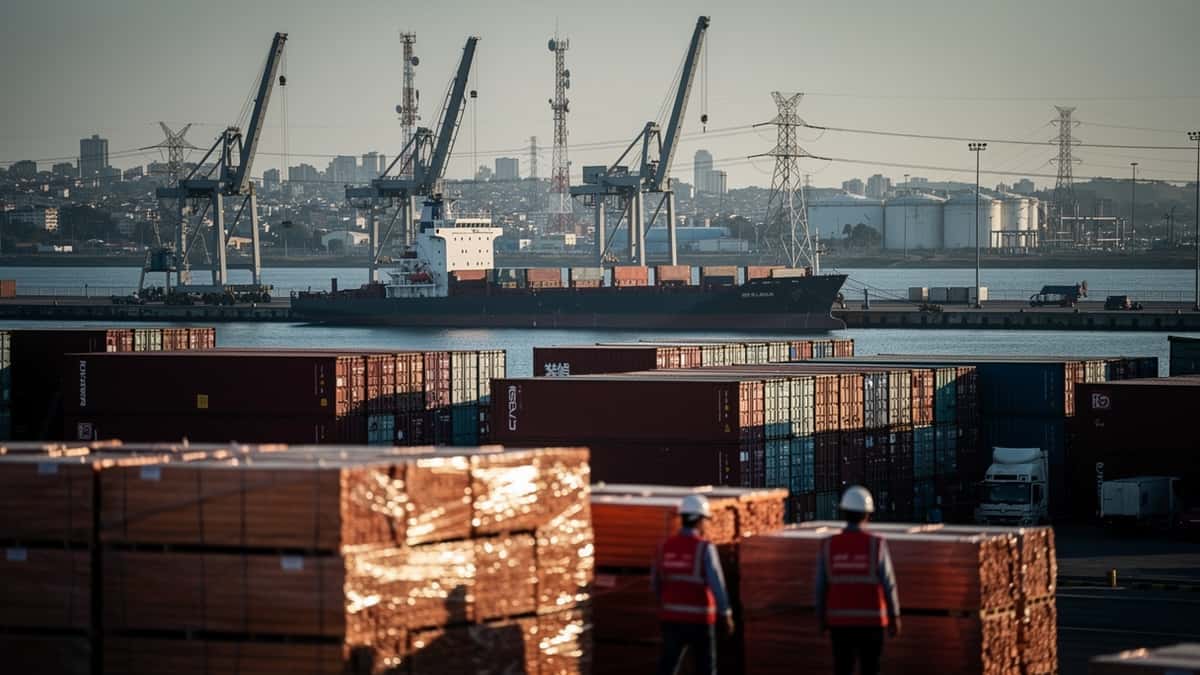
Why it matters: China’s influence over copper processing and market infrastructure could shape the commercial terms facing Argentina’s future producers.
59% — China’s share of the value of global copper concentrate imports in 2025, according to the report.
About 50% — China’s share of global copper smelting, as cited by the commission.
18.5% — Jiangxi Copper’s stake in First Quantum Minerals, which owns the Taca Taca project in Salta.
1.5 million to 1.6 million tonnes a year — Argentina’s potential copper output during the next decade, estimated by the country’s mining secretary if projects advance.
A bipartisan, bicameral US congressional commission says China is seeking greater influence across commodity markets and strategic infrastructure in Latin America, identifying copper as a priority even as its direct participation in Argentina’s copper projects remains limited. The report links market power to ownership and control across processing, pricing systems, logistics and finance.
Argentina appears 48 times in the report. Its chapter on commodity markets refers to copper 75 times and connects the metal’s importance to electrification and digital infrastructure. The commission also describes China’s regional trade relationships as reinforcing a pattern in which Latin America exports natural resources and imports finished goods.
China’s market reach extends beyond mine ownership
The report says China’s position as a major buyer, producer, refiner or processor can give it influence over how commodities are priced. It points to futures exchanges, benchmarks, warehouses for physical delivery, logistics networks and renminbi payments as parts of a strategy to reduce reliance on Western financial markets, the US dollar and established pricing centres such as Chicago, London and New York.
The commission qualifies that assessment: Western exchanges retain advantages in liquidity, dispute resolution and dollar use. But it says China has gained ground in markets where it concentrates demand or processing, including iron ore and lithium, and is seeking more influence in copper and oil.
Among the examples cited, Hong Kong Exchanges and Clearing acquired the London Metal Exchange in 2012. The report says the exchange has since deepened its links with Chinese industry and accepted renminbi as margin for trades. It also notes that China expanded foreign investors’ access to futures and options, from six futures contracts and no options in 2020 to more than 100 contracts combined. Guangzhou Futures Exchange lithium contracts are cited as a global reference.
For iron ore, the report points to the creation of state-owned China Mineral Resources Group in 2022 to manage purchases for Chinese steelmakers and strengthen their negotiating position. It also cites Alacero director Ezequiel Tavernelli’s statement that indirect imports of Chinese steel, embedded in machinery, vehicles and other manufactured goods, rose 152% between 2019 and 2025.
Argentina’s copper pipeline contrasts with its current Chinese stake
In Argentina, the report identifies Jiangxi Copper’s 18.5% holding in First Quantum Minerals as the Chinese mining interest relevant to its copper discussion. First Quantum owns Taca Taca in Salta. Other copper projects cited in the country’s pipeline include El Pachón, Vicuña, Los Azules and Altar in San Juan.
Mining Secretary Luis Lucero has estimated that Argentina’s projects could support annual production of 1.5 million to 1.6 million tonnes during the next decade. That potential depends on the projects being developed; the report does not present it as current output.
The commission’s wider assessment also highlights China’s position in Argentine lithium: it says 72% of projects submitted to the RIGI investment incentive regime have links to Chinese capital, and identifies China as the leading destination for Argentine lithium exports.
The report extends its concerns to fisheries and infrastructure
Beyond minerals, the report describes a distant-water fishing fleet of more than 3,000 vessels operating around Argentina, Chile, Peru and Ecuador, often near or within those countries’ exclusive economic zones. It estimates annual economic losses of US$2.3 billion from Chinese illegal, unreported and unregulated fishing.
On soybeans, the commission discusses a split between Chicago and Dalian market quotations and Chinese state-owned companies’ investments in storage, processing and ports across Latin America. In Argentina, it points to Cofco’s local network, built after acquisitions of Nidera and Noble Group assets between 2014 and 2016. The report says China has prioritised buying soybeans and processing them domestically rather than purchasing equivalent volumes of oil and meal.
Telecommunications, energy, digital infrastructure and space infrastructure also feature in the regional analysis. The commission argues that investment and contracts in these areas could create strategic vulnerabilities or serve as leverage in political relations.
More in Resources
Codelco and BHP deploy AI in Chile as copper growth tests mining’s footprint
Data-centre expansion is lifting copper forecasts as Chilean operators test algorithms in processing plants and sensitive ecosystems.
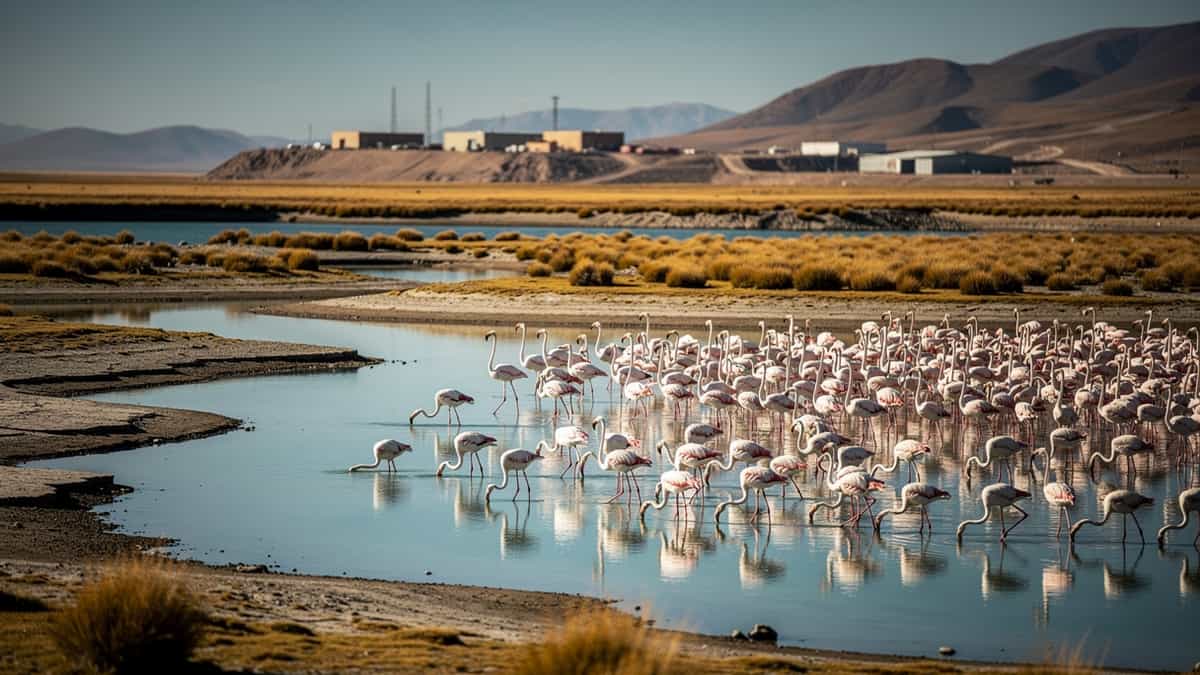
Peru counts 45,000 Andean flamingos as wetlands face cross-border pressure
Four countries reviewed a shared conservation plan, but the wetlands face threats that do not stop at borders.
How Chilean copper cargoes helped set the LME’s pricing clock
In the 19th century, buyers had to settle a cargo’s value while its ship was still crossing the Atlantic.