
How Chilean copper cargoes helped set the LME’s pricing clock
In the 19th century, buyers had to settle a cargo’s value while its ship was still crossing the Atlantic.
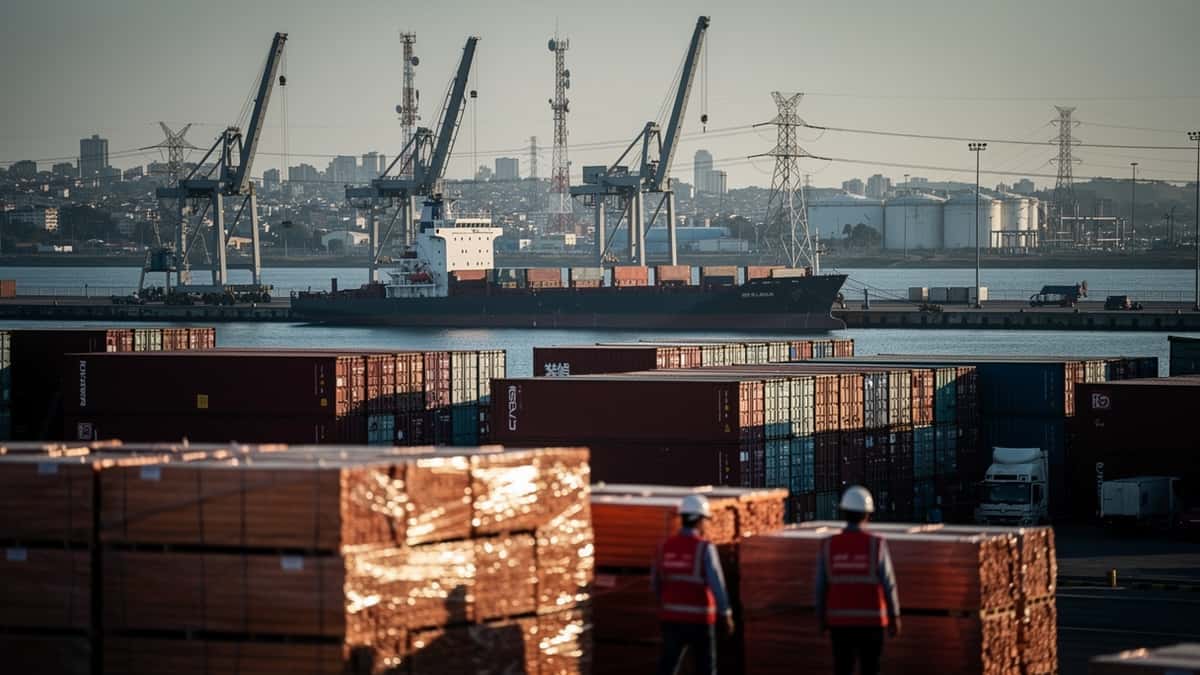
Why it matters: The LME’s benchmark grew out of the gap between slow physical delivery and fast market information—a dynamic that still informs copper trading.
About 2 million tonnes — Dyszel’s estimate of Chilean copper production from 1820 to 1900.
Three months — the approximate sea journey for Chilean copper cargoes to England.
1966 — the year Chile, Zambia and most other producing countries began using the LME price as a reference instead of fixed prices.
£1.4 billion — the reported value of the Hong Kong Exchanges and Clearing acquisition of the LME in 2012.
The long sea journey from Chile to England helped shape the London Metal Exchange’s copper market, where buyers and producers could agree on a cargo’s price before it arrived. Today, the LME’s three-month contract remains its most traded, even as prices are determined second by second by human traders and automated systems, according to Jorge Dyszel, the exchange’s education lead for Ibero-America.
A three-month voyage created a pricing problem
In the second half of the 19th century, ships could take around three months to complete the journey from Chile to England. Yet news of a vessel’s departure could reach London within minutes by telegraph. A message could report how many tonnes were aboard, allowing representatives of producers and consumers to negotiate a price while the copper was still at sea.
The arrangement addressed uncertainty for both sides: the market price could change during the voyage, and neither seller nor buyer knew what the metal would be worth on arrival. Agreeing a price in London for delivery later tied the trade to the shipping timetable. Dyszel described the practice as an early form of setting a product’s price today for a future date, while noting that agreements over goods not yet available have much older precedents.
Copper connected the cargo and the message
England’s demand for metal grew with the Industrial Revolution. Copper came from Asia as well as Chile, which Dyszel said was for part of the 19th century the world’s leading copper producer and exporter. He estimated Chile produced about 2 million tonnes between 1820 and 1900. Chilean smelted copper also became a standard in international trade.
The telegraph carried shipping information across a submarine cable made of copper, linking the metal being traded with the infrastructure used to report its movement. The opening of the Suez Canal in 1869 brought tin from Malaysia into the same trading calendar, Dyszel said; those shipments also took about three months to arrive.
The three-month contract remains central
The LME’s three-month contract is still its most traded and serves as a reference for copper prices, although contracts now extend beyond ten years. In 1966, Chile, Zambia and most other producing countries moved away from fixed copper prices and began using the LME quotation as a benchmark.
The exchange was acquired by Hong Kong Exchanges and Clearing in 2012 in a deal valued at £1.4 billion. China now consumes almost half of the world’s copper, according to information cited by Dyszel. Trading has also accelerated far beyond the pace of telegraph messages: he said prices are determined “second by second” by traders and robots operating faster than people.
Dyszel put the LME’s history at 149 years and said understanding its role will matter to Mendoza as its copper projects advance. The sea crossing still takes weeks; the exchange’s three-month contract remains the most actively traded.
More in Resources
Codelco and BHP deploy AI in Chile as copper growth tests mining’s footprint
Data-centre expansion is lifting copper forecasts as Chilean operators test algorithms in processing plants and sensitive ecosystems.
Peru counts 45,000 Andean flamingos as wetlands face cross-border pressure
Four countries reviewed a shared conservation plan, but the wetlands face threats that do not stop at borders.
US Congress report flags China’s copper leverage despite limited mine stakes in Argentina
The assessment links commodity pricing and processing to ports, telecoms and finance, taking its focus beyond who owns a mine.