
Sernageomin reviews safety systems at Pucobre and Candelaria in Atacama
One operation was underground and the other an open pit, putting emergency readiness and operational controls under different tests.
Why it matters: The visits put emergency readiness and the practical application of safety controls in two different types of mine under regulatory scrutiny.
48 hours — minimum survival period required for underground mine refuges under Chilean regulations.
21 controls — critical controls covered by Sernageomin’s national safety campaign.
Article 100 — the provision of Supreme Decree No. 132 setting out mine refuge requirements.
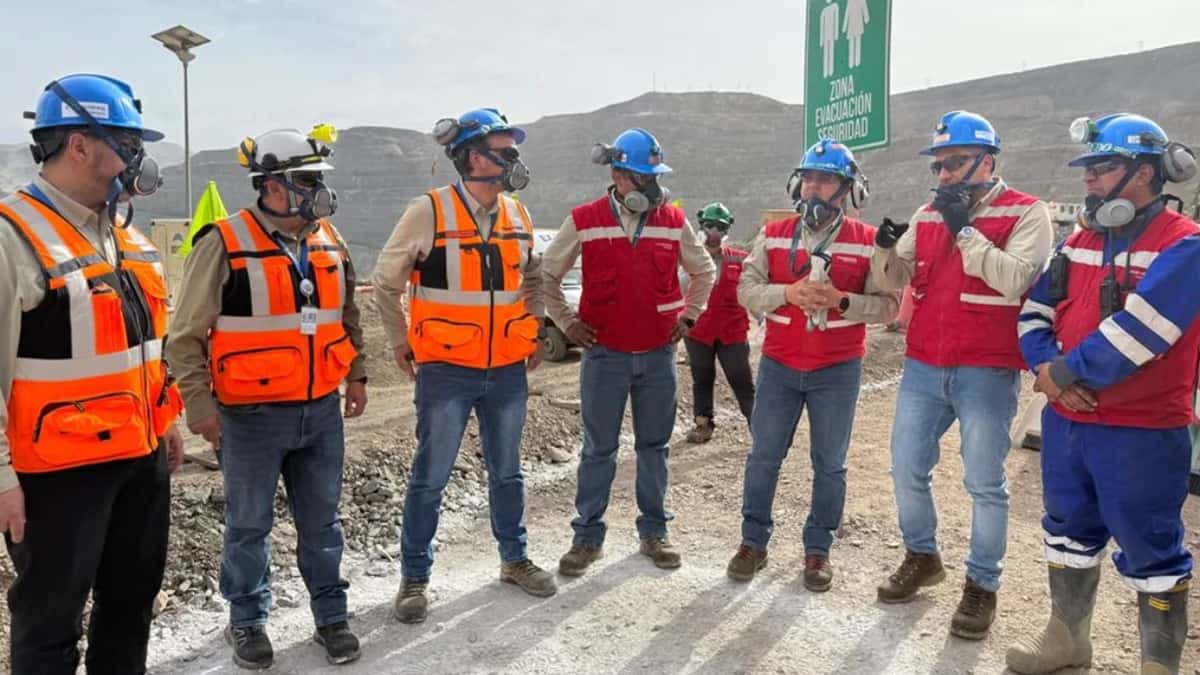
Sernageomin visited Pucobre’s underground operation and Minera Candelaria’s open pit in Chile’s Atacama Region to review emergency facilities, monitoring technology and measures intended to prevent workplace accidents. The visits were led by national director Mauricio Lorca and regional director Franklin Céspedes as part of a nationwide campaign focused on applying critical controls at operating mines.
The regulator’s account described the areas visited and the safety topics discussed, but did not detail specific test results, individual control assessments or corrective actions arising from the visits.
Pucobre visit focused on refuges and emergency preparation
At Pucobre, in the commune of Tierra Amarilla, the delegation met company executives before entering the underground operation. They visited an emergency refuge to review its operation and the protection it provides to workers, as well as the mine’s monitoring room and facilities used for emergency drills.
Under Article 100 of Chile’s Mining Safety Regulations, established by Supreme Decree No. 132, mines must provide refuges equipped to sustain people for at least 48 hours. Required provisions include drinking water, non-perishable food, communications equipment, oxygen and first-aid materials. A practical assessment involves checking that equipment is available and in working condition, and that refuge capacity is suited to the operation’s needs.
Sernageomin said the delegation examined the facilities and technologies used to monitor activities and prepare workers for emergencies. It did not publish measurements, functional test results or a detailed assessment of the refuge’s capacity.
Candelaria visit covered monitoring and operational controls
At Minera Candelaria, the delegation toured the open-pit operation, met company representatives and visited a monitoring station. Lorca also spoke with workers about how critical controls are applied during routine work.
The campaign covers 21 critical controls aimed at preventing serious and fatal accidents. The regulator cited examples including checks before equipment use, energy-isolation procedures and verification of protective systems. For mobile equipment, the campaign includes separation between vehicles of different sizes, pre-operational inspections and functioning fire-suppression systems. Sernageomin did not specify which controls were individually examined at Candelaria.
The campaign’s stated focus is on whether controls are implemented at the worksite, rather than existing only in procedures. That can involve comparing established processes with conditions in the field and relevant maintenance and operating records.
The regulator did not detail visit findings
Sernageomin’s account framed the visits as part of its national “Back to Basics: Critical Controls for Safe Mining” campaign. The regulator said contact with workers helps it understand how safety measures are applied, while Céspedes said the visits can identify good practices and areas for continuous improvement.
The Mining Safety Regulations authorize Sernageomin to inspect mine facilities and require compliance with applicable standards. The rules also provide for formal recording of observations and requirements, with companies responsible for responding and implementing measures within set deadlines. The agency did not say whether it issued observations or requirements following these visits.
Lorca said prevention depends on individual commitment and rigorous application of controls, adding that “no production task can take precedence over a worker’s life.” The public account did not provide further inspection findings or a follow-up schedule.
More in Resources
Copper drops to US$5.54/lb as London inventories rise and losses extend
The nine-session slide has pushed Chile’s benchmark export below its 2026 average as traders reassess industrial-demand signals.

Moody’s sees Chilean companies under 2027 cash-flow pressure as copper capex rises
Falling ore grades, longer haul distances and water infrastructure are adding to the spending burden across Chile’s copper mines.
Chile’s O’Higgins 220 kV line faces a connection deadlock after workaround rejected
The line is built, but its planned tie-ins depend on substation works delayed by failed tenders.