
James Webb probes LAP2’s near-primordial chemistry, but can it reveal first stars?
A gravitational lens made this faint galaxy observable, but a weak signal at its centre complicates the chemical picture.
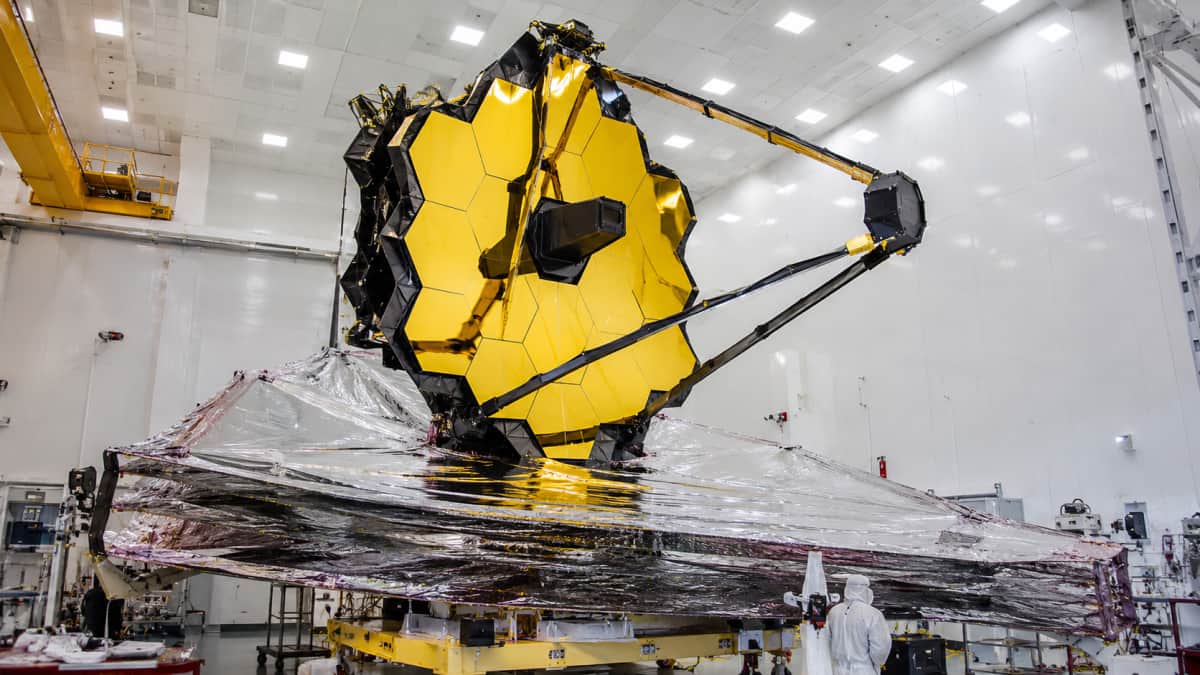
Why it matters: LAP2 offers a rare look at how stellar processes began enriching the early universe with the elements that later formed planets and mineral deposits.
12.2 billion years — approximate time LAP2’s light has travelled to Earth.
13.6 hours — James Webb’s NIRSpec observation time on the galaxy.
0.5% of the Sun’s oxygen abundance — upper limit measured across LAP2.
50 times — approximate magnification from gravitational lensing.
An international team using the James Webb Space Telescope measured an oxygen abundance in the distant galaxy LAP2 below 0.5% of the Sun’s level, placing it among the most chemically primitive galaxies identified so far. The observations do not, however, confirm that the galaxy contains first-generation, or Population III, stars.
LAP2’s light has travelled about 12.2 billion years, so the galaxy is seen as it was when the universe was roughly 1.5 billion years old. The study, led by Matteo Messa of Italy’s National Institute for Astrophysics (INAF), was released as a preliminary scientific publication on Nov. 3, 2026.
Webb measured a low oxygen abundance, with a caveat
The team used Webb’s Near Infrared Spectrograph (NIRSpec) for about 13.6 hours, alongside images from its Near Infrared Camera (NIRCam). The spectrum sets an upper limit for LAP2’s oxygen abundance at 0.5% of the solar value. That estimate is uncertain: methods used to calculate elemental abundances must be extrapolated at such exceptionally low concentrations.
In astronomy, “metals” means all elements heavier than helium, including oxygen, carbon, iron and copper. Their scarcity in LAP2 suggests its material has undergone relatively little chemical enrichment by successive generations of stars.
The integrated spectrum showed no detectable emission from doubly ionised oxygen, but the researchers found a weak signal from the galaxy’s core. There, the estimated oxygen abundance is about 1% of the solar value. The team says this could reflect physical conditions in the core that make oxygen emission easier to detect, or local enrichment by stars. Its calculations indicate that about 0.2 solar masses of newly produced oxygen could account for the local enrichment.
A foreground cluster magnified the faint galaxy
LAP2 was observable because the Abell 2744 galaxy cluster, also known as Pandora’s Cluster, lies between it and Earth. The cluster’s gravity bends the path of the galaxy’s light, acting as a natural telescope and magnifying LAP2’s luminosity by about 50 times.
The team estimates LAP2’s stellar mass at roughly 80,000 times the Sun’s mass, comparable to some massive star clusters and far below that of large galaxies such as the Milky Way. The galaxy was first identified in 2021 in observations with the MUSE instrument on the Very Large Telescope at Paranal, in Chile’s Antofagasta Region.
LAP2 offers clues, not proof, of the first stars
Population III stars are thought to have formed mainly from hydrogen and helium, before the universe contained substantial quantities of heavier elements. Their evolution and deaths would have helped seed surrounding gas with elements made inside stars. LAP2’s low measured oxygen abundance makes it useful for investigating such early conditions, but does not establish that Population III stars are present.
The findings also connect cosmic evolution to the origins of materials on Earth. Stellar nucleosynthesis and events such as supernovae produced and dispersed many elements; later, planetary and geological processes helped concentrate some of them into mineral deposits. Future observations of LAP2 will need to test whether it retains genuinely primordial gas and whether stars with almost no heavy elements formed there.
More in Resources
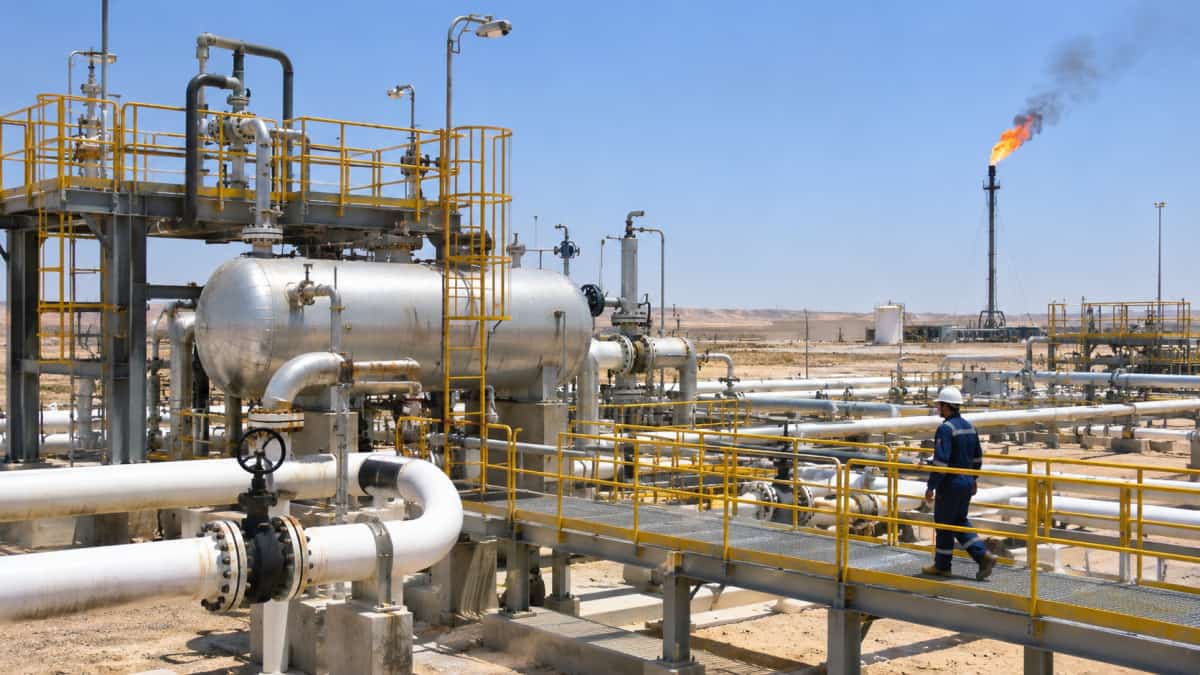
Iraq pushes for a larger OPEC+ oil quota as capacity estimates diverge
Baghdad wants future allocations based on a higher benchmark, while a technical review points to a lower sustainable ceiling.
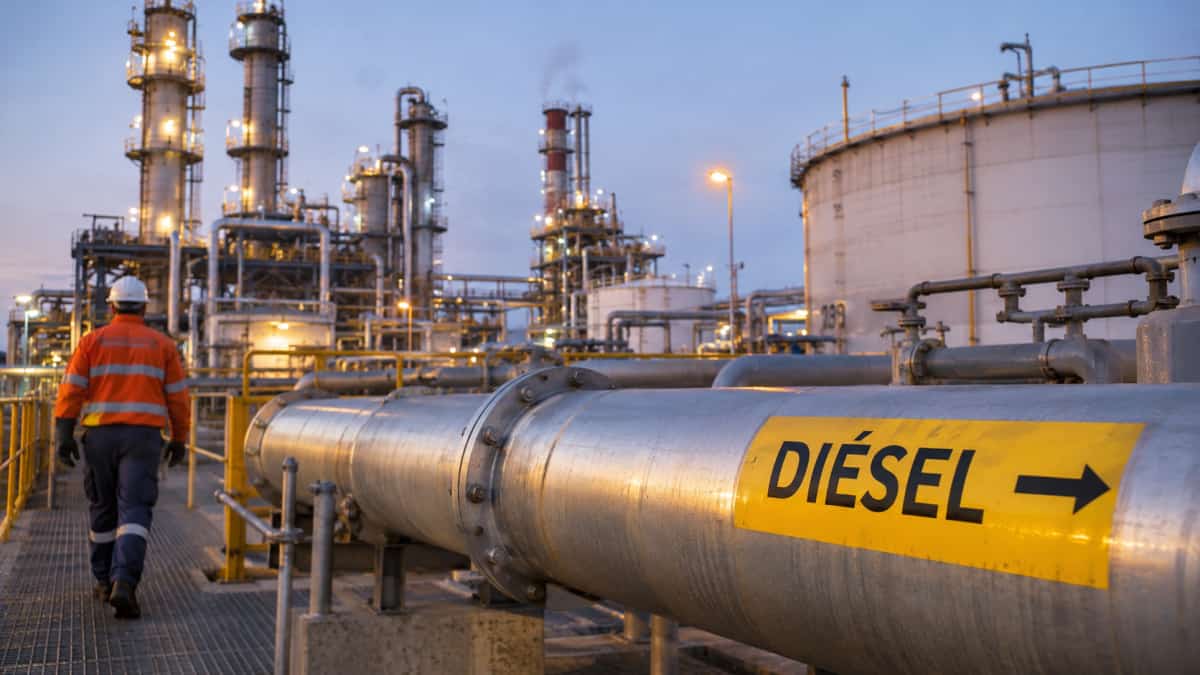
Diesel supply risk in 2027 puts Chile's copper miners' costs in focus
Open-pit fleets depend on a fuel market where crude availability and refinery output are diverging.
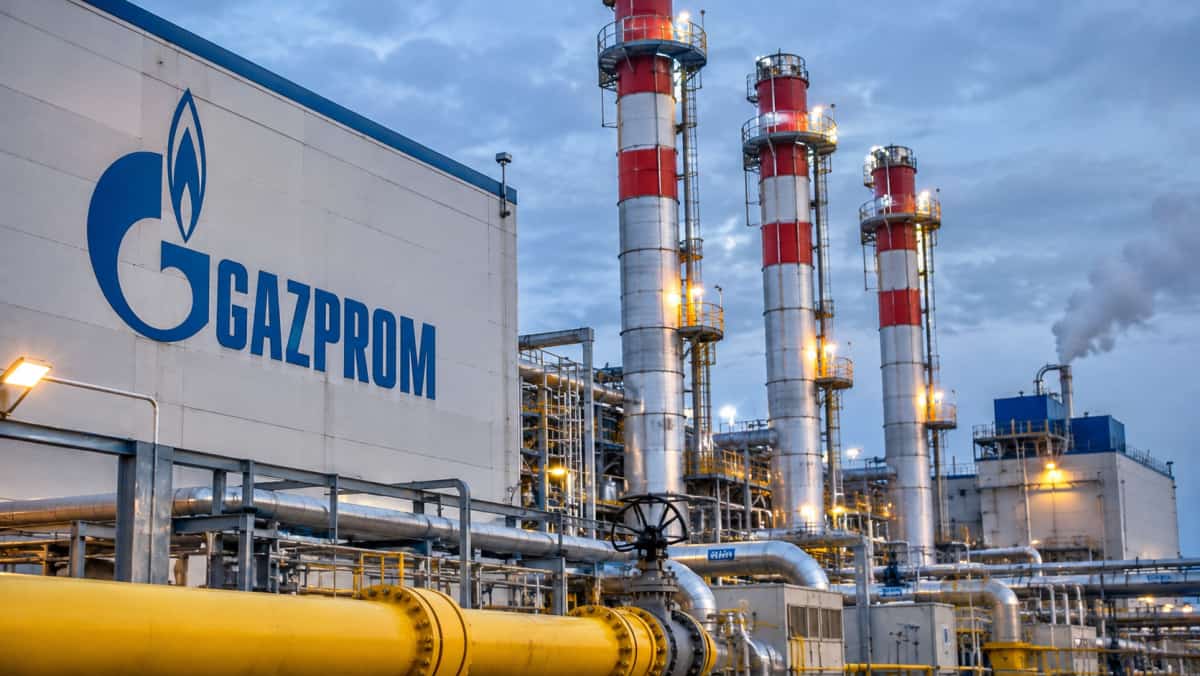
Gazprom’s 400 MW gas-station plan faces a test: compressor capacity is not power output
Russia’s data-centre expansion is colliding with regional power gaps, while Gazprom’s candidate assets were built to move gas.