
IoT Automation brings smart warning lights to Chilean mines, but safety gains remain unproven
Worker and vehicle tags trigger coloured alerts, but mine operators still need to establish how the system performs in live conditions.
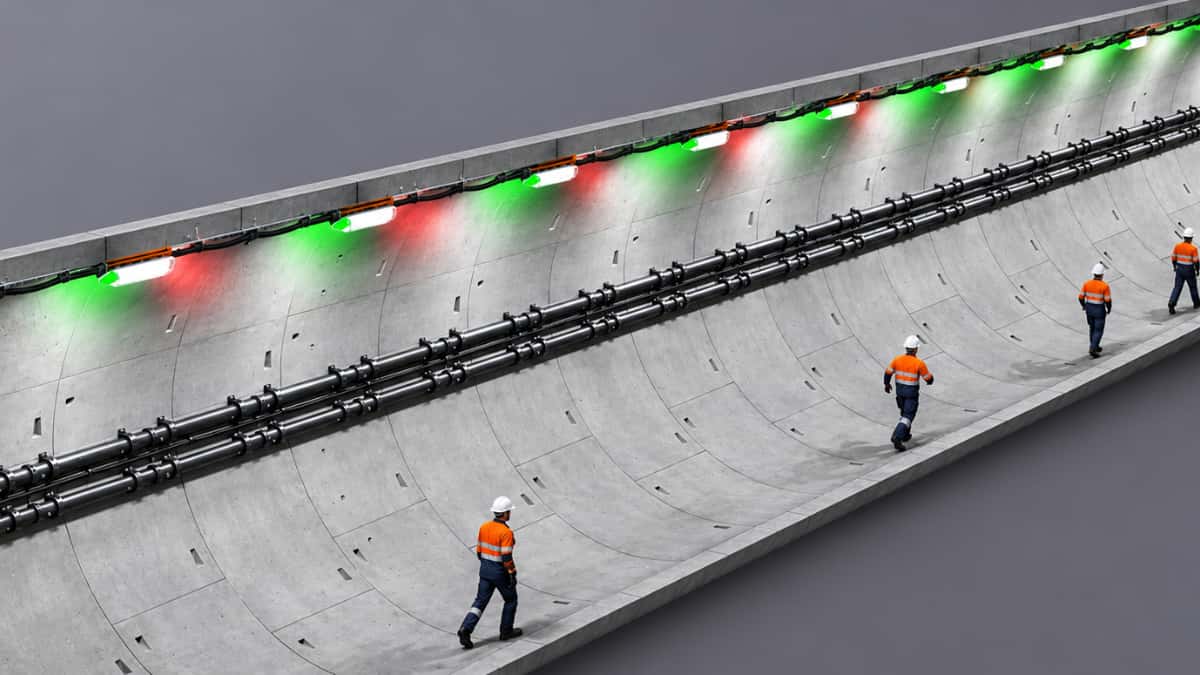
Why it matters: Smart lighting could add an early-warning layer to underground traffic controls, but its value depends on reliable detection and integration with mine procedures.
At least 200 metres — the warning zone described for one truck-detection application.
2023 — the year IoT Automation reported installing FireFly at Candelaria Norte.
Up to five tones — programmable siren options described for the system.
2026 — the year the company presented implementation updates at FOREDE in Atacama.
IoT Automation says its smart-lighting systems are being piloted or used in applications at Chile’s Chuquicamata, El Teniente and Candelaria operations. The technology combines electronic identification tags, sensors and software-controlled LED lights to alert workers to detected vehicle movements and, in some configurations, indicate evacuation routes.
The company’s general manager, Edgar Carrillo, presented the system and implementation updates at the 2026 Regional Development Forum (FOREDE) in Atacama. The reported deployments include a 2023 FireFly installation at Candelaria Norte, pilots at Chuquicamata and tests at El Teniente. Public information does not establish the pilots’ full coverage or independently verified safety results.
Tags trigger warnings along underground routes
Workers and vehicles can carry electronic identification devices, or tags, which are detected by the installed sensor and communications network. When the system identifies a heavy truck approaching an area where personnel or a light vehicle are also detected, the lights can change colour to signal the condition.
Carrillo described an application at an unnamed underground operation in the Copiapó area. When the system detects a truck on a main ramp, it activates blue lights along a stretch of at least 200 metres. If it also detects a tagged parked vehicle, lights in that area can flash red to warn the truck operator before reaching the potential hazard.
The system’s detection depends on tags and installed infrastructure. It should not be understood as automatically identifying every obstacle in a tunnel. IoT Automation says its platform can also connect with other monitoring systems, depending on the configuration at each operation.
FireFly and DragonFly use configurable signals
IoT Automation’s FireFly is designed for mine-gallery lighting and safety management, while DragonFly is intended for larger tunnels. Both use LED luminaires controlled by software, with configurable colours and lighting patterns. Green, red, yellow, blue and white signals can be assigned meanings under an operation’s protocols; sirens with up to five programmable tones can provide an additional warning where lights are difficult to see.
The platform can control individual areas or groups of lights and, when configured, respond automatically to sensor inputs. It can also use lighting sequences to guide people towards exits or refuge chambers during an emergency. The company describes backup-power options intended to keep lighting and warnings operating during supply interruptions.
Deployment scope and performance remain open
IoT Automation reported installing FireFly in the Cross 9 sector of Candelaria Norte in 2023, for applications including truck-traffic management and emergency warnings. The company has also described expanding pilots at Chuquicamata and operational tests at El Teniente related to routes to underground refuges. It has not publicly detailed the coverage or outcomes of those pilots.
Mine operators would need to integrate the equipment with existing systems, maintain sensors and ensure workers understand each signal. Performance in operating conditions—and any effect on accident rates or evacuation times—has yet to be established through independently verifiable assessments. The lighting is an additional preventive layer, not a replacement for traffic controls, emergency procedures or other required safety measures.
More in Resources
Chile mining delays could erode project values even after environmental approval
A favourable environmental decision can still be followed by litigation that holds up execution and leaves investment decisions exposed.
Metro de Santiago power works reach 85%, but Línea 7 still needs an underground link
At Cerro Navia, high-voltage equipment is being integrated before crews connect the substation to the new railway tunnel.

Antofagasta AI campus draws 21 power responses, but no supplier is chosen
A 50 MW starting load would run continuously in a solar-rich region, putting storage and grid backup at the centre of the design.