
Gold falls below US$3,500 as 2027 mine budgets face a price test
Companies are setting exploration and investment plans while US inflation data challenges the price assumptions behind project economics.
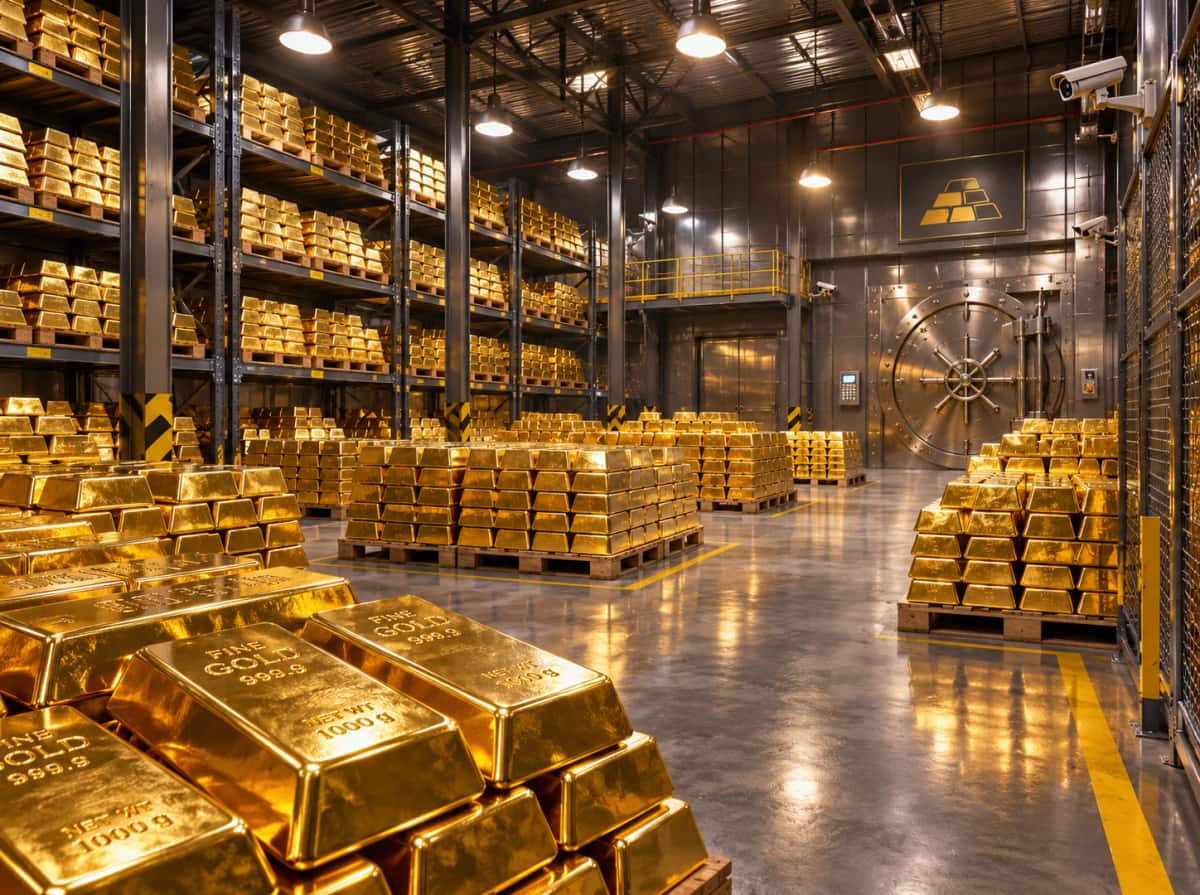
Why it matters: A sustained price decline could tighten project economics and financing options as miners set their 2027 spending plans.
Below US$3,500/oz — gold’s intraday low on November 25, its lowest level since August 2025.
US$3,547.29/oz — the price after a partial recovery at about 19:19 GMT.
0.3% — the October increase in the US personal consumption expenditures price index, after a 0.5% rise in September.
Nearly 37% — gold’s decline from its 2026 record high.
Gold briefly fell below US$3,500 per troy ounce on November 25, 2026, before recovering to US$3,547.29 an ounce at about 19:19 GMT. The intraday drop took the metal to its lowest level since August 2025, as US inflation data strengthened expectations of further interest-rate increases.
The decline comes as mining companies shape exploration and investment budgets for 2027. A lower gold price can affect producers’ revenue and change the economics of projects, although the impact depends on operating costs, capital requirements and the assumptions used in each study.
Inflation keeps rate expectations in focus
The US personal consumption expenditures price index rose 0.3% in October, following a 0.5% increase in September. Persistent inflation has reduced expectations of an immediate easing in monetary conditions, while markets have factored in the possibility of another rate increase at the Federal Reserve’s December meeting. The Fed raised rates in September.
Gold pays no interest to holders. Higher rates can therefore make it less attractive relative to financial instruments that offer a regular return. The price is also sensitive to shifts in the US dollar and the allocation of capital among financial assets, the source material said.
Project economics vary with costs and capital needs
The decline from gold’s 2026 record high is approaching 37%. For mining companies, that movement is a material change in the market price used to assess revenues, but it does not have the same effect on every operation. Producers with lower unit costs may have more room to withstand weaker prices, while operations with high costs or substantial investment needs can face tighter financial constraints.
Project studies test different combinations of price, operating costs and metallurgical recovery. A prolonged fall can weigh more heavily on lower-grade deposits or projects requiring significant capital, and may make it harder for exploration companies to attract investor funding. A short-term decline alone, however, does not establish that a project is uneconomic; evaluations typically consider longer-term assumptions and sensitivity to different market conditions.
Chilean producers may feel the change through by-product revenue
Chile has both gold-focused operations and copper mines that recover gold as a by-product. In the latter, gold revenue can help lower net copper production costs. A sustained drop in the gold price could reduce that contribution, depending on the amount recovered and each operation’s commercial terms.
The next Federal Reserve decisions will shape financial-market expectations for precious metals. For mining companies, whether the price correction persists will be relevant as they finalise 2027 exploration and investment budgets.
More in Resources
US data centers generated 25.7Mt of power-linked CO₂, but grid mix matters
A Harvard assessment of 403 large facilities shows why the climate cost of digital infrastructure cannot be judged by electricity use alone.

Selenium Isotopes Trace Subducted Material Into New Oceanic Crust
The trench-to-ridge connection spans deep mantle processes, and rocks formed at its far end may hold the evidence.

China connects Qiongjie’s first turbines, while the 500 MW target remains ahead
At roughly 5,100 metres, thinner air affects energy capture and cooling, while cold and logistics add operational constraints.