
Codelco reviews Chuquicamata pit as unions push to extend mining beyond 2028
A 22% first-half production decline sharpens the debate over district integration and Chuquicamata’s shift to underground mining.
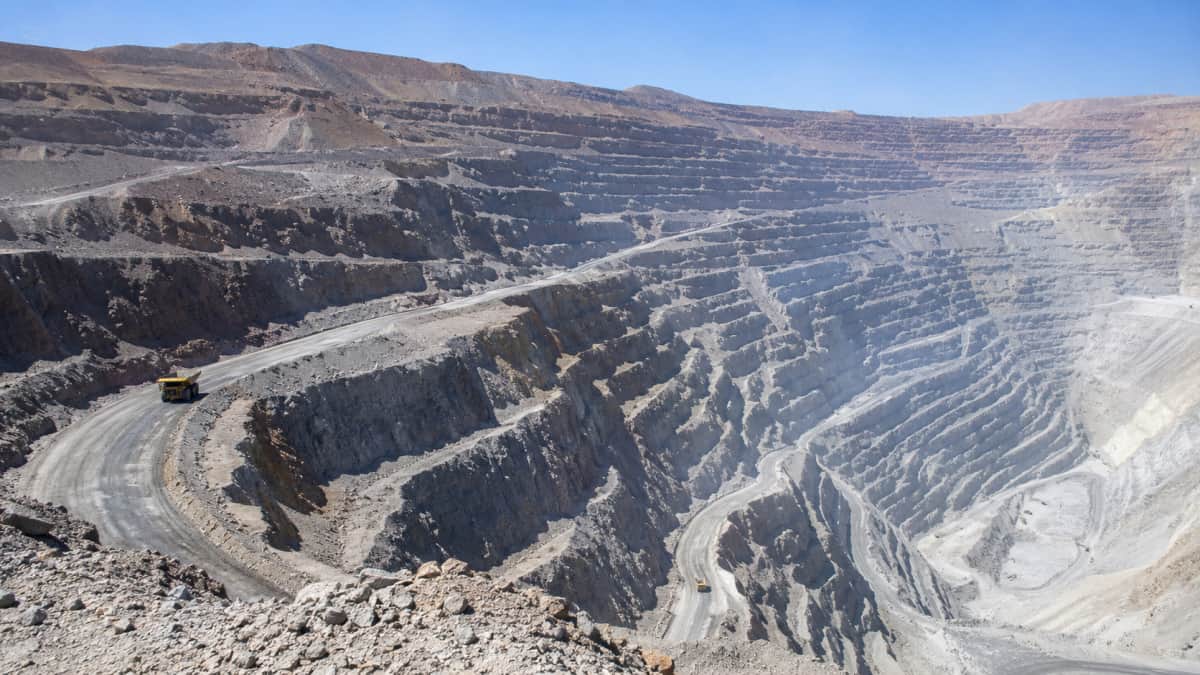
Why it matters: The decision will shape how Codelco balances open-pit feed, underground production and investment across its northern Chilean district.
22% — Chuquicamata’s copper production decline in the first half of 2026.
2028 — the year unions say the open pit and extraction and leaching area could close.
2038 — the extension workers say could be possible under their preferred development scenario.
3,992 — Codelco employees at the division at the end of 2025.
Codelco is reviewing the operating future of parts of its Chuquicamata division in Chile, after unions warned that the open pit and its Extraction and Leaching Management area could cease operating in 2028. The state-owned miner said it has made no immediate decision affecting the division as a whole and is assessing alternatives to support the complex’s economic viability.
The warning, issued on November 27, 2026, has put the future of surface mining at one of Codelco’s flagship copper assets under scrutiny. A possible end to open-pit operations would not mean the closure of Chuquicamata: the division also includes an underground mine and mineral-processing facilities.
Unions argue for extending surface mining
Chuquicamata unions No. 1, 2 and 5, along with the Miners’ Union, have declared themselves on alert over the possible changes. The Chuquicamata Union said it would call an assembly to discuss potential mobilisations in support of continued operations and jobs. Union representatives have also challenged how divisional management, led by Ricardo Weishaupt Hidalgo, communicated the scenarios to workers.
Their proposal centres on Interminas, which would use mineral resources between Chuquicamata and Radomiro Tomic and integrate operations, infrastructure, services and maintenance across the district. Union president Hernán Guerrero has said deepening Phase 49 could extend open-pit mining to 2034, with a further four years potentially available. The 2038 date is a union-backed scenario, not an operating commitment confirmed by Codelco.
Any extension would require geological, geotechnical, economic and environmental assessments, as well as the investment needed to develop the plan. Codelco is considering different production-reorganisation scenarios, but has not announced a decision on the pit’s future.
Underground transition faces production pressure
Chuquicamata began operating in 1915 and recorded an approximately 266,000-tonne production of fine copper in 2025, according to figures initially reported by the company. Subsequent audits identified irregularities in the recognition of some inventories as finished production. In the first half of 2026, output fell 22%, mainly because of major maintenance carried out between April and May.
The underground mine, inaugurated in August 2019, uses block caving and was designed to extend the division’s productive life by at least four decades. At the end of 2025, the project was reported to be 90% complete, while engineering studies continued on mining the remaining reserves in its first two levels. A reduction in open-pit activity could increase the underground operation’s importance as a source of feed for processing facilities, making its development and production performance central to the wider review.
Asset impairment adds to the investment test
Codelco reported net losses of US$377 million for the first nine months of 2026, alongside a US$4.82 billion impairment of assets associated with Chuquicamata, Salvador and Gabriela Mistral. The accounting charge reflects a reduction in estimated recoverable value; it is not, by itself, an order to close any operation.
The economic case for keeping the pit open will depend on factors including ore grades, mining costs, stripping ratios, required investment and the value of recoverable copper. Codelco has said it is assessing the continuity of specific areas and options for the mining complex, while the unions’ proposed extension still depends on technical and economic evaluation. No workforce reduction figure or definitive severance plan has been confirmed.
More in Resources

Chile unemployment reaches 10% as mining investment faces a jobs test
Employment has declined year on year for four consecutive quarters, even as officials point to mining and infrastructure as potential sources of hiring.
Chile’s 2027 power-grid reform faces a test as copper mines need more electricity
Copper output is forecast to grow more slowly than electricity use, putting network investment and supply reliability on the same legislative agenda.
Sernageomin presses 21 critical safety controls at SQM’s Pampa Blanca
The Antofagasta campaign focuses on whether protections hold during high-risk work as conditions change across the operation.