
Chile's copper export gains face a production squeeze as prices retreat from October highs
Higher export values are cushioning falling mine output, but that balance depends on prices holding above recent lows.
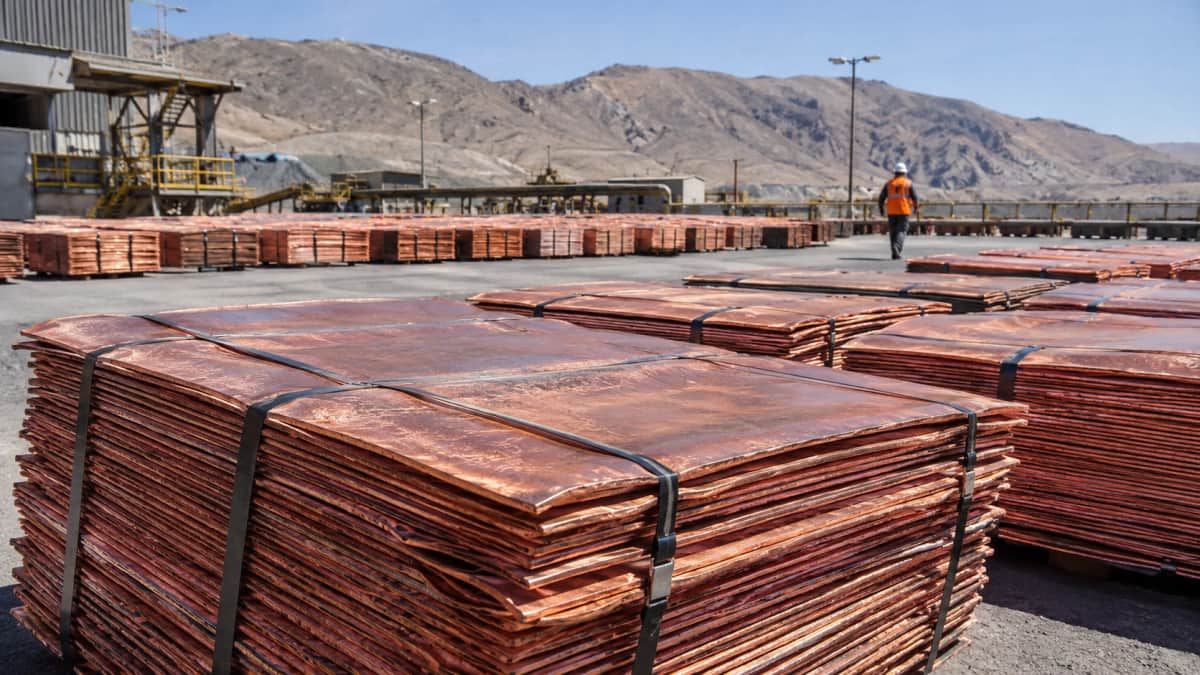
Why it matters: Chile’s ability to turn strong copper prices into export and fiscal income is constrained by falling production at major mines.
US$5.58 per pound — copper price on 27 November, after a partial rebound
8.5% lower — Chilean copper production in the first nine months of 2026 year on year
US$54.655 billion — Chilean copper exports from January to October, up 15.8% year on year
US$144,000 tonnes — projected refined-copper market surplus for 2026
Copper traded at US$5.58 per pound on the London Metal Exchange on 27 November, recovering 2.9% from the previous session but remaining well below October’s average of US$6.59. The retreat comes as Chile’s production falls: output reached about 3.63 million tonnes in the first nine months of 2026, down 8.5% from a year earlier.
The price decline has not erased the year’s gains. Copper averaged US$6.13 per pound through 27 November, 38.4% above the same period in 2025. But the widening gap between the metal’s annual performance and Chile’s mine output puts the country’s export growth—and its exposure to price swings—in focus.
November’s pullback follows a record October average
Copper fell to US$5.31 per pound on 25 November after 12 consecutive sessions of declines, then rose to US$5.43 on 26 November and US$5.58 the following day. November’s partial average was about US$5.99 per pound, roughly 9% below October’s.
The 2026 average from January to October was approximately US$6.14 per pound, compared with US$4.38 over the same period in 2025. October’s average was the highest in the available series dating to January 2005. The contrast shows how a strong annual average can coexist with a sharp monthly correction.
China’s outlook remains a key influence: it is projected to account for about 57.3% of refined copper consumption in 2027. Demand from power networks, electric vehicles, energy storage, renewables and data centres adds to the market’s longer-term requirements, while financing conditions and revisions to industrial investment can shift near-term expectations.
Falling output limits Chile’s ability to capture higher prices
Chile’s full-year 2026 production is estimated at 4.94 million tonnes, an 8.4% decline. Lower ore grades, maintenance, operating constraints and interruptions at individual mines have weighed on output. Escondida, Codelco and Spence account for a significant share of the national decrease.
Higher prices raise the potential value of each tonne sold, but fewer tonnes limit export volumes. The relationship is not one-for-one: costs, commercial terms and processing capacity also affect the revenue received by producers.
The export figures have so far benefited from prices. Copper shipments were valued at US$54.655 billion from January to October, 15.8% higher than in the corresponding 2025 period, and represented 52.5% of Chile’s goods export value. Total mining exports reached US$65.233 billion. The contrast between rising export value and lower production underscores the role of price in sustaining trade earnings.
Market projections do not remove the production challenge
The projected 2026 global mine output of 23.30 million tonnes and refined copper demand of 27.50 million tonnes refer to different stages of the supply chain and should not be read as a direct deficit calculation. The refined-market balance instead points to a surplus of about 144,000 tonnes, a relatively small share of global consumption that leaves prices exposed to operational disruptions, inventory changes and shifts in economic expectations.
Chile’s economy contracted 1.1% year on year in the third quarter of 2026, while mining activity fell 14.7%, with lower copper extraction a key factor in the sector’s result. For the 2027 fiscal plan, the long-term reference price was set at US$5.37 per pound in that year’s currency; it is a budget parameter, not a forecast of the daily market price.
The country’s 2027 copper production is projected to reach 5.08 million tonnes, a 3% recovery from the 2026 estimate. Achieving that outlook depends on operations normalising and addressing current production constraints. The near-term test for Chile is therefore not only where copper trades, but whether its mines can restore output.
More in Resources
Marimaca wins Chile early-works permit, but full mine build still needs approval
The authorization covers earthworks, not the full set of mine and processing facilities required for the 13-year operation.

Aurora Williams named among 100 mining women as Chile faces a retention test
Hiring has lifted women’s share of Chilean large-scale mining, but staying and advancing remain separate tests.
Copper rebounds to US$5.58 as Codelco faces lower China premiums
Chinese purchases of Chilean cathodes have dropped, sharpening the stakes in Codelco’s annual supply talks.