
AI-run labs promise faster materials research, but mining poses a different test
From reagent selection to mineral recovery, each change in chemistry can demand another round of trials.
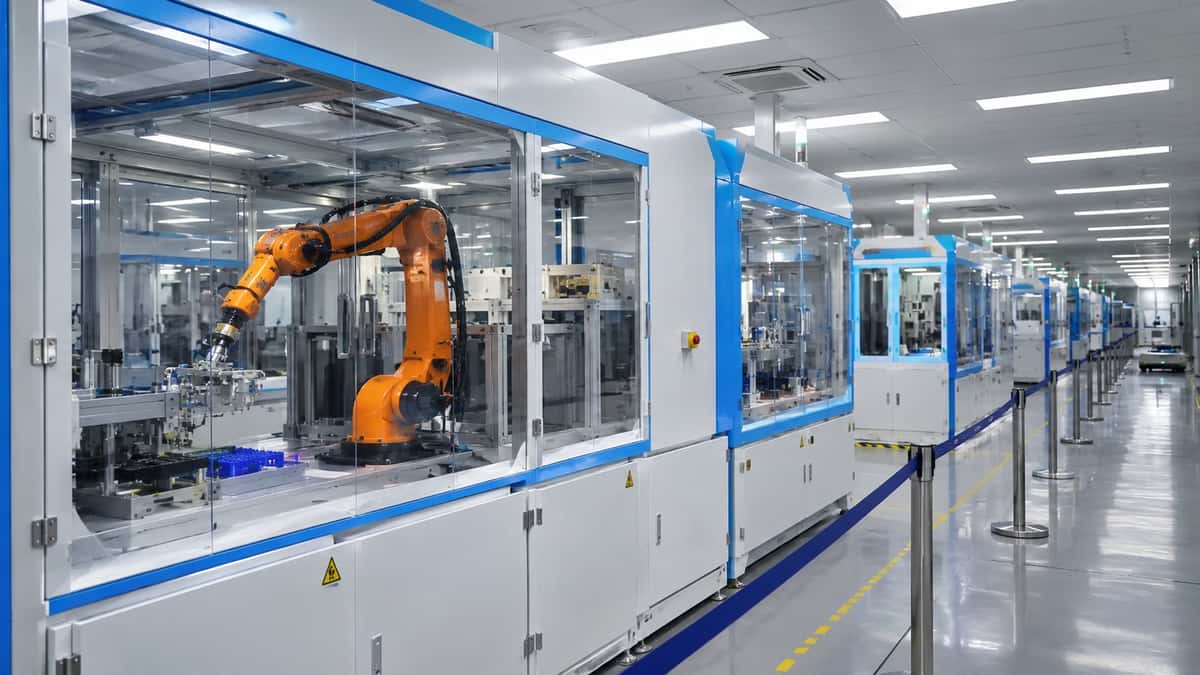
Why it matters: AI-directed experiments could help researchers test more mineral-processing conditions, but laboratory results still have to work at plant scale.
US$20 million — National Science Foundation funding for the PoLARIS programme
More than 20 systems — planned across five connected laboratories
100 to 300 experiments a day — PoLARIS’s projected capacity when fully operational
Less than 1% — the share of more than 5,000 possible fabrication conditions tested by AutoBot in one study
Autonomous-laboratory projects in the United States and China are giving artificial intelligence a role in choosing and modifying experiments, not just analysing results. The systems combine algorithms with robotics and laboratory instruments to run tests and use each result to select what to try next, a model with potential applications in materials research and mineral processing.
AI selects the next test
PoLARIS, developed by the University of Chicago and Argonne National Laboratory, received US$20 million from the US National Science Foundation. The four-year project plans to connect more than 20 automated systems across five laboratories, with a projected capacity of 100 to 300 experiments per day once fully operational. Its research areas include polymers, soft materials, coatings, adhesives and electronic materials.
In a self-driving laboratory, researchers set an objective, such as improving a material or reaction. Software selects experiments it expects to be informative; robots prepare samples, mix substances and control conditions such as temperature. Measurements then feed back into the system, which can revise the experimental sequence rather than simply repeat a fixed programme.
A separate example, AutoBot at Lawrence Berkeley National Laboratory, used robotics and machine learning to explore fabrication conditions for metal-halide perovskites, materials used in technologies including solar cells. It assessed a space of more than 5,000 possible combinations while experimentally testing less than 1% of them, and examined how humidity affected material formation and stability. The result illustrates the potential to reduce trial counts in a particular research problem; it does not establish that the same reduction applies across materials or processes.
Mineral processing is a tougher proving ground
The mining connection lies in the number of conditions that can affect separation and recovery. Changes in chemistry can alter how minerals respond to reagents, while temperature and other operating variables can shape processing outcomes. Lawrence Berkeley’s HIPASS platform is designed to study separation and concentration in solutions and slurries, using automated dosing, chemical measurements and AI analysis.
The US initiative METALLIC also brings together laboratory capabilities to investigate critical-mineral recovery. Its autonomous systems combine minerals with additives and apply heat to study selective extraction of elements including lithium, magnesium and copper. These efforts could support research into lower-grade ores, tailings recovery and hydrometallurgical treatment, including in Chile, but the research does not yet demonstrate improved performance at operating mines.
Results still need to scale
China’s AutoDNA, presented by researchers at Shanghai Jiao Tong University on 4 November 2026, applies connected instruments and AI to molecular-biology tasks, including DNA analysis and information storage in DNA. Its development shows that experimental automation is extending beyond relatively simple chemical procedures, although the platform remains at the research stage.
For mining applications, laboratory findings must be reproducible and remain effective when moved from small samples to large volumes with changing heat and mass transfer, impurities and process conditions. Automated systems also require compatible instruments, reliable data, safety controls and human oversight, particularly when experiments involve hazardous substances or high temperatures.
PoLARIS plans to begin end-to-end autonomous experiments in its first research areas within 18 months of the project’s start and offer services to external users toward the end of its second year. Those are programme targets; the projected daily experiment capacity is not a reported operating result.
More in Frontier Mining

NASA’s 12 stratospheric dust grains may point to ancient ice beyond Neptune
The particles were recovered near Earth, but the region they may represent is almost impossible to sample directly.

Northwestern wrist sensors top 92% gesture accuracy, but repeat use tests reliability
Camera-free controls could suit rehabilitation and industrial tasks, but researchers have yet to show how the systems perform beyond controlled trials.
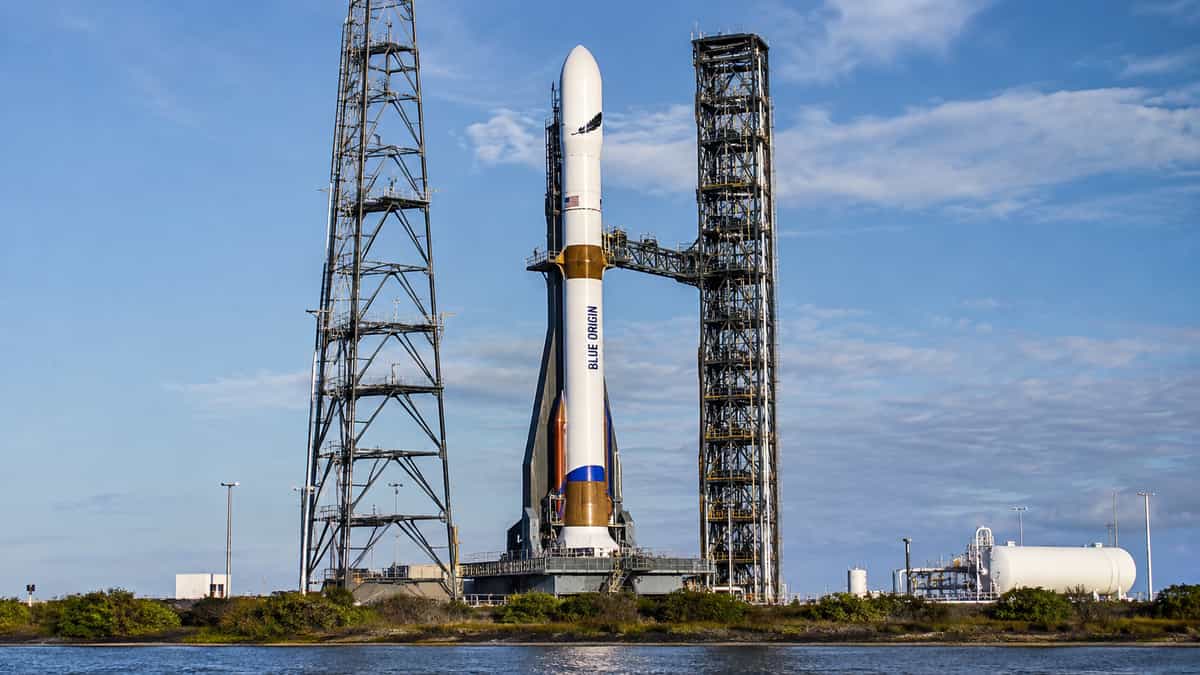
Google and Blue Origin target 2029 space data centres, but heat remains a hurdle
A New Glenn launch would test whether distributed orbital computing can move beyond a single-satellite demonstration.