
Viking Mines finds visible scheelite in 25 Linka holes, but grades remain unproven
At the historic Nevada mine, ultraviolet logging is mapping tungsten targets—but laboratory assays will determine whether the zones carry meaningful WO₃ grades.
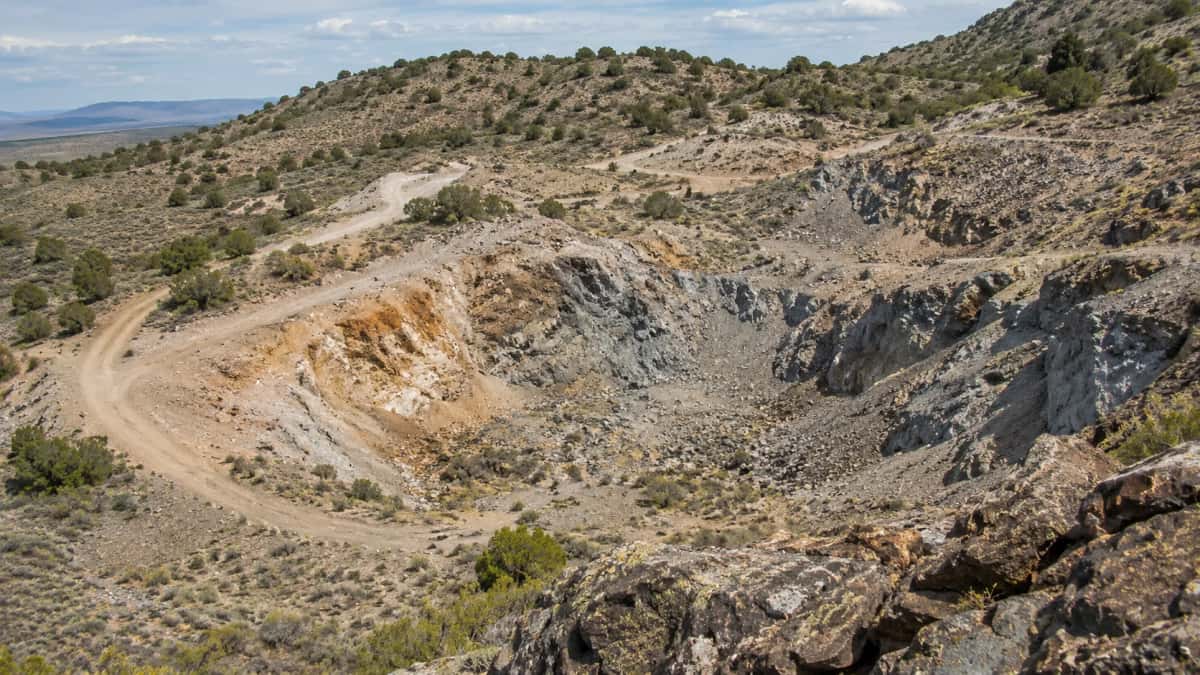
Why it matters: Linka’s visible scheelite could help guide exploration, but assays and continuity will determine whether the historic Nevada workings have resource potential.
25 of 31 holes — Linka Main holes with visible scheelite.
3,491 metres — approximate total reverse-circulation drilling across 48 holes.
1.86% WO₃ — the highest individual assay reported from the campaign so far.
Viking Mines has logged visible scheelite in 25 of 31 reverse-circulation holes at Linka Main in Nevada, identifying intervals of up to 18.3 metres. The company said the observations are visual estimates, not laboratory measurements of tungsten grade; assays are needed to establish the mineralisation’s grade and continuity.
The latest geological logging covered the final 15 Linka Main holes, 11 of which showed visible scheelite under short-wave ultraviolet light. In LKRC0024, the mineral was observed over 18.3 metres from 12.2 metres down-hole. LKRC0025 contained 15.3 metres of visible mineralisation within a 28.2-metre interval starting at 53.3 metres, while LKRC0023 showed 11.4 metres from 11.4 metres, including a 0.8-metre sample-recovery cavity.
Visual logging guides follow-up, not grade estimates
Viking estimated visible scheelite abundance at 0.05% to 1.2%. Those figures are not WO₃ assay results and do not establish economic grade, mineralisation continuity or metallurgical recovery. The reported intervals are down-hole lengths, not necessarily true widths.
Earlier laboratory results from the campaign provide a separate measure of grade. The company reported 9.9 metres at 0.51% WO₃ in LKRC0016, 3.8 metres at 0.79% in LKRC0009, 7.6 metres at 0.33% in LKRC0007 and 12.2 metres at 0.20% in LKRC0017. Higher-grade shorter intervals included 0.8 metres at 1.86% WO₃ in LKRC0007 and 1.5 metres at 1.10% in LKRC0009. The 1.86% result is the highest individual grade reported from the campaign to date.
The company said the relationship between ultraviolet observations and assay results may help target further drilling. Pending assays will be needed to test how well visible scheelite corresponds to measured WO₃ grades across the broader programme.
Drilling tested Linka Main and regional targets
Viking completed approximately 3,491 metres in 48 reverse-circulation holes: 31 at Linka Main, 10 at its southwest extension and seven on regional targets. The programme tested areas around historic workings as well as ground with less geological information. Mineralisation is hosted mainly in skarn formations associated with interactions between intrusive rocks and carbonate units.
The company has also reported visible scheelite in hole LKRC0044, about 500 metres southwest of Linka Main. The hole intersected three metres from 56.4 metres down-hole at the contact between limestone and monzonite. Viking is investigating a geological corridor extending about 800 metres, but assays will be required to determine whether this outlying mineralisation has comparable grades.
Processing studies remain at an early stage
Alongside exploration, Viking is assessing processing options, including a conceptual modular plant with nominal capacity of about 300,000 tonnes of ore per year. Initial gravity-concentration tests on four samples produced products grading above 50% WO₃. The company also reported further progress on X-ray transmission ore-sorting tests using TOMRA technology on 24 November.
Pre-concentration could reduce the material sent to grinding, but commercial application will depend on sample representativeness and further technical and economic work. Viking expects outstanding drilling assays in December 2026 to inform an updated three-dimensional geological model and assessment of true widths. The company has also said it is targeting a mining-permit application towards the end of 2027, subject to technical and environmental studies; Linka has not been declared a new mineral resource or reserve.
More in Discoveries
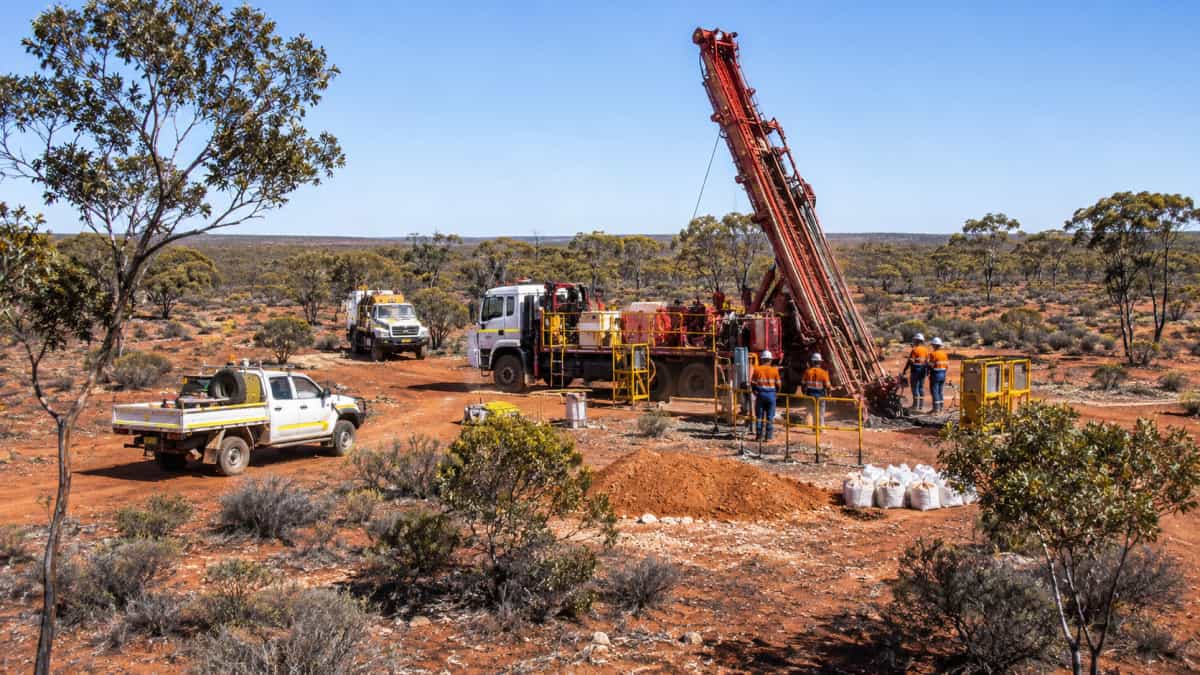
Kalgoorlie Gold finds volcanic rocks at Pinjin, but gold assays are pending
Lighthorse drilling targeted extensions beneath earlier high-grade hits, while Rebecca Sequence was tested for the first time beneath cover.
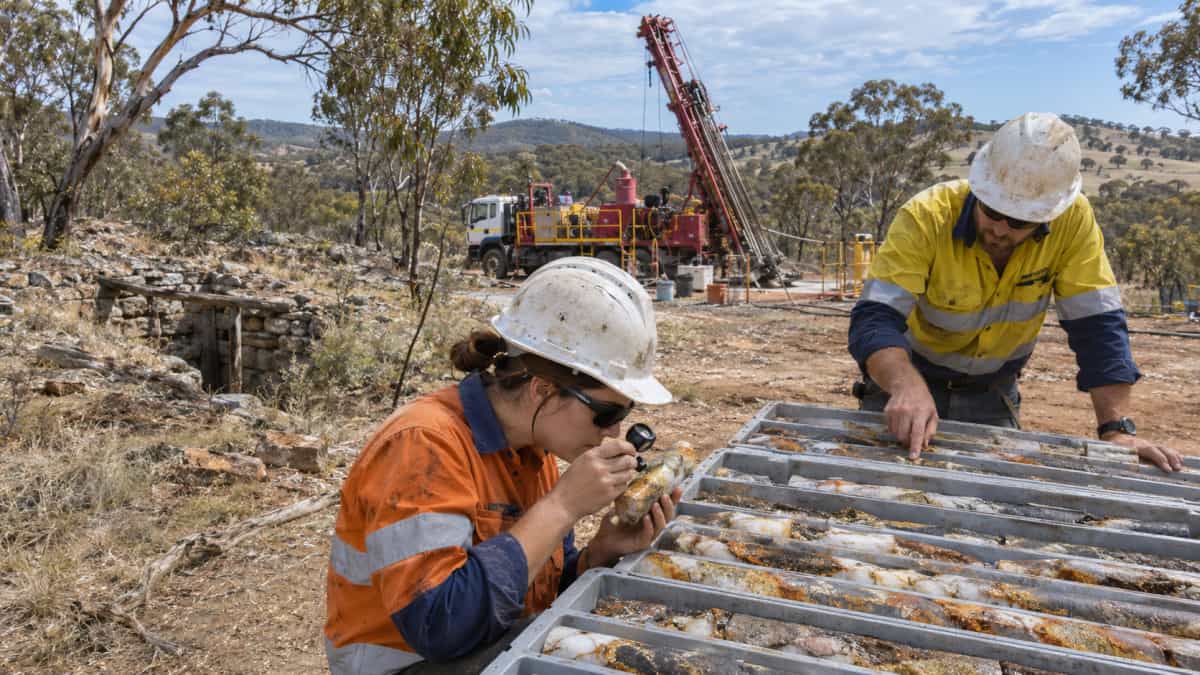
Argent Minerals finds gold beyond Trunkey Creek workings, but continuity is unproven
The first campaign has tested only the northern end of a 4.7-kilometre target, leaving the vein’s deeper geometry unresolved.
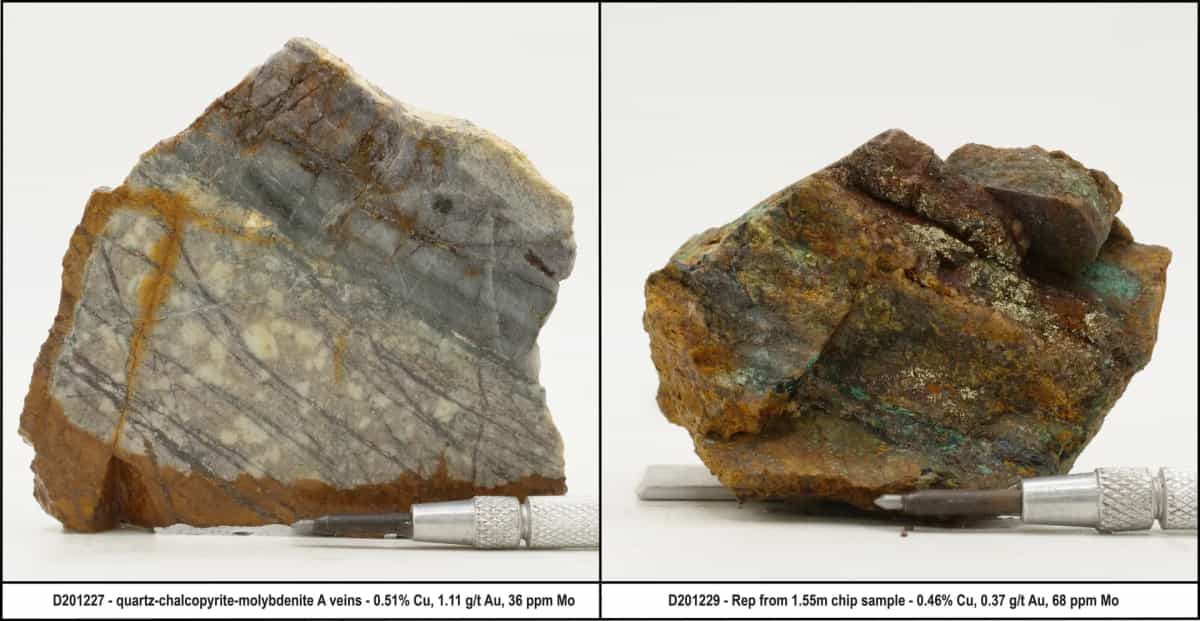
Brixton extends Catalyst at Thorn, while Sentinel’s porphyry footprint remains uncertain
Catalyst step-outs and a first test at a target 37 km from Camp Creek put two different exploration stages in the same campaign.