
Safi Silver drills deeper silver at Morocco's Addana, but continuity remains unproven
The campaign is also testing Antenna Hill, where visible sulphides have yet to be matched with assay results.
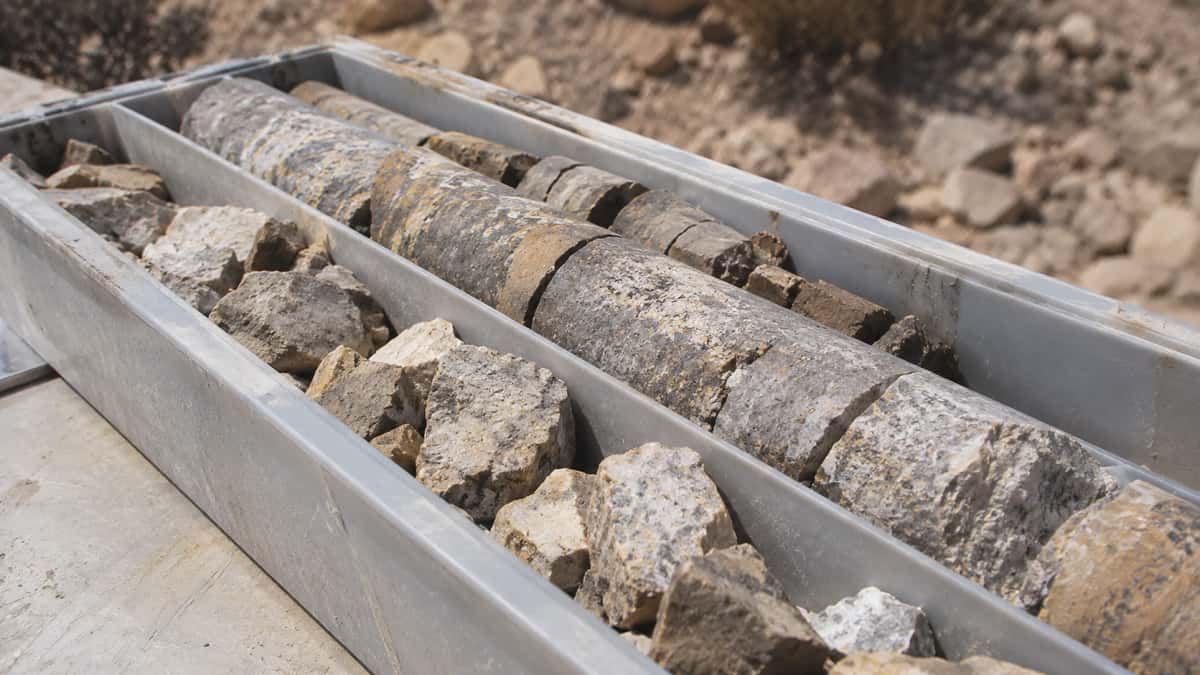
Why it matters: The results add exploration targets at Addana, but the company still needs to demonstrate continuity and establish whether the mineralization has economic potential.
0.8 metres at 146 g/t silver — SW2026-06, from 160 metres downhole
1 metre at 608 g/t silver — repeat analysis of the interval in SW2026-02
112 square kilometres — Addana’s area across seven exclusive prospecting permits
300 metres — the authorized target depth for Antenna Hill hole AH-02
Safi Silver Corp. reported a new silver interval at depth at its Addana project in Morocco, along with a repeat analysis confirming a high-grade result from an earlier hole. The company also reported sulphides in initial drilling at Antenna Hill, but assays are pending and the continuity of mineralization at Addana remains unproven.
The results come from the company’s 2026 exploration programme in Tata province, in southern Morocco. Addana is an exploration-stage project with no quantified mineral resources.
Silver intervals in sandstone need follow-up drilling
Hole SW2026-06 at Addana Southwest intersected 0.8 metres grading 146 g/t silver between 160 and 160.8 metres downhole. The interval is hosted in lower sandstone beneath a sequence of graphitic schists. The hole reached a final depth of 180.7 metres.
A previous hole, SW2026-07, returned 1 metre at 35.52 g/t silver in the same sandstone unit, about 250 metres from the new intersection. The results give Safi Silver additional grounds to investigate the unit, but spacing between holes alone does not establish geological continuity or an economically mineable body. Reported interval lengths are measured along the drill core and may not represent true widths.
A second analysis of the 1-metre interval in SW2026-02, between 6 and 7 metres downhole, returned 608 g/t silver. The original result was 657 g/t. Safi Silver said the recheck used fire assay with gravimetric finish. The interval lies in sandstone associated with a fault zone, where the core was fragmented. Its narrow width and unestablished continuity limit what can be concluded from the grade alone.
Antenna Hill sulphides await laboratory results
At Antenna Hill, holes AH-01 and AH-02 intersected sulphide mineralization in graphitic schist sequences; AH-02 also encountered disseminated sulphides in underlying quartzite. Geological observations in AH-02 included a band about 10 centimetres wide at 144 metres, estimated visually to contain 45% to 55% sulphides. Further downhole, between 153 and 154 metres, visual estimates were 10% to 20%; a small grain of chalcopyrite was noted at about 154.7 metres. The sulphides were predominantly pyrite.
These observations are not assay results and do not confirm silver, copper or other metal grades. AH-01 reached 158.8 metres before difficult ground conditions led to the loss of drill rods and the hole’s termination. The company said it is considering whether the hole may have intersected an old underground working, but that interpretation is unconfirmed. AH-02 had passed 229 metres by November 17 and was authorized to continue to 300 metres.
Historic workings guide the next phase
Addana covers about 112 square kilometres across seven permits in the Anti-Atlas, where Safi Silver has identified structures along a roughly 40-kilometre corridor. Historical mining and surface sampling have helped guide the programme; samples from old waste material returned up to 564 g/t silver. That corridor length does not indicate continuous mineralization.
The company plans to continue AH-02 and expedite assays from Antenna Hill, testing for silver, gold and base metals. It also expects to complete SW2026-05, which was halted at 50 metres when equipment moved to Antenna Hill. Initial gold analyses from 52 Addana Southwest samples were below 0.05 g/t, with further testing using lower detection limits underway. Assay results and additional drilling will be needed to assess the targets and determine whether any support resource estimation or economic studies.
More in Discoveries
Val-d’Or Mining’s Perestroika drilling adds high-grade gold, but continuity is unproven
A mineralized corridor extends about 1,100 metres, but the latest holes do not establish how its gold-bearing veins connect.
Lithium Africa finds pegmatites at South Africa’s Springbok, but continuity is unproven
Jackal Water lies 11 km from Norrabees, extending the search across a vast property as the company tests whether targets belong to one system.
Ni-Co Energy’s Kremer drilling finds deep sulphides, but continuity remains unproven
The Quebec programme paired shallow assays with deeper mafic and ultramafic rocks, setting up two different tests for the next phase.