
Renascor wins South Australian grant to test Flat Hill copper targets, but sulfides remain unproven
VTEM conductors sit near historic copper intersections and extend into southern ground that has yet to be tested.
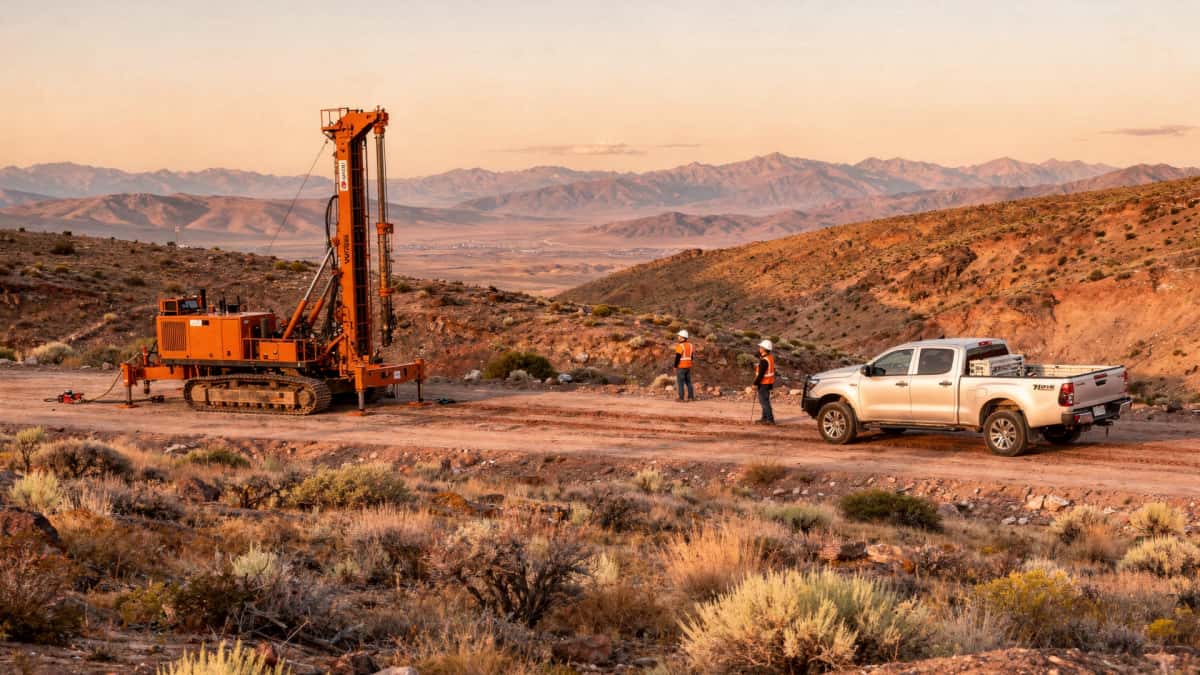
Why it matters: The planned drilling will test whether geophysical conductors beneath weathered ground indicate primary copper sulfides, a question historic near-surface results cannot answer.
$312,500 — South Australian government grant to co-fund drilling at Flat Hill
150–300 metres — approximate depth of the VTEM conductors
3 kilometres — span of the historical copper-intersection corridor
Renascor Resources received a $312,500 grant from the South Australian Government to co-fund drilling at the Flat Hill copper prospect, where the company plans to test whether conductors beneath the weathered zone are associated with primary sulfides. Drilling cannot begin until required cultural heritage studies are completed; the company has not specified a start date.
Flat Hill is part of Renascor’s wholly owned Marree project in the Adelaide Rift Complex. The campaign is intended to investigate conductors near known copper occurrences and assess additional targets farther south. Whether these occurrences form part of a larger mineralised system remains an exploration hypothesis, not a confirmed result.
Historic copper hits are mostly near surface
Previous drilling reported copper intersections across a corridor of about 3 kilometres, mainly close to surface. At Breaden Hill, one hole intersected 18 metres at 1.57% copper from surface, including 6 metres at 2.5% from 2 metres. Another hole at the prospect returned 16.5 metres at 1.94% copper from about 2 metres.
At Boorloo, historical results included 134 metres at 0.57% copper from 26 metres, including 28 metres at 1.11% from 128 metres. Breaden Hill South returned 9 metres at 0.99% copper from 39 metres.
These are results from earlier campaigns. They do not, on their own, establish mineral continuity or demonstrate that primary sulfides occur below the weathered material. Renascor is reinterpreting the historical data with a greater focus on faults and other structures that may have influenced where copper was deposited. Earlier exploration concentrated largely on near-surface copper-bearing layers.
VTEM survey outlines targets at depth and to the south
An airborne VTEM electromagnetic survey identified conductors close to historic intersections at Breaden Hill and Boorloo. It also outlined untested targets farther south at Mayflower and West Willouran. Modelling places the responses at approximately 150 to 300 metres depth.
The geophysical signals help the company select drill targets, but they do not establish the presence of copper or determine the type of mineralisation. The planned holes are intended to test whether the conductors relate to primary sulfides beneath the weathered zone. Renascor managing director David Christensen said the proximity of conductors to historic copper intersections informed the target selection.
Heritage studies remain a condition before drilling
Renascor was one of 19 recipients in the first round of South Australia’s PACE Minerals program, which supports early-stage exploration and the use of modern technologies. The government announced more than $4.6 million in grants on 19 November and expects supported proposals, alongside company co-funding, to generate more than $12 million in exploration activity during 2027.
The company has signed a Native Title mining agreement with Arabana Aboriginal Corporation and is working with the organisation to coordinate the cultural heritage studies required before drilling. Separately, the International Energy Agency’s Global Critical Minerals Outlook 2026 projects that mine supply of copper could be 25% below forecast demand in 2035 if the current project pipeline is maintained, with electricity networks and electric vehicles among the drivers of demand. That broader outlook does not resolve the geological question at Flat Hill: drilling remains contingent on completion of the heritage work.
More in Discoveries
Lithium Africa finds pegmatites at South Africa’s Springbok, but continuity is unproven
Jackal Water lies 11 km from Norrabees, extending the search across a vast property as the company tests whether targets belong to one system.
Ni-Co Energy’s Kremer drilling finds deep sulphides, but continuity remains unproven
The Quebec programme paired shallow assays with deeper mafic and ultramafic rocks, setting up two different tests for the next phase.
Cantex finds lead-zinc at North Gold, leaving a 7 km germanium question open
Three holes confirm gold, silver, lead and zinc, but the strategic metal identified elsewhere on the property still needs testing.