Cantex finds lead-zinc at North Gold, leaving a 7 km germanium question open
Three holes confirm gold, silver, lead and zinc, but the strategic metal identified elsewhere on the property still needs testing.
Why it matters: North Gold has confirmed polymetallic mineralization, but continuity, true widths and potential germanium content remain unresolved.
27.39% combined lead and zinc — over 1 metre in hole YKDD26-365
280 g/t silver — in the same 1-metre interval
2.42 g/t gold — over 1 metre in YKDD26-365
7 km — approximate distance from North Gold to Main Zone
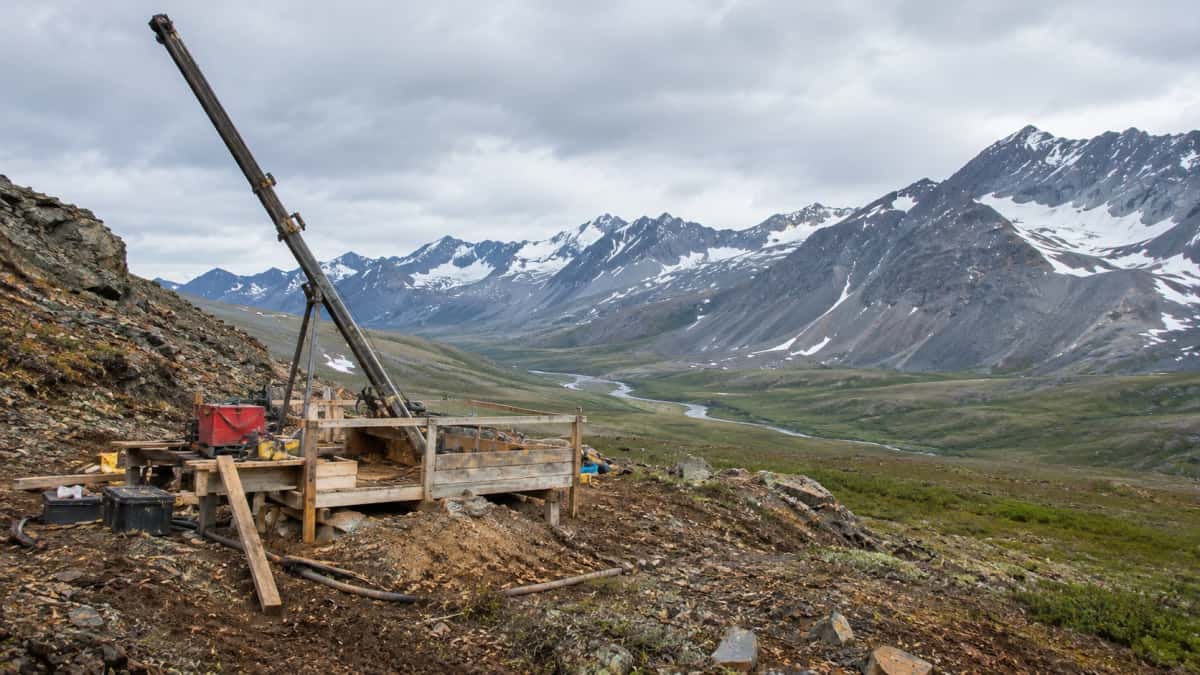
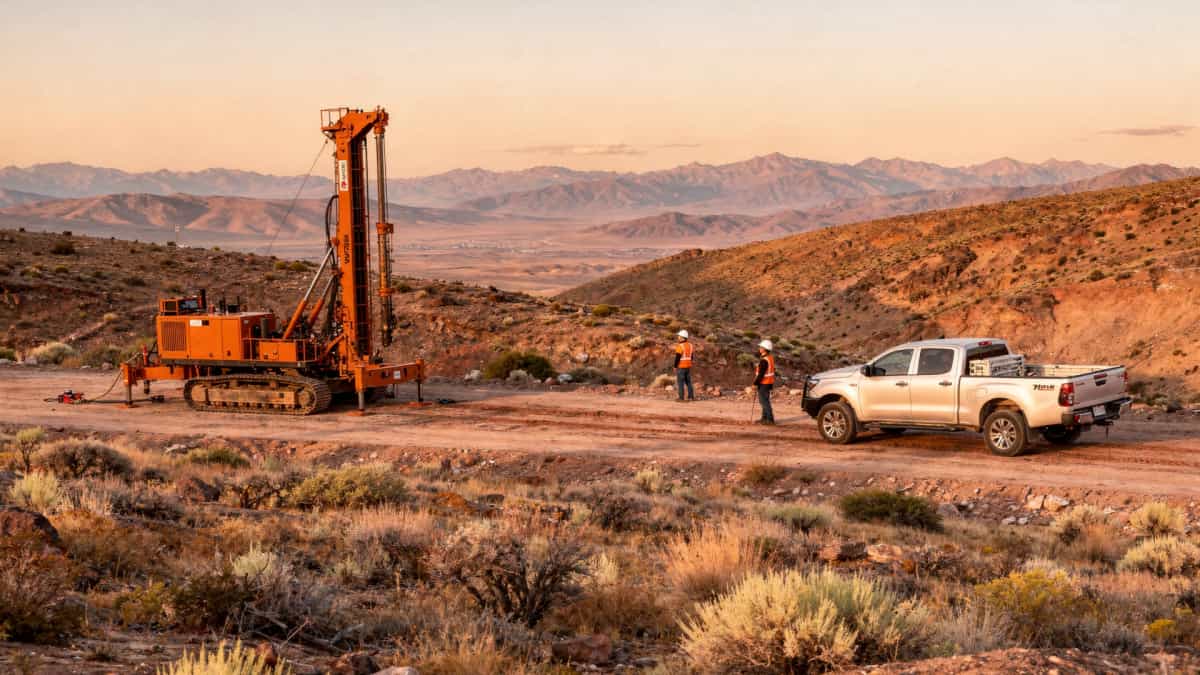
Cantex Mine Development reported results from three diamond drill holes at the North Gold target on its North Rackla project in Yukon, Canada. All three holes intersected mineralization, including intervals of lead, zinc, silver and gold. The company said it will test zinc-rich samples for germanium, which has been identified at Main Zone, about 7 km to the southeast.
The results, reported on November 19, 2026, came from holes drilled from a single platform, NZ04, during this year’s exploration campaign. Cantex has not reported germanium assays from North Gold.
Hole results include high-grade lead-zinc and silver
Hole YKDD26-365 returned 1 metre grading 27.39% combined lead and zinc, comprising 3.59% lead and 23.80% zinc, from 99 to 100 metres downhole. That interval also assayed 280 g/t silver. The hole separately intersected 1 metre grading 2.42 g/t gold, from 91 to 92 metres.
Hole YKDD26-364 returned 8 metres grading 8.34% combined lead and zinc and 59.8 g/t silver, including 4 metres at 15.44% combined lead and zinc and 104.7 g/t silver. Hole YKDD26-366 intersected 3 metres grading 6.36% combined lead and zinc and 33.6 g/t silver.
The reported lead-zinc percentages are sums of the two metals, not individual grades. Intervals are measured downhole; true widths have not been determined.
North Gold is a separate target under investigation
Surface exploration outlined a geochemical anomaly measuring about 250 by 350 metres, with gold, silver, lead and zinc in soil and rock samples. Earlier individual surface samples returned up to 15.75 g/t gold, 13.75% lead, 23% zinc and 278 g/t silver. Those samples are not representative average grades for the target.
North Gold lies about 7 km northwest of Main Zone, where Cantex has reported elevated germanium associated with sphalerite, a zinc sulphide. The company plans to analyse samples with higher zinc grades from North Gold to determine whether they also contain germanium. The proximity raises a geological question, but the available results do not establish that the zones are physically connected or share a mineralization history.
Cantex’s North Rackla property covers about 14,077 hectares. Additional drilling and structural and geochemical work will be needed to assess the target’s dimensions and whether the mineralized intervals form a continuous system.
Continuity and metallurgy still need to be established
The three North Gold holes confirm mineralization at the target, but are not enough to define its extent, continuity, tonnage or resource potential. The next exploration work will need to test the system laterally and at depth, while determining the true widths of the mineralized structures.
Cantex also reported that four of seven holes drilled at the regional G67 target had returned no significant mineralization as of November 19; assays for the remaining three were pending. The results underline that exploration anomalies require drill testing before their potential can be assessed.
Earlier flotation tests on other North Rackla material returned lead recoveries of 85.1% and zinc recoveries of 80.6% from high-grade sulphide samples. Those results do not establish how North Gold material would perform; specific metallurgical tests would be required. The immediate technical steps are further drilling, pending G67 assays and analysis of zinc-rich North Gold samples for germanium.
More in Discoveries
Lithium Africa finds pegmatites at South Africa’s Springbok, but continuity is unproven
Jackal Water lies 11 km from Norrabees, extending the search across a vast property as the company tests whether targets belong to one system.
Ni-Co Energy’s Kremer drilling finds deep sulphides, but continuity remains unproven
The Quebec programme paired shallow assays with deeper mafic and ultramafic rocks, setting up two different tests for the next phase.
Renascor wins South Australian grant to test Flat Hill copper targets, but sulfides remain unproven
VTEM conductors sit near historic copper intersections and extend into southern ground that has yet to be tested.