
Intrepid Metals advances Corral drilling as Ivanhoe’s Gleeson discovery nears
Ivanhoe’s deep mineralization sharpens the district picture, while Corral’s own untested porphyry targets await the drill.
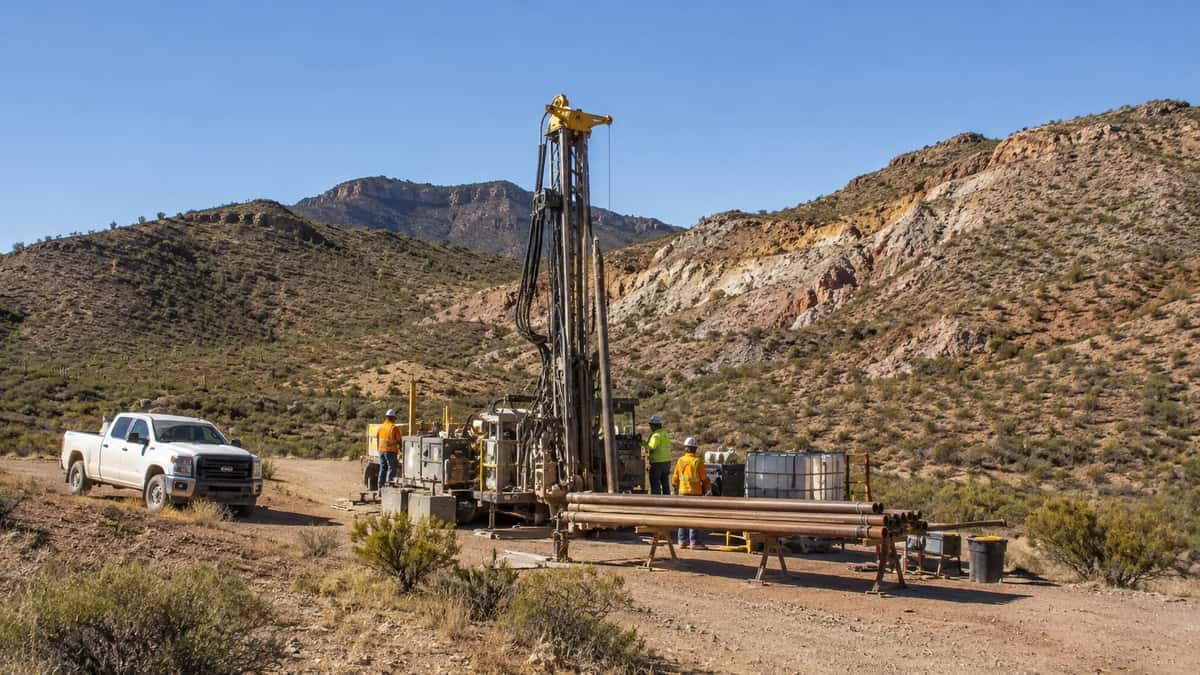
Why it matters: Corral’s next drilling will test whether a neighbouring discovery points to a broader copper system or remains separate from Intrepid’s ground.
3,100 metres — drilled in seven holes at Corral Copper by November 20, 2026.
10,000 metres — total length of Intrepid’s ongoing programme.
150 metres — distance from Ivanhoe Electric’s Gleeson discovery to Corral’s western property boundary.
123.60 metres — copper-gold-silver intercept reported by Ivanhoe at Gleeson, not at Corral.
Intrepid Metals has completed approximately 3,100 metres across seven step-out holes at its Corral Copper project in Cochise County, Arizona, as it advances a 10,000-metre exploration programme. The work is focused on extending known copper-gold mineralization and testing new targets at depth. Ivanhoe Electric’s recent discovery at neighbouring Gleeson lies about 150 metres from Corral’s western boundary, but that proximity does not establish a connection between the two systems.
Corral’s remaining metres target new ground
Intrepid’s initial drilling has focused on the Holliday and Ringo zones. The company plans approximately 7,000 additional metres, including deeper targets and areas that have not yet been tested by drilling. Its exploration models include carbonate replacement deposits, or CRDs, and possible porphyry copper systems.
The company has identified Curly, Kate and Mattie as priority areas through geological work, rock and soil sampling, and portable X-ray fluorescence analyses. Curly, in western Corral, is a porphyry target immediately east of the area where Ivanhoe drilled at Gleeson. Intrepid has not yet confirmed a porphyry system there; drilling is required to test whether the geological indications translate into mineralization at depth.
A geophysical survey combining induced polarization (IP) and magnetotellurics (MT) covered about 75% of the project’s northern sector and was nearing completion. Intrepid said it would interpret the results alongside drilling, mapping and sampling to refine targets. Geophysical anomalies can help identify subsurface features, but are not, on their own, evidence of an economic deposit.
Gleeson results raise the district stakes
Ivanhoe Electric announced its Gleeson discovery on November 19, reporting two main mineralized domains: an upper zone associated with copper, gold and silver-bearing breccias, and a deeper zone associated with intrusive rocks, skarn and carbonate replacement.
Hole CGD26-TR-003 intersected 123.60 metres grading 0.91% copper, 0.44 g/t gold and 5.27 g/t silver from a depth of 601.70 metres. Within that interval, 71.03 metres graded 1.38% copper, 0.52 g/t gold and 6.73 g/t silver. Hole CGD26-TR-008 returned 381.66 metres grading 0.34% copper, 0.29 g/t gold and 1.07 g/t silver.
Those assays are from Ivanhoe’s Gleeson project, not Intrepid’s Corral property. The reported lengths are downhole intervals and may not represent true widths. The discovery remains at the exploration stage; its continuity, dimensions and economic potential have not been established.
Geology, not distance, will determine the link
The closeness of the projects has focused attention on the Courtland-Gleeson district, where several companies are exploring in a historically significant Arizona mining region. Intrepid’s work must determine whether Curly has a distinct system or shares geological features with mineralization identified on neighbouring ground. Ivanhoe’s results provide regional context, but cannot substitute for assays from Corral.
Intrepid’s next steps are to complete and interpret the geophysical work and continue drilling at known zones and new targets. The remaining metres are expected to test whether Corral’s geological and geophysical indications lead to mineralized intervals; until those results are available, continuity between Corral and Gleeson remains unproven.
More in Discoveries
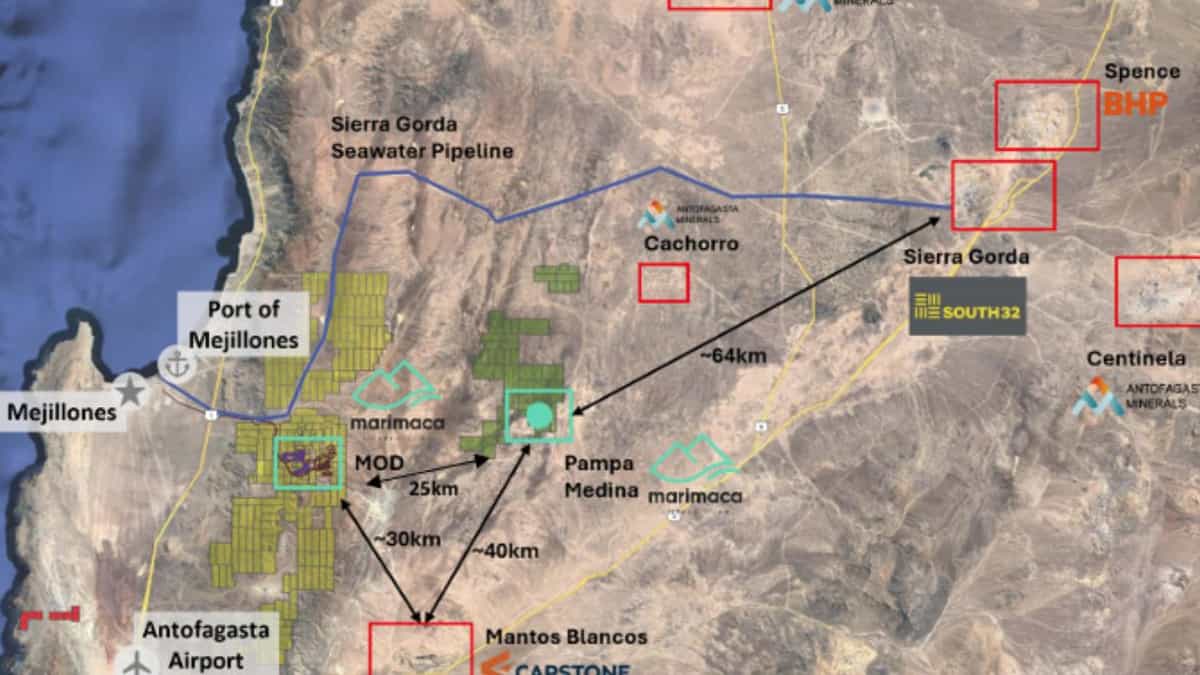
Marimaca drilling tests the reach of Pampa Medina’s copper sulphides
The central zone is being drilled on 150-metre spacing, while exploration also extends beyond the historically known oxide area.
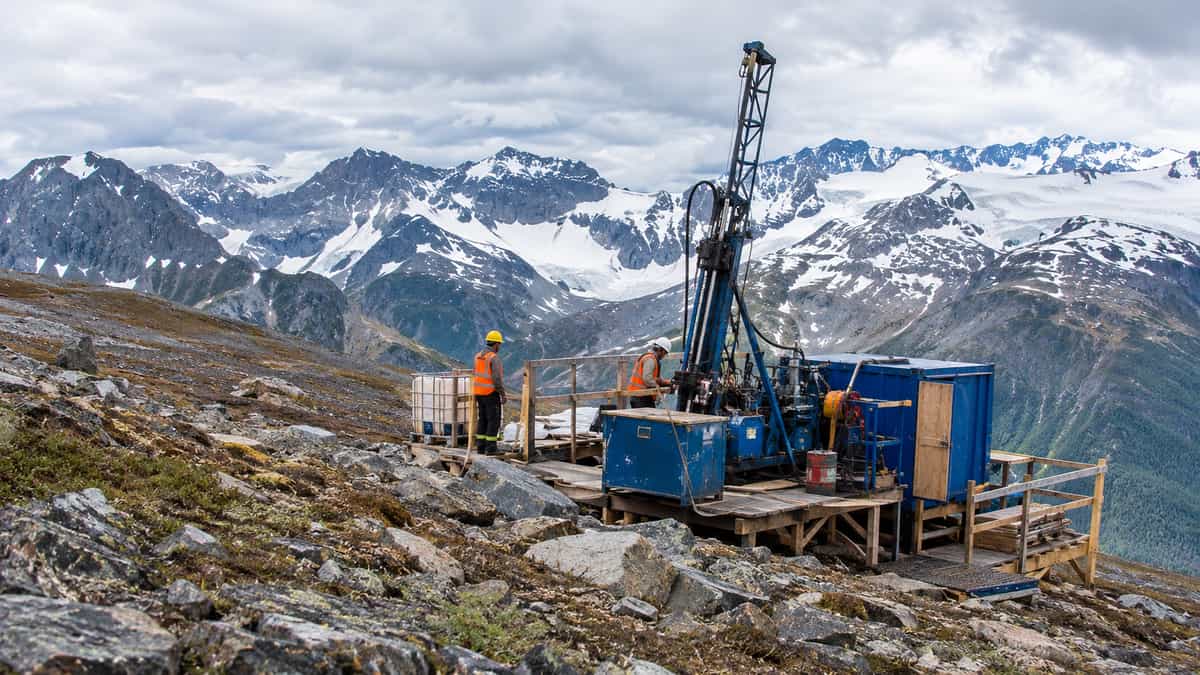
Scottie Resources finds high-grade gold beyond planned mine limits
The Blueberry Contact holes could extend the underground layout, but their true widths and continuity remain unresolved.
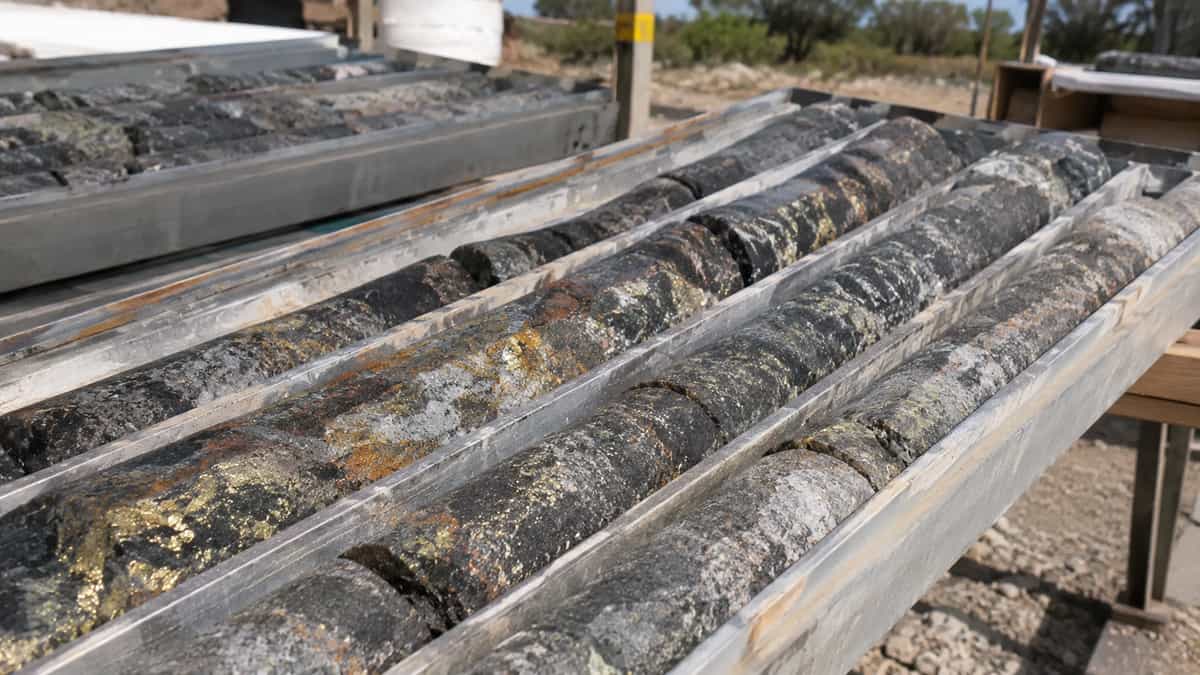
NexMetals finds third copper-nickel zone at Selebi Main, but its scale is untested
The deep target lies below Selebi Main’s known Lower Zone, and its continuity will shape how the deposit is modelled.