
Trump and Xi agree to draft stability plan as rare-earth dispute remains
The meeting unfolded against a stark imbalance in permanent-magnet manufacturing, a bottleneck for electric vehicles, defence and AI hardware.
Why it matters: Mineral processing capacity can shape access to materials used across electrification, defence and advanced computing.
4,500 tonnes a year — US neodymium-iron-boron magnet manufacturing capacity in 2025
About 210,000 tonnes a year — China’s comparable capacity
US$31.089 billion — Chilean exports to China in the first nine months of 2026
January 10, 2027 — scheduled end of the US-China tariff truce
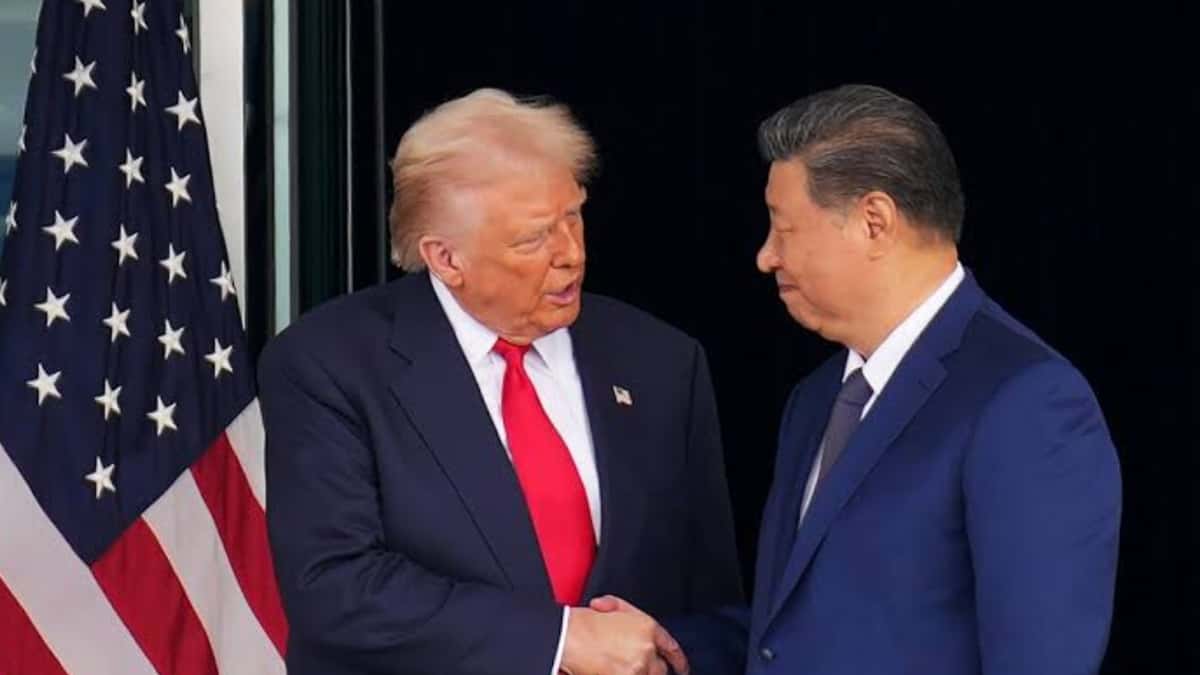
Donald Trump and Xi Jinping agreed to draft an action plan to stabilise US-China relations at a bilateral meeting in Shenzhen on Thursday, November 19, but announced no new public commitments on rare earths, semiconductors or trade restrictions.
The meeting took place on the sidelines of the Asia-Pacific Economic Cooperation forum. China’s foreign ministry described it as positive and constructive, while Trump said the bilateral trade mechanism established in May had helped move the relationship towards greater balance. The two leaders backed implementing understandings reached in earlier meetings, but the main economic disputes remain unresolved.
Magnet manufacturing highlights the supply-chain gap
Access to rare earths and other strategic minerals remains a central point of friction. The materials are used in electric vehicles, defence equipment, electronic components and artificial-intelligence technologies. China holds a dominant position in processing rare earths and making permanent magnets, leaving US industries reliant on supply chains that Washington is trying to diversify.
International Energy Agency data cited in a November sector analysis put US neodymium-iron-boron magnet manufacturing capacity at about 4,500 tonnes a year in 2025, compared with roughly 210,000 tonnes in China. The disparity illustrates the scale of the manufacturing gap, not just the availability of mined material. New US supply-chain investments are under way, but several projects are expected to take years to begin operating.
China has temporarily suspended restrictions on some exports, but the Shenzhen meeting produced no public commitment guaranteeing a lasting resolution. That leaves access to strategic materials exposed to changes in export controls as the two governments continue negotiations.
Existing tariff truce leaves technology restrictions in place
The leaders met after Washington and Beijing extended their tariff truce through January 10, 2027, averting an immediate escalation of reciprocal duties. In September, the governments reached understandings to recommend more favourable tariff treatment for goods worth US$30 billion in each direction. They also set up dialogue on investment, agricultural market access and risks associated with artificial intelligence.
Those steps have not resolved disputes over advanced technology. The United States continues to restrict Chinese access to some semiconductors used in AI, while China can influence strategic-material supplies through export controls. No substantial changes to those policies were announced in Shenzhen, and the existing truce does not itself settle the technology or minerals issues.
Chile’s export exposure links the talks to copper
The relationship matters to Chile because China is the country’s largest export market and a major source of global copper demand. Chilean exports to China totalled US$31.089 billion in the first nine months of 2026, or 33.1% of the national total, according to the Undersecretariat of International Economic Relations (Subrei). The United States ranked second, taking US$15.967 billion, or 17%.
Copper accounted for 50.1% of Chile’s export value in the first half of 2026, official foreign-trade statistics show. Continued US-China dialogue could reduce uncertainty around trade, but does not by itself guarantee stronger copper prices or higher demand.
The next scheduled diplomatic checkpoint is the G20 summit in the United States in December, ahead of the tariff truce’s January 2027 expiry. Any durable change to mineral supply, technology restrictions or tariffs would require further agreements from the two governments.
More in Critical Minerals

Perpetua explores US$55.5 million tungsten funding path, with Stibnite unproven
An unnamed aerospace and defence company may back work in Idaho, but Stibnite’s existing gold-and-antimony approvals do not cover a separate tungsten operation.

Kenya picks Frontier Minerals for Mrima Hill as rival consortia challenge award
The proposed development still has to clear a licensing process before exploration can begin.

Global X sees AI growth colliding with long lead times for new mines
A one-gigawatt AI facility could need 27,212 tonnes of copper, alongside demand from power grids, electric vehicles and defence.