
Lithium hydroxide gains 8.51% on Comex, but the reported range is flat
The market sheet offers a prior-close comparison, while its other fields leave the session’s path unclear.
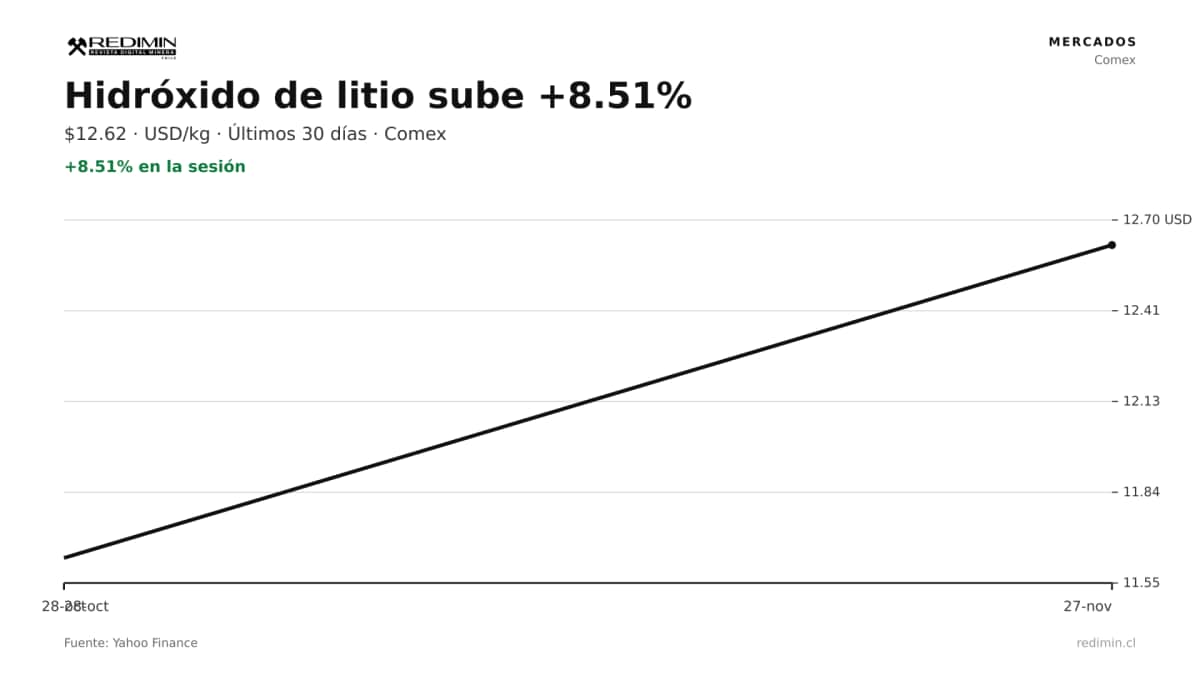
Why it matters: The move offers a price signal for a battery-material market, but the reported range limits what investors can infer about trading during the session.
US$12.62/kg — listed lithium hydroxide price
8.51% — daily gain against the previous close
US$11.63/kg — previous close
3 — reported volume; the unit was not specified
Lithium hydroxide was listed at US$12.62 per kilogram on Comex on November 17, 2026, up 8.51% from the previous close of US$11.63. The market data was updated at 15:06:30 UTC. The reported session low and high were both US$12.62/kg, so the figures show the increase against the prior close but do not describe price movement within the session.
Daily range matches the quoted price
The stated range of US$12.62 to US$12.62/kg matches the listed price. That leaves no reported spread between the session’s minimum and maximum, despite the gain shown against the previous close.
The percentage change is calculated from the difference between US$11.63 and US$12.62. It is an 8.51% increase, not an 8.51-percentage-point move; percentage points are used to compare two percentage figures.
Annual range offers no historical context
The market sheet also gives a 52-week range of US$12.62 to US$12.62/kg, identical to both the current price and the daily range. It provides no historical series or explanation of how that range field was compiled, so the figure cannot establish the price trajectory over the past year.
Volume was recorded as 3, but the data does not identify the unit or explain what each unit represents. The listing also provides no explanation for the price move or recent context from companies and projects linked to lithium hydroxide. Further interpretation of the trading session therefore depends on data beyond the reported price, prior close and ranges.
More in Critical Minerals
Cyclic Materials picks German site, but its five-plant European plan remains unbuilt
Discarded motors, hard drives and industrial equipment are the proposed feedstock for a facility intended to supply a separate chemical hub.
China extends US mineral export pause, but licensing controls remain
For US manufacturers, finding alternatives means more than locating ore: gallium and germanium need specialized recovery from other production streams.
Lithium Atlas puts 500-plus projects under scrutiny over their land footprint
A two-year inventory tracks ownership and projected output, but its territorial overlays shift attention from how much lithium to where projects sit.