
Legacy Minerals adds scandium to NiCo Young, but recovery remains unverified
The addition lifts the project's scale, while a pending licence and a key processing assumption shape what can be counted on.
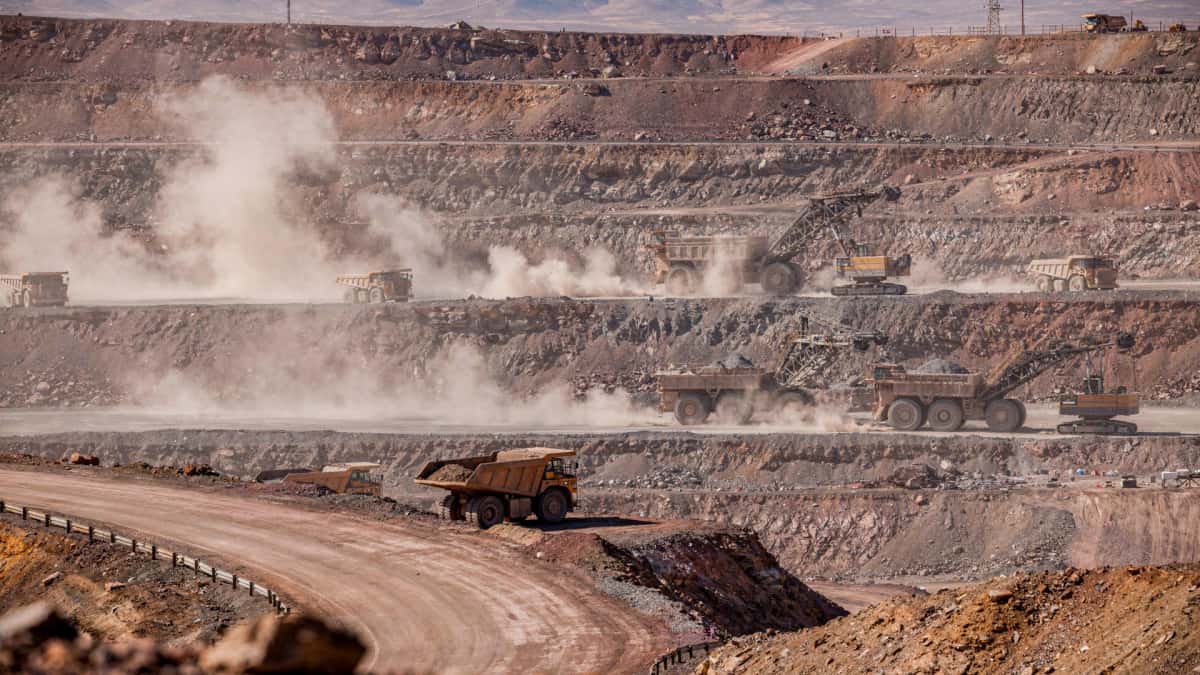
Why it matters: NiCo Young's new scandium estimate could broaden the project's critical-mineral profile, but its contribution depends on recovery that has not been confirmed for development.
6,400 tonnes — inferred contained scandium at Thuddungra East and West.
253.6 million tonnes — total NiCo Young resource, including Ardnaree.
80% — scandium recovery assumption used in the revised nickel-equivalent calculation.
Legacy Minerals has added an inferred resource of 6,400 tonnes of scandium at its NiCo Young project in New South Wales, Australia. The estimate covers the Thuddungra East and West deposits and lifts the project's total resource tonnage by 51%, but the assumed scandium recovery still needs further metallurgical testing.
Thuddungra is estimated to contain 200 million tonnes grading 0.45% nickel, 0.04% cobalt and 31.9 parts per million (ppm) scandium. Including the unchanged Ardnaree resource of 53.6 million tonnes, NiCo Young totals 253.6 million tonnes at 0.49% nickel and 0.04% cobalt. The combined inventory contains about 1.25 million tonnes of nickel and 114,000 tonnes of cobalt.
Scandium drives more than half of Thuddungra's nickel-equivalent grade
The update adds Thuddungra West for the first time and revises the deposit models using historical drilling. Legacy reports Thuddungra above a 0.60% nickel-equivalent cut-off and within an optimised pit, assuming processing by high-pressure acid leach (HPAL). The revised estimate increases contained nickel by 26% and cobalt by 18%.
Nickel equivalent combines metals into a common measure using specified price and recovery assumptions. At Thuddungra, scandium accounts for more than half of the revised nickel-equivalent grade. That calculation assumes 80% scandium recovery and a long-term price of US$3,000 per kilogram for scandium oxide supplied from outside China. Legacy said the recovery assumption is supported by historical test work, but further metallurgical work is required to confirm it. It should not be read as a demonstrated recovery rate for a project development plan.
The estimate's 6,400 tonnes of contained scandium equate to about 9,800 tonnes of scandium oxide by chemical conversion, before extraction and processing losses. Scandium occurs in the same lateritic profile as nickel and cobalt, with the highest average grades in the upper limonite horizon.
Licensing and development options remain open
Of Thuddungra's 200 million tonnes, 176 million tonnes are within granted tenements and 24 million tonnes lie within the pending application for the Thuddungra West licence. Ardnaree contributes 53.6 million tonnes to the project total and was unchanged in the update.
Legacy said it will use the revised model to assess strategic partnerships and development alternatives. Those options include a non-binding memorandum of understanding with Cobalt Blue; the memorandum is not a development agreement. Chief executive Christopher Byrne said Legacy owns the project outright and that it has no private royalties or encumbrances. The company has announced neither an investment decision nor a construction timetable.
Syerston provides a market reference, not a demand guarantee
Scandium is used in aerospace alloys and solid oxide fuel cells, including power generation and backup applications for critical infrastructure. US Geological Survey-attributed data cited in the company material indicate that 2025 global scandium production came exclusively from byproduct sources, with China the leading producer. A new project could provide buyers with another potential supply source, but market growth remains uncertain.
Sunrise Energy Metals approved development of its Syerston project, also in New South Wales, on 2 November 2026. The plan estimates US$322 million in investment and targets production of 60 tonnes of scandium oxide annually, with first production expected in the second half of 2028. Lockheed Martin has an option to buy the first 15 tonnes a year for each of the initial five years, subject to binding purchase agreements. Sunrise chief executive Sam Riggall has projected demand of about 300 tonnes a year by 2030 and 500 to 600 tonnes by 2035; those are company projections, not committed production or offtake. For NiCo Young, the next technical test is whether additional metallurgical work can substantiate the recovery assumption underpinning scandium's contribution to the estimate.
More in Critical Minerals
Antofagasta court rejects Coyo challenge to Codelco-SQM lithium pact, for now
Coyo argued SQM was selected without a public tender, putting the structure of Chile’s state-led lithium strategy under scrutiny.
BYD and Tsingshan abandon US$523m Chile lithium plans as Corfo seeks a replacement
Chile offered preferred SQM lithium pricing through 2030 to attract battery-material makers; a new Albemarle allocation is the next test.
BLM advances Century Lithium’s Angel Island review, but mine approval remains ahead
Nevada’s proposed open pit, processing plant and water infrastructure are all within the scope of the federal environmental review.