
Latin America’s US$220bn minerals opportunity depends on what happens after mining
Copper and lithium give the region leverage, but its ability to capture more value across global supply chains remains uneven.
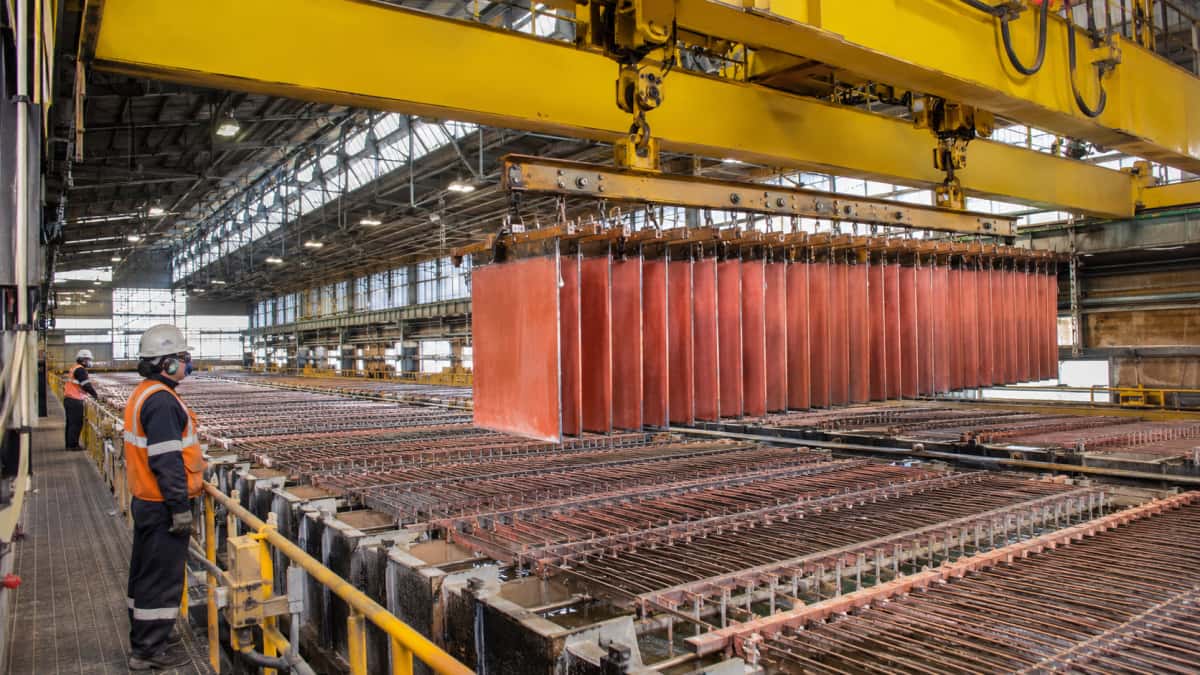
Why it matters: The region’s mineral endowment gives it a strategic position, but limited processing capacity constrains how much value it can capture beyond extraction.
38.3% — Latin America’s share of global lithium reserves.
32.5% — its share of global copper reserves.
US$185 billion to US$220 billion — projected value from critical-mineral activity by 2035, depending on regional processing capacity.
Around 20% — the share of major energy minerals refined in Latin America and the Caribbean in 2025, excluding lithium.
Latin America and the Caribbean could generate about US$185 billion from activity linked to critical minerals by 2035, with the value rising to US$220 billion in a scenario that develops more regional refining and processing. The additional US$35 billion is a projection, not committed investment or guaranteed revenue, and highlights the region’s challenge: converting its mineral position into a broader role in global industrial supply chains.
Copper and lithium underpin the region’s position
Latin America holds about 38.3% of the world’s lithium reserves and 32.5% of its copper reserves. The region also accounts for around 40% of global copper production and one-quarter of lithium output.
Chile is a major copper producer and has an established lithium industry at the Salar de Atacama. Peru’s mineral base includes copper and molybdenum, while Argentina is advancing a portfolio of lithium projects. Bolivia has significant lithium resources, but turning them into sustained industrial production depends on technological and commercial hurdles.
Copper demand is expected to grow with investment in electricity networks, renewable generation, electric vehicles and data centres. Yet projects currently planned are projected to leave a gap of about 25% against primary copper supply needs by 2035. For Chile and Peru, adding supply will depend not only on new discoveries but also on extending mine lives, modernising concentrators and improving metallurgical recovery. Lower ore grades, energy costs, water availability and permitting timelines remain constraints.
Lithium demand could multiply over the next 15 years as electric vehicles and energy storage expand. But regional competitiveness will depend on extraction technologies, operating costs, infrastructure, capital and regulation. Price swings and changes in battery chemistry mean rising demand alone does not guarantee sustained higher prices or uniform benefits for producers.
Processing capacity is the value-chain test
In 2025, the region refined an average of about 20% of the major energy minerals extracted locally, excluding lithium. As a result, much of the material is processed elsewhere. Building more local capacity could include smelting, refining, chemical processing and production of advanced materials, as well as opportunities for regional engineering, automation and maintenance suppliers.
The scale of the industrial challenge is clear in China’s position: it controls about 70% of global lithium refining, around 85% of separation of rare earths used in magnets and more than 90% of battery-grade graphite production. Efforts by the United States, Europe and Asian economies to diversify supply chains could create openings for Latin American partnerships, offtake agreements and technology transfer. Competing for that business, however, requires substantial investment, reliable electricity, logistics and skilled workers.
Brazil adds rare earths and niobium to the mix
Brazil’s estimated 21 million tonnes of rare-earth oxides give it one of the largest known resource bases. These elements are used in permanent magnets for electric motors and wind turbines, as well as electronics and specialised industrial applications. Developing a competitive industry requires separation and purification facilities and the technical capacity to produce magnetic materials—not extraction alone.
Brazil is also estimated to account for about 93% of global mined niobium production in 2025. Its uses include strengthening steel and producing specialised alloys, underscoring that the region’s critical-mineral opportunity extends beyond battery materials.
Water, environmental permitting and community engagement will shape project development, including in Chile’s north and the Andean salars. The next step for the region is to translate resource potential into operating industrial capacity, while meeting those infrastructure and environmental requirements.
More in Critical Minerals
Latin America’s critical-minerals race puts processing capacity in play
Washington is expanding cooperation with regional producers as Chinese companies retain stakes in key projects.
Red Mountain maps Oaky Creek antimony, but 2027 drill targets remain unresolved
Initial RC holes found antimony, but the structural controls that should guide deeper tests still need to be interpreted.
US commission puts Argentina’s lithium and copper supply chains under scrutiny
Chinese investment links brine production to Asian battery supply chains, but project ownership and commercial arrangements vary.