
InfinitEnergy secures US$250,000 to develop solid-state cells without pressure systems
Solid electrolytes can lose contact with electrodes as cells cycle, leaving the company to prove its design can avoid added mechanical support.
Why it matters: If the cells can maintain performance without added pressure hardware, battery makers could have more flexibility in system design and integration.
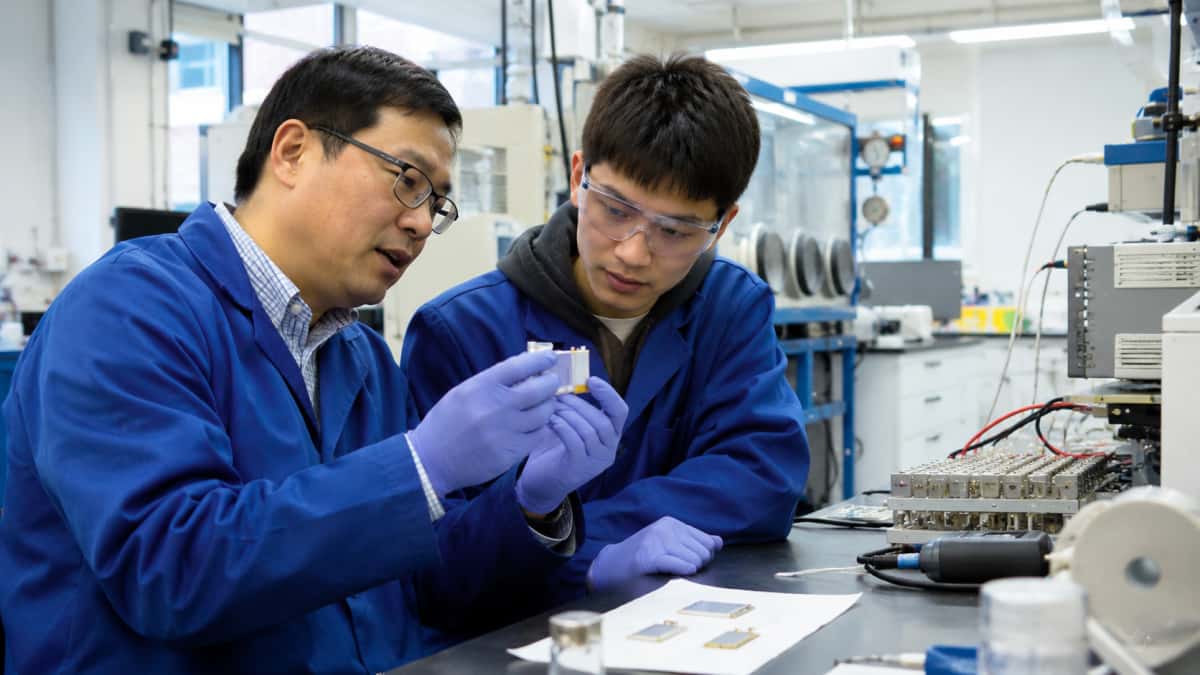
InfinitEnergy has received US$250,000 from the New York State Energy Research and Development Authority (NYSERDA) to develop solid-state batteries designed to operate without external pressure systems. The US technology company is working with specialists linked to Syracuse University on cells intended to combine high energy density with repeated charge and discharge cycling.
The funding supports continued technology development; it is not evidence that the design is commercially viable at scale. The company will need to show that its cells can retain their operating characteristics over time and that the approach can be manufactured consistently and competitively.
Solid electrolytes create an interface challenge
Solid-state batteries replace some liquid components found in conventional batteries with solid materials. The configuration has potential advantages for safety, energy density and system design, but maintaining contact between the electrodes and solid electrolyte can be difficult.
Materials may change dimension during charging and discharging, disrupting internal interfaces. Some designs address that problem by applying pressure to the cells. The associated mechanisms can add weight, occupy space and increase system complexity.
InfinitEnergy’s project aims to reduce those mechanical requirements. The available details do not specify the battery chemistry or explain how the company’s architecture maintains contact between components. Its ability to do so through repeated cycling remains a key technical question.
Vehicle use depends on durability and performance
Reducing mechanical components could make batteries more compact and easier to integrate into electric vehicles, but that benefit would depend on cell performance holding up in operation. The project will need to assess storage capacity, charging speed, performance across different temperatures and material degradation.
Industrial production poses a separate hurdle: manufacturing processes must produce cells consistently and at a competitive cost. The award enables further development, but the work still needs to progress through validation, prototype development and testing under operating conditions before commercial-scale potential can be judged.
Mineral demand will depend on the final design
The development of new battery architectures matters to suppliers of materials used in energy storage. Depending on their chemistry, solid-state batteries may use lithium, copper, graphite and other materials in electrodes and electrical components. Changes in cell design could affect material quantities and purity requirements, but the source material does not identify InfinitEnergy’s chemistry or its expected material mix.
For Chile, a producer of copper and lithium, the technology’s eventual commercial prospects are relevant to battery supply chains. A change in architecture alone does not establish that any particular mineral will be displaced: chemistry, manufacturing efficiency and end-product cost will shape effective demand.
The next test is whether InfinitEnergy can demonstrate that its cells retain performance without external pressure systems; the award itself does not establish durability or manufacturing economics.
More in Critical Minerals
US commission puts Argentina’s lithium and copper supply chains under scrutiny
Chinese investment links brine production to Asian battery supply chains, but project ownership and commercial arrangements vary.
China’s 94% rare-earth magnet share exposes a US military supply risk
An audit traced critical minerals to thousands of components across US weapons systems as Washington works to rebuild processing capacity at home.
Argentina targets Río Turbio coal waste for rare earths, but recovery remains unproven
SEGEMAR will assess waste rock, sludge and ash at the Patagonian operation, broadening Argentina’s search beyond conventional deposits.