
Argentina targets Río Turbio coal waste for rare earths, but recovery remains unproven
SEGEMAR will assess waste rock, sludge and ash at the Patagonian operation, broadening Argentina’s search beyond conventional deposits.
Why it matters: Testing coal waste for critical minerals could add a new exploration route for Argentina, but any supply potential depends on grades and recovery economics.
190,000 tonnes — identified rare-earth resources in Argentina, according to SEGEMAR studies.
3.3 million tonnes — estimated potential resources nationally; these are not reserves and are not attributed to Río Turbio.
US$75 million — funding announced by the US Department of Energy in July 2026 for five coal-derived critical-mineral projects.
17 elements — the number of chemical elements classified as rare earths.
Argentina’s state-owned Yacimientos Carboníferos Río Turbio (YCRT) will work with the Argentine Geological and Mining Survey (SEGEMAR) to assess whether waste from the Río Turbio coal complex in Santa Cruz contains rare earths at concentrations that could justify further study. The agreement, announced by the provincial government on November 23, 2026, covers waste rock, industrial sludge and ash. No economically exploitable rare-earth reserves have been established at the site.
Three waste streams under review
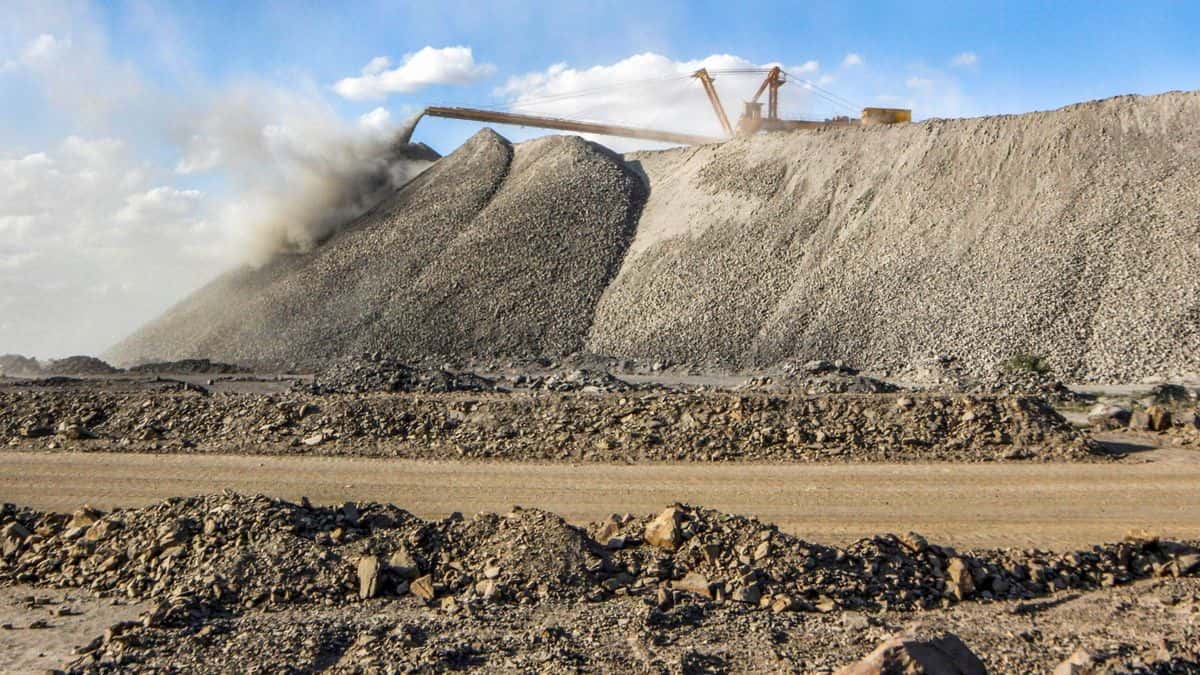
The characterization campaign will examine material discarded during mining, coal processing and power generation. Waste rock consists of material removed during extraction; sludge comes from processing operations; and ash is produced by burning coal for energy.
YCRT administrator Pablo Gordillo said earlier research involving the National Institute of Industrial Technology (INTI) detected traces of industrially relevant elements, including selenium and vanadium. Neither is a rare earth, but those findings prompted more systematic analysis of the waste’s mineral composition.
The new work is intended to identify specific elements and measure their concentrations. Those results would help determine whether metallurgical testing is warranted. The agreement does not establish that the materials can be processed economically, or that a resource exists.
National estimates do not define Río Turbio’s potential
SEGEMAR’s figures of about 190,000 tonnes of identified rare-earth resources and 3.3 million tonnes of potential resources apply to Argentina nationally. They are not commercially mineable reserves, and neither figure has been assigned to the Río Turbio complex.
The approach is an alternative to conventional exploration: it tests material already extracted or generated by industrial activity. Its viability would depend on the concentrations found, the ability to recover the elements, and the costs and environmental requirements of processing the secondary waste.
International interest in such sources is growing. In July 2026, the US Department of Energy announced US$75 million for five pilot projects to recover rare earths and other critical materials from coal and coal-derived products. China is also pursuing ways to recover lithium and rare earths from coal waste. Rare earths are used in products including permanent magnets, electric motors, wind turbines, electronics and aerospace systems.
Diversification remains conditional on testing
YCRT’s complex combines mining, power generation, rail transport and port operations. The state company is also considering options involving coal industrialization and the possible use of gas in power generation. The agreement with SEGEMAR additionally provides for seismograph installation and preventive geological studies in the operating area.
The waste assessment is an early-stage investigation, not a production plan. Its next technical gate is to establish the materials’ composition; any decision to proceed would also require metallurgical tests and economic and environmental evaluation.
More in Critical Minerals

China’s 94% rare-earth magnet share exposes a US military supply risk
An audit traced critical minerals to thousands of components across US weapons systems as Washington works to rebuild processing capacity at home.
France plans rare-earth reserves as China’s magnet-processing dominance tests supply security
French officials have outlined stockpiling and purchasing tools, but the plan’s scale and the suppliers it could draw in remain unsettled.

Chile-India trade pact nears finish as mineral access tests mining policy
India’s next tariff offer is due in coming weeks, but the pact’s critical-minerals chapter still has to accommodate competing priorities.