
Chile-India trade pact nears finish as mineral access tests mining policy
India’s next tariff offer is due in coming weeks, but the pact’s critical-minerals chapter still has to accommodate competing priorities.
Why it matters: A broader Indian market could help diversify Chile’s mineral exports, but the negotiations have not produced supply contracts or investment commitments.
15 of 17 chapters — closed in the proposed Chile-India CEPA.
US$5,809 million — Chilean exports to India from January to October 2026.
92.1% — year-on-year increase in those exports.
16.2% and 36.7% — average tariffs on Chilean products and agro-industrial products, respectively.
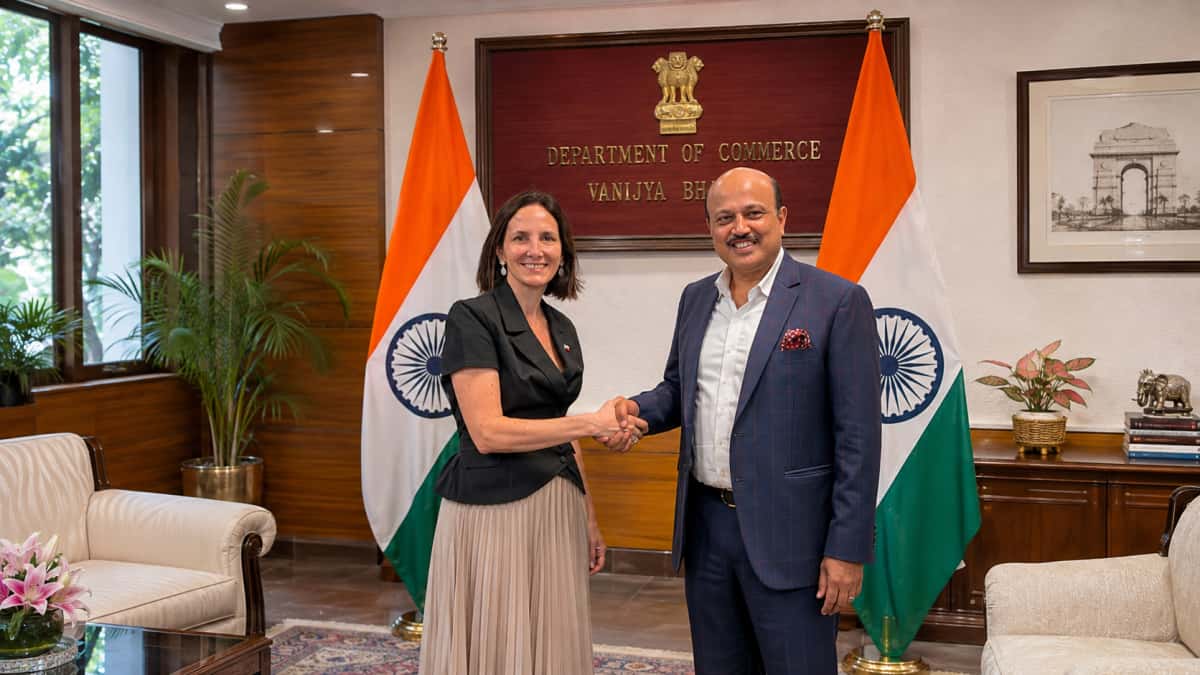
Chile and India have narrowed negotiations on their proposed Comprehensive Economic Partnership Agreement (CEPA) to market access and critical minerals, with copper and lithium among the central issues. At a 23 November meeting in New Delhi, officials moved closer on the two remaining chapters, while India prepared a new tariff proposal that Chile expects in the coming weeks.
Chile aims to conclude technical negotiations between late 2026 and early 2027. The government has said cooperation on minerals must remain consistent with its broader trade policy, including open and non-discriminatory terms for international partners.
Market access and minerals remain unresolved
India is seeking secure access to raw materials for electric vehicles, batteries, energy infrastructure and power transmission. Chile’s copper and lithium production gives it a potential role in those supply chains, but the talks have not established exclusive supply rights or preferential access to Chilean resources.
The two countries began negotiations in April 2025, holding four in-person rounds alongside technical meetings. Their existing Partial Scope Agreement provides tariff preferences for a limited range of products; the CEPA is intended to broaden that framework and cover additional economic disciplines.
Any investment or development involving lithium would still need to comply with Chile’s special legal regime for the mineral. Copper-related opportunities could also extend beyond concentrate and cathode sales to mining services, processing technology, equipment and energy-efficiency solutions, though the negotiations have not produced specific project commitments.
Indian trade gains ground for Chilean exports
Chilean exports to India rose by US$2,785 million year on year over the first ten months of 2026, making India the country’s fourth-largest export destination overall. In the first nine months of the year, it also became the fifth-largest destination for Chilean copper exports, moving ahead of Brazil.
Shipments included gold, iodine, lithium, forest products and food as well as copper. India’s growth as a buyer could help Chile diversify export markets, while China remains a major destination for Chilean copper. The reported tariff averages underline the access issues still at stake, particularly for agro-industrial products.
A negotiated deal would still need approval
The discussions have also covered possible Indian investment in Chilean digital infrastructure and data centres. Such facilities could create demand for electricity, cooling systems and copper conductors, while potential areas of technical cooperation include mining automation, artificial intelligence and digital operations. These opportunities remain under evaluation; no investment has been formally committed.
After technical negotiations conclude, the agreement would still require signature and legislative approval in Chile before it could take effect. The immediate next step is India’s revised market-access proposal, alongside continued work on the critical-minerals chapter.
More in Critical Minerals
Core Lithium ships first Finniss cargo, but final sale value is still open
Finniss now faces a different test: turning a restart and a newly commissioned plant into a consistent export stream.
Redodo fits 200 Ah into a Group 31 battery, but runtime hinges on demand
The 12 V LiFePO4 unit targets campers and RVs where adding storage can mean giving up scarce compartment space.
Tianqi Lithium’s Sichuan deal adds Shaotangou, but assumed debt lifts the cost
The deposit is close to Tianqi’s Cuola mine, but the potential infrastructure savings have not been quantified.