
COP31 fails to adopt Antalya Pact, but critical minerals enter a separate decision
Talks ran two days over schedule, with fossil-fuel language and climate finance still dividing governments.
Why it matters: The failure to agree on fossil-fuel transition and adaptation finance leaves those issues without new COP31 commitments, while critical-mineral value chains gain formal recognition in just-transition policy.
23% — approximate share of global final energy consumption currently met by electricity.
35% by 2035 — proposed global electricity share target in the rejected Antalya Pact.
2027 — year negotiators are due to continue work on an international just-transition mechanism.
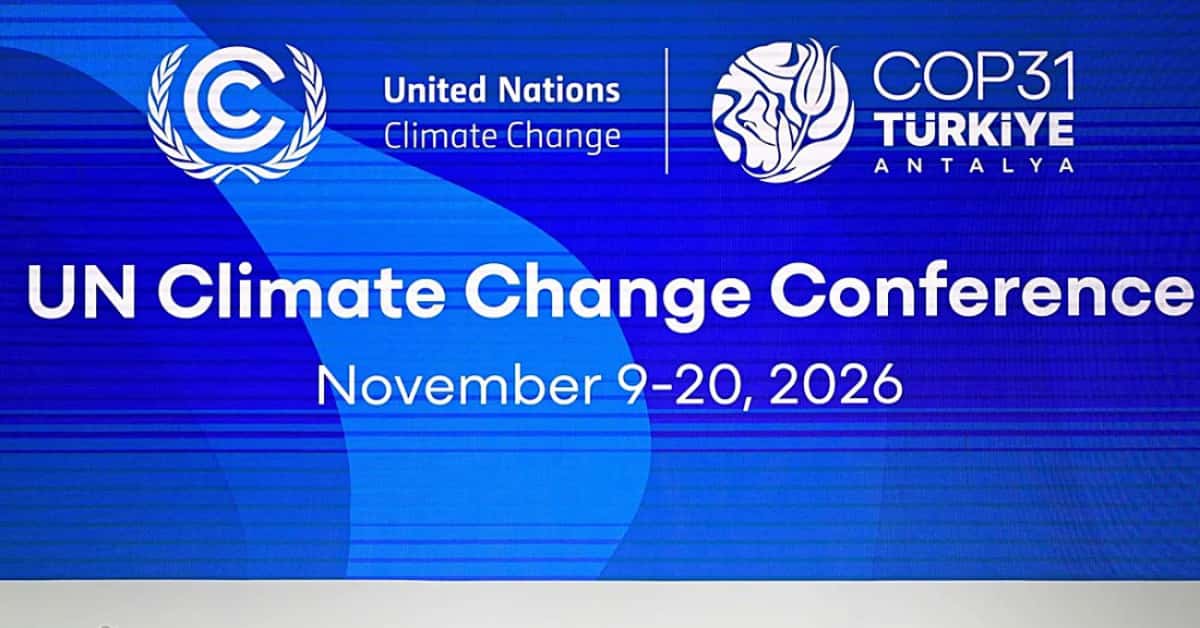
The United Nations climate conference in Antalya, Turkey, ended on 22 November without adopting the Antalya Pact, after the European Union and other countries rejected the proposed text over its lack of explicit fossil-fuel commitments and unresolved climate-finance provisions. Countries did, however, approve a separate decision recognising the role of critical minerals in just-transition value chains.
Negotiations ran two days beyond schedule. COP31 president and Turkish Environment Minister Murat Kurum said there were not the conditions to approve the Pact, while Australian Climate Change and Energy Minister Chris Bowen, who led the negotiations, described the outcome as deeply disappointing and said positions on fossil fuels and climate finance were irreconcilable.
Fossil-fuel language divides negotiating blocs
The EU, the United Kingdom, Panama and several Pacific island states objected to the proposed text because it did not directly refer to phasing out fossil fuels. Irish Environment Minister Darragh O'Brien, speaking for the EU’s 27 member states, said the bloc could not support a climate declaration that omitted the principal source of emissions driving global warming.
The EU’s position drew on the COP28 agreement in Dubai in 2023, where countries first recognised the need to transition away from fossil fuels in energy systems. Oil-producing countries, including Saudi Arabia, defended a different approach to the future of hydrocarbons. Negotiators also disagreed over carbon capture and removal technologies: some viewed them as necessary emissions-reduction tools, while others warned they could prolong fossil-fuel use.
The rejected Pact would have set a goal of increasing electricity’s share of global final energy consumption to 35% by 2035, from about 23% currently. It also proposed expanding clean energy, storage and grid modernisation, alongside gigatonne-scale carbon capture, utilisation and storage capacity by 2035. Those proposals did not become new multilateral COP31 commitments.
Climate adaptation finance was another point of contention. The draft proposed working towards tripling those resources by 2035, but countries remained divided over implementation and the financial responsibilities of developed nations. The Antalya outcome does not change existing Paris Agreement commitments or decisions from earlier climate conferences.
Separate decision recognises mineral value chains
Despite the failure to reach agreement on the Pact, countries adopted separate decisions, including one under the United Arab Emirates Just Transition Work Programme. It recognises the importance of equitable value chains, local value addition and enabling developing countries to participate in higher-value segments of regional and global production, including chains linked to critical minerals.
The decision also addresses Indigenous peoples’ rights, community participation, labour conditions and the environmental and social effects of industrial transformation. For mineral-producing economies such as Chile, the recognition brings critical-mineral supply chains further into multilateral discussions on a just transition. It does not set specific production targets or financing commitments for those chains.
Countries agreed to continue developing an international just-transition mechanism. Its functions and operating arrangements are to be negotiated during 2027, with a decision intended for adoption at COP32 in Addis Ababa, Ethiopia, in November 2027.
UN Secretary-General António Guterres expressed deep disappointment at the lack of consensus and called for faster emissions cuts, clean-energy deployment and financial support for vulnerable countries. UN climate chief Simon Stiell also acknowledged the setback while pointing to progress on just transition and other cooperation initiatives. The European Commission reaffirmed its support for multilateral climate talks on 23 November. Negotiations on fossil fuels and climate finance are expected to continue at COP32.
More in Critical Minerals
Blue Moon tests tungsten ore sorting at Springer, but plant fit remains unresolved
Tests used selected material from historic stockpiles, leaving open how XRT would perform on representative mine feed.
China’s electric truck boom adds lithium demand as mine supply returns
Heavy-duty models carry larger battery packs, while previously idled operations are restarting across the lithium supply chain.
Western Australia gives WA1’s Luni niobium project strategic status, but permits remain
A state-backed coordination channel arrives as WA1 weighs how to finance a project that still needs detailed studies and permits.