
China’s electric truck boom adds lithium demand as mine supply returns
Heavy-duty models carry larger battery packs, while previously idled operations are restarting across the lithium supply chain.
Why it matters: Heavy-duty electrification is creating another source of lithium consumption, but its growth must compete with returning supply and uncertain prices.
600,000 electric trucks — sold in China from January to October 2026, up 45% year on year.
262,000 electric heavy trucks — sold over the same period, a 68% increase.
95% higher — SFA Oxford’s revised 2026 estimate for lithium demand from heavy electric vehicles versus its projection a year earlier.
10% lower — SQM’s average lithium selling price in the latest quarter compared with the previous quarter.
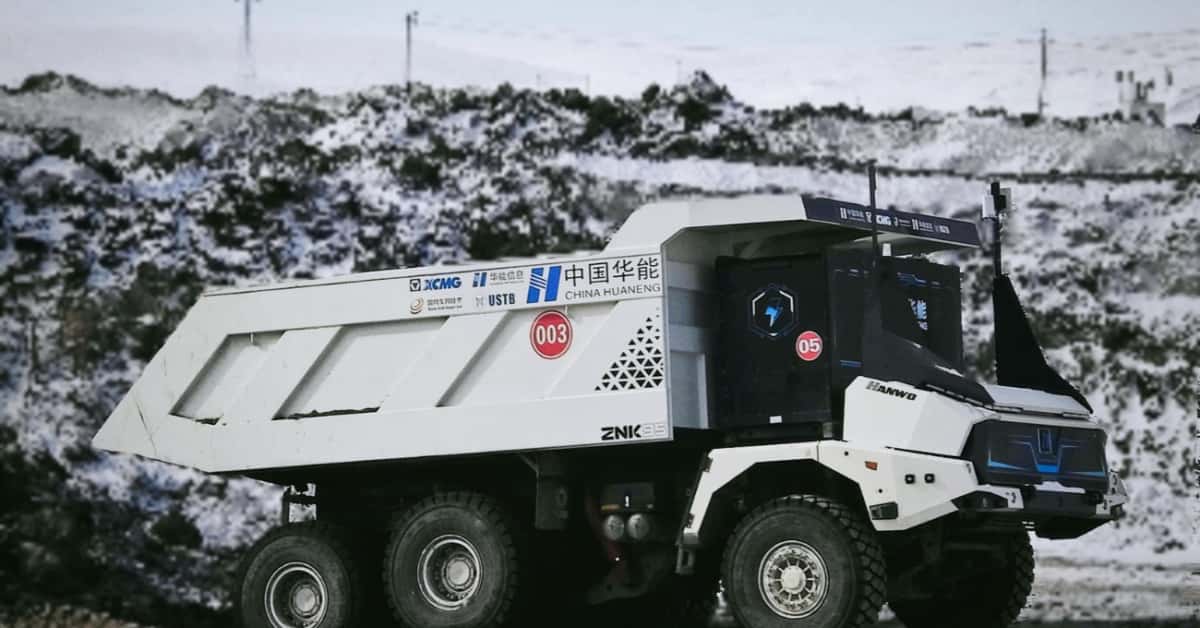
China’s electric truck sales reached 600,000 in the first 10 months of 2026, adding a fast-growing source of lithium demand even as renewed mine output and price pressure cloud the market outlook. The vehicles accounted for 30% of truck sales across categories, according to BofA Global Research.
The expansion was strongest in heavy transport. Sales of electric heavy trucks rose 68% to 262,000 units from January to October, a segment of particular interest to lithium producers because its batteries require more lithium than passenger-car batteries.
Larger batteries lift the heavy-truck demand outlook
SFA Oxford raised its estimate for 2026 lithium demand from heavy electric vehicles by 95% compared with the forecast it held a year earlier. The revised outlook reflects the speed of adoption in China, where operating costs and developing technologies are helping extend electrification to higher-tonnage transport.
A study published on November 17 by the International Council on Clean Transportation (ICCT) found that China recorded about 253,000 sales of zero-emission medium- and heavy-duty vehicles in the first half of 2026, including buses, up 54% year on year. Heavy trucks and zero-emission tractor units accounted for about 140,000 of those sales. Battery-electric models represented roughly 33% of total sales in the heavy segment.
The ICCT report said many heavy electric trucks on the market have battery capacities of 200 to 600 kilowatt-hours and typical ranges of 200 to 700 kilometres. Battery swapping is also gaining a role in high-use settings such as ports, mines and steel plants, where regular routes can support the exchange of depleted packs for charged ones.
Arcane Green Metal Fund investment manager YJ Lee estimated that electric trucks could absorb about 7% of global lithium supply in 2026, rising to 12% by 2030. He said that later share would be equivalent to the battery demand of as many as 11.5 million electric cars.
SQM points to trucks as one of several demand drivers
In results published November 17, Chilean producer SQM cited heavy-duty truck electrification, alongside battery energy storage, as an emerging source of growth for the global lithium market. The company estimated that worldwide lithium demand could rise about 30% in 2026 and exceed 3 million metric tonnes by 2030.
SQM reported sales of 232,300 tonnes of lithium and derivatives in the first nine months of 2026, up 28% from the same period in 2025. Its Novandino division, which includes its Salar de Atacama lithium operations, accounted for 211,500 tonnes. Truck electrification is one component of that broader demand picture, not its sole driver.
Returning output keeps prices in focus
The demand expansion has not removed concerns about potential oversupply. New mine production and the restart of idled operations have strengthened expectations of abundant supply, while uncertainty remains over growth in other battery applications, particularly energy storage.
SQM said its average lithium selling price fell 10% quarter on quarter in its latest reporting period. It also warned that prices observed recently in the market could lead to a further decline in the fourth quarter. The extent to which electric trucks alter the market balance will therefore depend on both the pace of adoption and the evolution of mine supply and battery demand across other sectors.
More in Critical Minerals
Western Australia gives WA1’s Luni niobium project strategic status, but permits remain
A state-backed coordination channel arrives as WA1 weighs how to finance a project that still needs detailed studies and permits.
Prairie Lithium brings first brine to surface in Saskatchewan, with processing still ahead
The project’s first phase hinges on integrating a four-column DLE unit with the well and site infrastructure.
DR Congo’s cobalt export halt returns as quotas fail to arrest price slide
The 2026–27 export cap had not stopped prices falling as weaker consumption and rising inventories kept supply ahead of demand.