
Prairie Lithium brings first brine to surface in Saskatchewan, with processing still ahead
The project’s first phase hinges on integrating a four-column DLE unit with the well and site infrastructure.
Why it matters: Brine recovery gives Prairie Lithium material for further testing, but commercial output depends on processing equipment and systems still to be integrated.
150 tonnes a year — planned initial-phase capacity, expressed as lithium carbonate equivalent (LCE)
C$6.3 million — interest-free financing approved by the Government of Canada
A$10 million — approximate value of refining technology and equipment included in the Hydro Lithium agreement
100% — share of planned initial-phase production covered by the offtake agreement
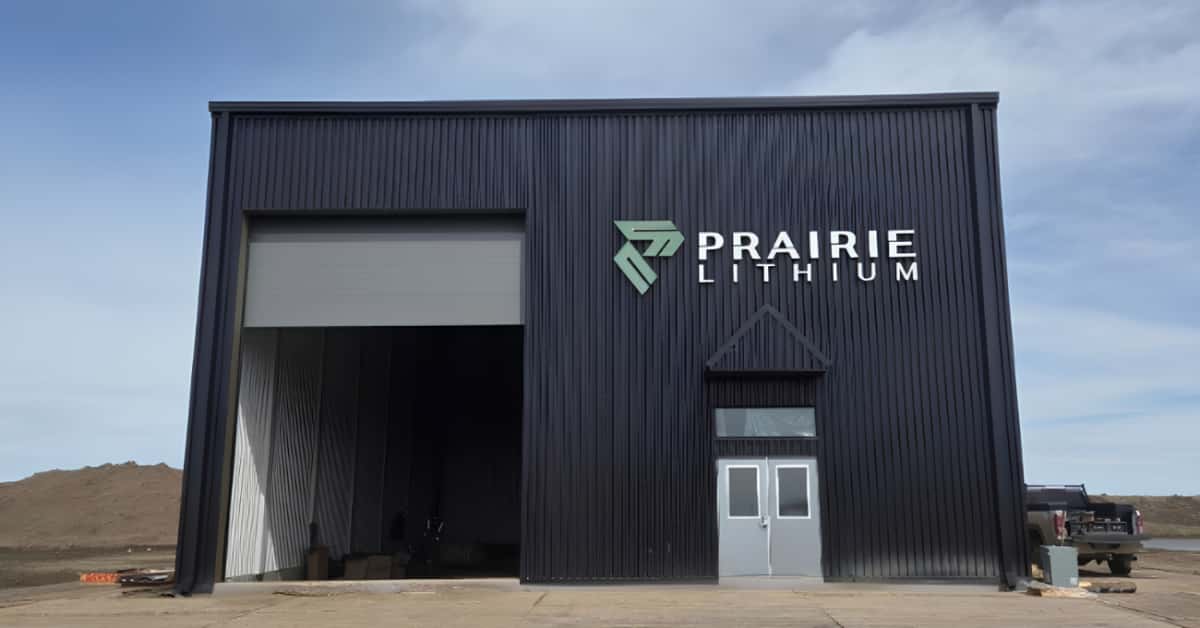
Prairie Lithium has recovered brine to surface for the first time from production well Pad #1 at its project in Saskatchewan, Canada, after completing well intervention and site expansion work. The brine will be used in further metallurgical testing; the project has not yet begun commercial production.
The company said the work met its target for brine production testing in the fourth quarter of 2026. It re-entered the well and perforated productive zones in the Duperow formation before bringing the fluid to surface. The result provides material for testing, but is an upstream step ahead of commissioning processing systems.
Duperow brine will feed further testing
Prairie Lithium plans to use the recovered brine in metallurgical tests to support development of the project’s first phase. That phase is designed around a four-column direct lithium extraction (DLE) unit, with equipment already transported to site.
The process is intended to selectively recover lithium from underground brine and produce a lithium chloride concentrate. The company’s stated initial-phase design capacity is up to 150 tonnes a year of LCE, to be reached progressively. The recovery announcement does not establish that the processing plant is operating or that the designed capacity has been demonstrated.
Site work has included expanding and levelling the area for additional facilities. Existing infrastructure includes production and brine-disposal wells, power supply and a building intended for processing operations. The next work includes installing and integrating additional equipment and preparing the brine pre-treatment, DLE and lithium chloride concentration systems.
Financing and offtake support the first phase
The Government of Canada, through Prairies Economic Development Canada, approved approximately C$6.3 million in interest-free financing for equipment purchases and installation, along with supporting systems. Repayments are scheduled to begin in 2029.
Prairie Lithium also has a binding agreement with South Korean company Hydro Lithium to purchase all planned production from the initial phase. The agreement includes refining technology and equipment valued at approximately A$10 million.
Executive chairman Paul Lloyd said the brine recovery and completion of site works ahead of the Canadian winter supported project preparation. He said the company would continue a staged investment approach, taking lithium-market conditions and funding availability into account. The next material steps are metallurgical testing and integration of the industrial systems needed to advance towards commercial production.
More in Critical Minerals
Western Australia gives WA1’s Luni niobium project strategic status, but permits remain
A state-backed coordination channel arrives as WA1 weighs how to finance a project that still needs detailed studies and permits.
DR Congo’s cobalt export halt returns as quotas fail to arrest price slide
The 2026–27 export cap had not stopped prices falling as weaker consumption and rising inventories kept supply ahead of demand.
E3 Lithium starts Clearwater scale-up tests as commercial design moves into 2027
The Alberta pilot has produced more than 80,000 cubic metres of brine, but its next equipment configuration must provide data for plant design.