
Blue Moon tests tungsten ore sorting at Springer, but plant fit remains unresolved
Tests used selected material from historic stockpiles, leaving open how XRT would perform on representative mine feed.
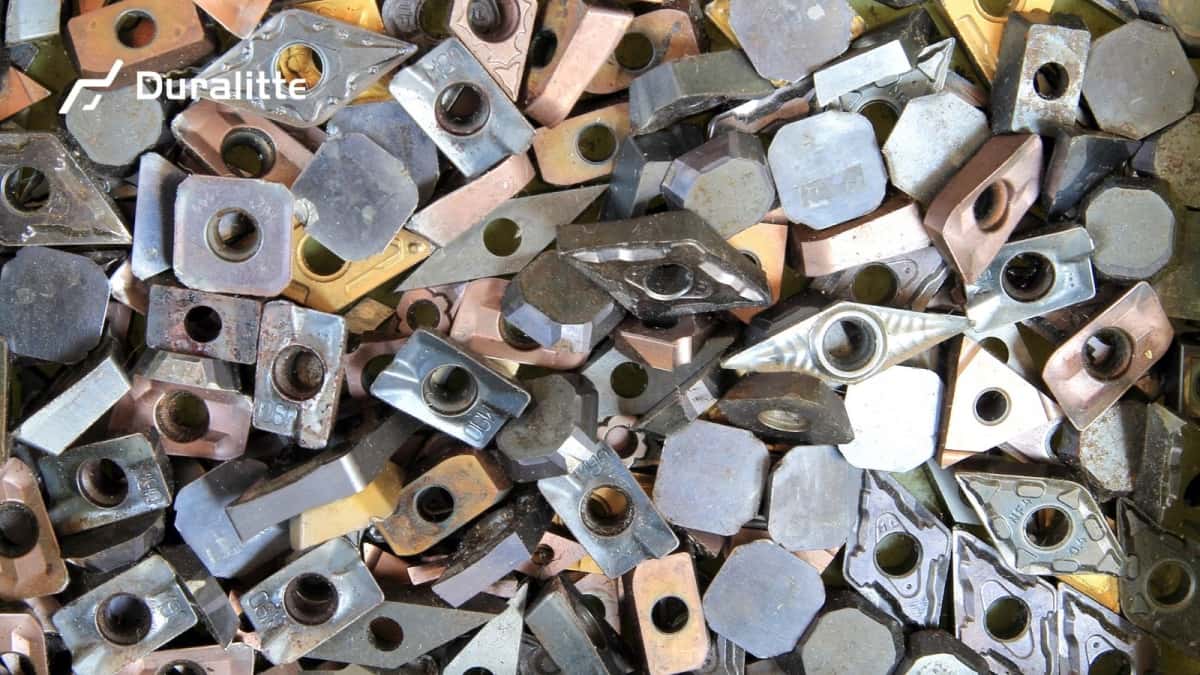
duralitte.com.mx
Why it matters: Pre-concentration could reduce the material Springer sends to milling, but the reported tests do not yet establish operating or cost benefits.
1.3 to 3.4 times — reported WO₃ grade improvement across the selected fractions.
93.3% to 97.5% — tungsten recovery in the selected fractions.
71.7% — the share of low-grade sample mass rejected by XRT sorting.
Blue Moon Metals reported favorable initial laboratory results from sensor-based ore sorting tests on tungsten mineralisation at its Springer mine in Nevada, but has not determined whether the process can be incorporated into the plant design. The tests used material selected from historic stockpiles, not a continuous plant trial or material demonstrated to represent future operating feed.
XRT results varied by sample grade
The program assessed whether a pre-concentration stage could remove lower-grade material or waste before ore reaches the mill. Blue Moon said no ore-sorting tests had previously been conducted at Springer.
Three composites were prepared from stockpiled material from historic operations. Workers visually classified the samples as high, medium or low grade using ultraviolet light and the fluorescence response of scheelite, the tungsten-bearing mineral. The Saskatchewan Research Council, an accredited independent laboratory in Saskatoon, received 363 kg of low-grade material, 339 kg of medium-grade material and 360 kg of high-grade material.
The laboratory used commercial TOMRA COM Tertiary XRT equipment. X-ray transmission sorting distinguishes particles based on a projection of their density; scheelite's density makes it suitable for the method. The system also used TOMRA's OBTAIN and CONTAIN artificial-intelligence programs to make real-time particle-sorting decisions.
The medium-grade composite had a feed grade of 0.20% WO₃. The selected fraction retained 37.7% of the mass and 93.3% of the tungsten, producing a grade of 0.49% WO₃, or 2.5 times the feed grade. The system rejected 62.3% of the feed mass.
The low-grade sample started at 0.07% WO₃. Its selected fraction retained 28.3% of the mass and 93.3% of the tungsten, with a resulting grade of 0.24% WO₃, a 3.4-fold increase. Mass rejection was 71.7%. Blue Moon said this fraction would require further testing and engineering studies before the company could assess processing it.
For the high-grade composite, which had a feed grade of 0.59% WO₃, the selected fraction retained 74.9% of the mass and recovered 97.5% of the tungsten. Its grade improvement was 1.3 times, while mass rejection was 25.1%. The results therefore show different sorting outcomes across the three samples: the low- and medium-grade composites had higher mass rejection, while the high-grade sample retained a larger share of its feed.
Springer plant design remains under review
Blue Moon said removing lower-grade material could reduce the volume sent to milling and affect processing, handling and transport costs. The company also cited potentially lower water use in the mill and plant. The reported tests did not quantify any operating-cost savings or changes in water consumption.
The company plans to review the results alongside the conceptual mill and plant configuration to determine where an XRT stage might fit. It also expects to assess assay and geochemical results from 499 composites collected across 28 known Springer stockpiles to evaluate whether those materials could provide feed.
Blue Moon expects further sorting and engineering studies during 2027. In July 2026, it announced a 67,000-metre drilling program at Springer to update the geological model and advance resource definition. The company said the technical and scientific information was reviewed and approved by Jason Dunning, its general manager of special projects and a non-independent qualified person under NI 43-101.
More in Critical Minerals
China’s electric truck boom adds lithium demand as mine supply returns
Heavy-duty models carry larger battery packs, while previously idled operations are restarting across the lithium supply chain.
Western Australia gives WA1’s Luni niobium project strategic status, but permits remain
A state-backed coordination channel arrives as WA1 weighs how to finance a project that still needs detailed studies and permits.
Prairie Lithium brings first brine to surface in Saskatchewan, with processing still ahead
The project’s first phase hinges on integrating a four-column DLE unit with the well and site infrastructure.