
Vicuña’s US$18 billion plan tests how Chile and Argentina will run a cross-border mine
Its deposits straddle the Andes, while the operating model still has to fit two national regulatory systems.
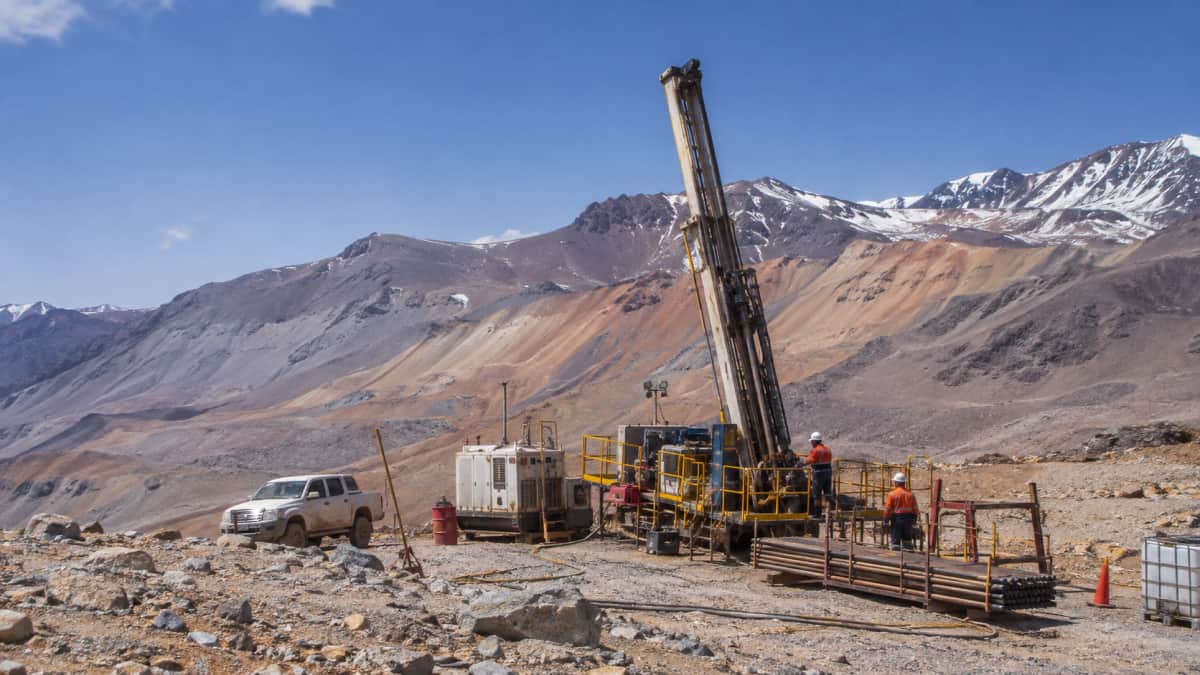
Why it matters: Vicuña’s scale makes coordination on infrastructure and regulation a central condition for developing deposits that cross the Andes.
US$18 billion — estimated investment for the integrated Vicuña project
50% each — BHP and Lundin Mining’s stakes in the development company
US$7 billion — estimated investment for the first development stage
2030 — potential first production, subject to investment approval and construction
Chile and Argentina approved specific border protocols on August 27, 2026, for Vicuña, NexoAndino and Filo Sur, renewing cooperation under the countries’ 1997 Mining Integration and Complementation Treaty. Vicuña, a joint development by BHP and Lundin Mining, is the largest of the initiatives, with an estimated integrated investment of US$18 billion.
The protocols provide a framework for coordination, but do not remove the need for each project to secure approvals in the country where its activities take place. Vicuña combines Josemaría in Argentina with Filo del Sol, which spans San Juan province and Chile’s Atacama Region. The project’s development therefore involves infrastructure and operating decisions across two national systems.
Vicuña’s three-stage development plan
BHP and Lundin each hold a 50% interest in the company responsible for Vicuña. During the third quarter of 2026, the project advanced infrastructure preparations, secured an economic stability agreement with San Juan province and received authorization to build a high-voltage power line connecting it to Argentina’s electricity system. The provincial agreement also includes a US$250 million commitment through a trust fund for eligible infrastructure works. Vicuña has been admitted to Argentina’s Large Investment Incentive Regime, or RIGI.
A preliminary economic evaluation published in February 2026 sets out three development stages. The first would develop Josemaría and build a concentrator, with an estimated initial investment of US$7 billion. The second would process oxidised material at Filo del Sol to recover copper, gold and silver. The third would target Filo del Sol’s sulphide resources, expand the concentrator and add water and logistics infrastructure.
The company’s scenario points to possible first production in 2030, conditional on final investment approval and completion of the construction programme. Across the first 25 full years of operation, the complex could average annual production of 395,000 tonnes of copper, 711,000 ounces of gold and 22.2 million ounces of silver. Those figures remain dependent on the project advancing through its investment and construction stages.
Exploration and permitting remain distinct hurdles
The other projects covered by the protocols are at different stages. Mogotes Metals completed 6,208 metres of drilling at Filo Sur in the 2025–26 season and identified two mineralised systems, Albor and Cruz del Sur. It plans up to 20,000 metres of drilling in 2026–27, targeting extensions and new porphyry targets at Luz del Sol, Cuenca and Meseta. The project remains in exploration; commercial development would require resource definition, metallurgical work and economic evaluation.
Glencore is preparing environmental documentation for El Pachón in San Juan, with a submission targeted for the first quarter of 2027. The company’s estimate for the deposit is approximately 6 billion tonnes at an average grade of 0.43% copper, with silver and molybdenum also present. Any plan to use logistics infrastructure in Chile would require further agreements and authorizations. Meanwhile, McEwen Copper’s Los Azules secured US$240 million in financing in August 2026 and continued work on permits and infrastructure. Its feasibility study envisages average production of 205,000 tonnes of copper cathodes annually in the first five years, over a 22-year mine life.
Environmental and legal processes remain material constraints. On November 9, Chile’s Second Environmental Court suspended for 30 days the effects of the environmental resolution authorizing Barrick’s El Alto exploration project in Atacama, preventing drilling while the precautionary measure remains in force. El Alto is an exploration initiative and does not authorize the reopening of Pascua Lama.
Infrastructure integration will require further agreements
The projects could create opportunities for Chilean ports, transport operators, engineering firms and equipment suppliers as San Juan’s copper developments advance. The deposits’ proximity to the Pacific also makes Chilean export routes a potential option. But cross-border logistics would require the two countries and project owners to address customs, tax, environmental and operational requirements; shared infrastructure does not replace national permitting.
The next indicators are the projects’ investment decisions, exploration results and permit progress during 2027. For Vicuña, the stated production scenario remains contingent on final investment approval and delivery of its construction programme.
More in Resources
Peru’s copper base expands as La Granja’s processing economics remain unresolved
La Granja’s scale is clear, but metallurgy, power and infrastructure must still support a viable operation.
China’s 600 MW compressed-air expander clears tests, but plant performance remains unproven
The machine is twice the scale of equipment at operating projects, but its power rating alone does not show how long it can discharge.
Nueva Centinela nears startup as Antofagasta’s copper recovery lags 2025
At the US$4.4 billion project, equipment trials are under way as the group advances separate water and infrastructure work elsewhere in Chile.