
TransEmel files US$30 million Ñuble grid plan, but SEA admission is pending
The proposed link combines a 220/66 kV switching station with a second substation serving the 23 kV network.
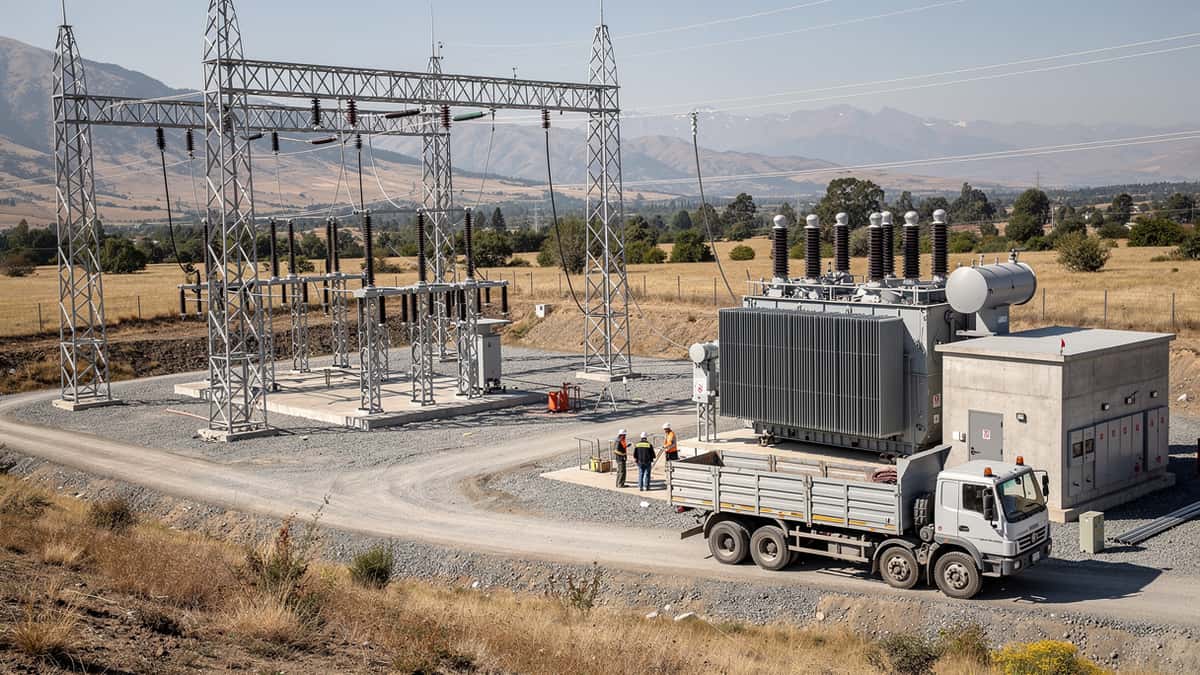
Why it matters: The project would connect high-voltage transmission infrastructure with local networks in Ñuble, but must pass environmental review before it can advance.
US$30 million — investment indicated for the project
0.9 kilometres — approximate aerial connection to the existing 220 kV line
9.1 kilometres — approximate length of the proposed double-circuit 66 kV line
220 kV, 66 kV and 23 kV — voltage levels across the planned facilities
TransEmel S.A. has filed an environmental-impact declaration for two substations and a transmission line in Quirihue, Ñuble Region, Chile. The project is listed in the Environmental Assessment Service (SEA) system as “En Admisión” and does not yet have a favourable environmental qualification. Its stated investment is US$30 million.
The filing, titled “Nueva Subestación Seccionadora Las Delicias, Nueva Subestación Coiquén y Nueva Línea 2x66 kV Las Delicias–Coiquén,” was submitted to the Environmental Impact Assessment System (SEIA) as a Declaración de Impacto Ambiental (DIA). The SEA record does not specify a submission date.
Las Delicias would connect 220 kV and 66 kV infrastructure
The Las Delicias switching substation is designed with 220 kV and 66 kV yards and a 220/66 kV transformer. About 0.9 kilometres of overhead line would connect the facility to the two circuits of the existing Nueva Cauquenes–Dichato 220 kV line. That line segment is associated with a project by Mataquito Transmisora de Energía that holds Environmental Qualification Resolution No. 20249900119/2024.
The proposed Coiquén substation would have 66 kV and 23 kV yards, with a 66/23 kV transformer. A roughly 9.1-kilometre overhead, double-circuit line would link it to Las Delicias. The scope also includes construction facilities, roads and access routes, stringing areas, civil works, and protection, control and communications systems.
The transmission works are in the 2021 expansion plan
The SEA record says the zonal transmission project is included in Chile’s 2021 Expansion Plan, approved through Energy Ministry Exempt Decree No. 257/2022. TransEmel’s stated objectives are to strengthen transmission capacity, security and reliability in the area and accommodate projected demand growth, with improvements to supply continuity and quality.
The works would be located in Quirihue, Itata Province. The filing gives the project an indefinite useful life and a reference horizon of 50 years. At the end of that period, the company would assess whether to maintain or modernize the facilities. Future modifications would have to enter the SEIA when applicable.
SEA has not made an impact determination
The DIA was filed under Articles 8 and 10(b) of Law No. 19,300 and Article 3 of the SEIA regulations, set out in Supreme Decree No. 40/2012 and its amendments. The submitted documents include the company’s justification for the applicable project categories and a chapter arguing that the circumstances described in Article 11 of Law No. 19,300 are absent. Those statements are part of the applicant’s filing and do not constitute an SEA determination on the project’s impacts.
The record names TransEmel S.A. as the project proponent and Rodrigo Andrés Guerrero Valenzuela as its legal representative. The file remains at the admission stage, where its entry is checked before it can proceed through environmental assessment.
More in Resources
Endeavour Silver's Pitarrilla study prices a US$585M build before key permit
The 18-year underground model uses US$50 silver, but its returns change materially across the study's sensitivity cases.
Chile’s geothermal power potential faces a hurdle beyond its reservoirs
Cerro Pabellón was still the country’s only geothermal plant in October 2022, despite estimates pointing to a far larger role for the resource.
Vizsla pushes Pánuco production to 2028 as permits remain pending
Remote engineering continued during the shutdown, but a return to site and federal authorizations remain separate hurdles.