
Taprobane’s 17.6% THM grade is striking, but Sri Lanka’s sands have another test
Taprobane and nearby Mannar show why investors need to look beyond the total heavy-mineral percentage.
Why it matters: For titanium-mineral sands, the proportion of heavy minerals that can become saleable products helps determine processing costs and project economics.
17.2 million tonnes at 17.6% THM — Taprobane’s reported resource.
About 75% VHM — the share of Taprobane’s heavy-mineral fraction made up of valuable heavy minerals.
71% VHM — the reported share in the area considered for Mannar’s first stage.
9.2% lower costs — the reduction estimated in a 2015 study when pigment feed purity rose from 85% to 90%.
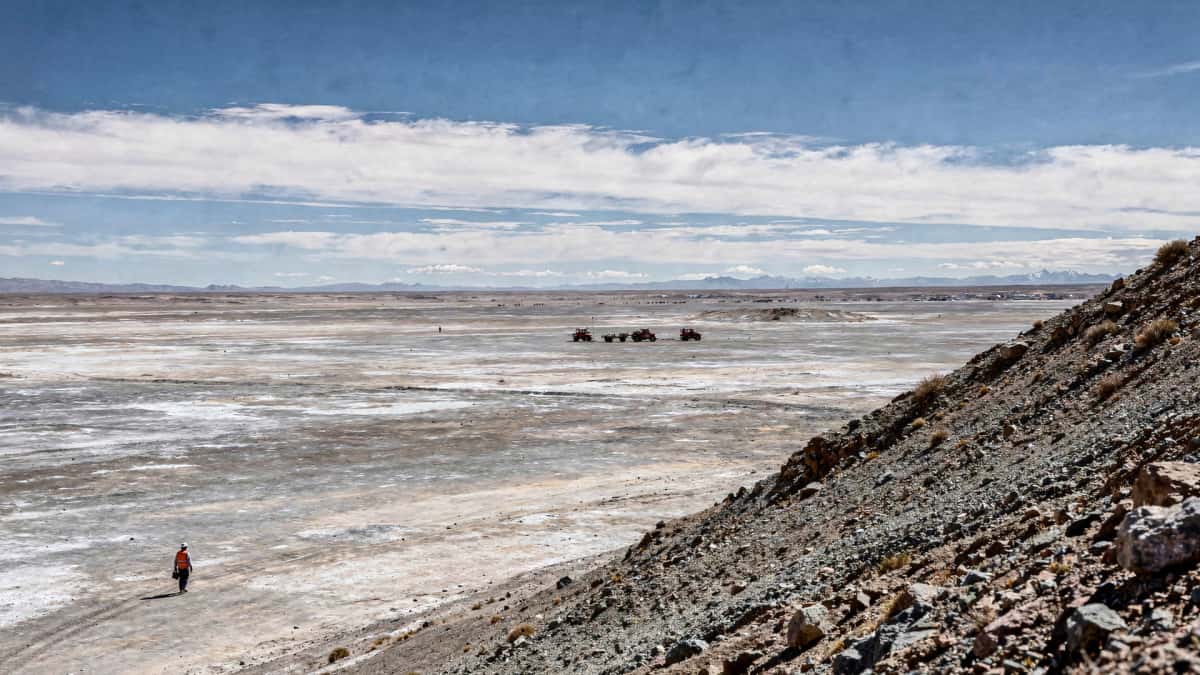
Capital Metals’ Taprobane project in Sri Lanka has a resource of 17.2 million tonnes grading 17.6% total heavy minerals (THM), with about 75% of that fraction comprising valuable heavy minerals (VHM), including ilmenite, rutile, zircon and garnet. The company has outlined first-stage production of 125,000 tonnes of concentrate a year, but has not approved a final investment decision.
The distinction between THM and VHM matters because a deposit’s total heavy-mineral grade does not show how much of its material is made up of minerals with commercial value. The mix also affects the processing required to produce saleable concentrate. Taprobane’s grade is one part of its project case, not a stand-alone measure of economic potential.
Mineral composition can affect processing costs
Titanium dioxide, used as a white pigment in products including paint, paper and cosmetics, accounts for about 95% of titanium demand; roughly 5% goes to metal alloys. Ilmenite and rutile are major feedstocks for pigment production. Rutile can contain up to 60% elemental titanium, compared with about 32% by weight for ilmenite.
Pigment producers use sulfate and chloride routes, while titanium metal is produced through the Kroll process. Feed quality can affect reagent use, energy, transport and waste. In the chloride process, about one tonne of chlorine is needed to produce five to six tonnes of titanium dioxide pigment. In the sulfate route, one tonne of ilmenite produces around half a tonne of titanium dioxide, requiring more material to be moved and processed for a given output.
A 2015 study commissioned by Exxaro Heavy Minerals and conducted by a University of Pretoria team estimated that increasing feed purity from 85% to 90% would cut pigment-producer costs by 9.2%. The finding does not establish that higher-purity feed is always cheaper: the study’s assumptions indicated that obtaining the quality improvement cost more than simply using additional reagent. Potential savings in transport, storage and waste handling also need to be weighed against the cost of securing higher-quality feed.
Mannar presents a different grade and mix
Titanium Sands’ Mannar project, on an island off Sri Lanka’s northwestern coast, has a high-grade core of 82 million tonnes at 6.03% THM. The area assessed for its first stage has 71% VHM. A scoping study outlines potential supply of 139,000 tonnes of concentrate annually for 20 years, with a pre-tax net present value of $545 million, an internal rate of return of 52% and gross revenue of $2.01 billion.
Mannar’s total resource is 318 million tonnes at 4.17% THM, predominantly ilmenite. The company is also evaluating expansion options that would raise ore processing to 8 million or 12 million tonnes a year; neither option is approved production. The comparison with Taprobane underscores why resource grade and mineral composition need to be assessed together.
Australian operations show a range of mineral mixes
At Thunderbird in Western Australia, a 50:50 joint venture between Sheffield Resources and Yansteel, the resource is 2.96 billion tonnes at 6.8% THM and about 42% VHM. The operation produced about 246,000 dry tonnes of concentrate in the September 2026 quarter. Sheffield’s at-capacity production forecast is 210,000 tonnes of zircon concentrate and 900,000 tonnes of ilmenite concentrate a year.
Other Australian deposits have different profiles. Image Resources’ Atlas mine had a resource of 15.2 million tonnes at 5.2% THM and about 70% VHM at the end of 2025. PTR Minerals’ Rosewood resource is 463 million tonnes at 8.8% THM, with leucoxene accounting for 75% of the heavy-mineral fraction and VHM at 93%. Tronox’s combined Atlas–Campaspe reserves are 102 million tonnes at 5.6% THM and 85% VHM.
Iluka Resources began mining and processing rutile and zircon at Balranald in January 2026; its VHM is 88%, and the operation produced about 24,000 tonnes of heavy-mineral concentrate in the September quarter. Iluka’s satellite deposits Typhoon and Atacama, planned for Jacinth–Ambrosia, also illustrate the need to distinguish resource categories and grades: Typhoon has 24 million tonnes measured at 6.3% THM and 77% VHM, while Atacama has 46 million tonnes indicated at 14.4% heavy minerals and 28 million tonnes inferred at 7.1%, with 87% combined VHM. Resource, reserve and production figures describe different stages of project assessment; Taprobane’s final investment decision remains outstanding.
More in Resources
Swiss glaciers lose 19.4% of their ice in five years as summer flows swell
A record stretch of freezing levels above 4,000 metres changed how far summer warmth reached into Alpine ice.

Antarctic ozone hole ranks seventh-largest in 48 years, but size is not the full measure
A persistent polar vortex drove the September expansion, but surface area alone does not show how deeply ozone was depleted.
Luca Mining rejects claims of criminal control at Campo Morado in Guerrero
Mexican reports cast doubt on who runs the mine, while Luca says coverage may have confused it with nearby operations.