
Antarctic ozone hole ranks seventh-largest in 48 years, but size is not the full measure
A persistent polar vortex drove the September expansion, but surface area alone does not show how deeply ozone was depleted.
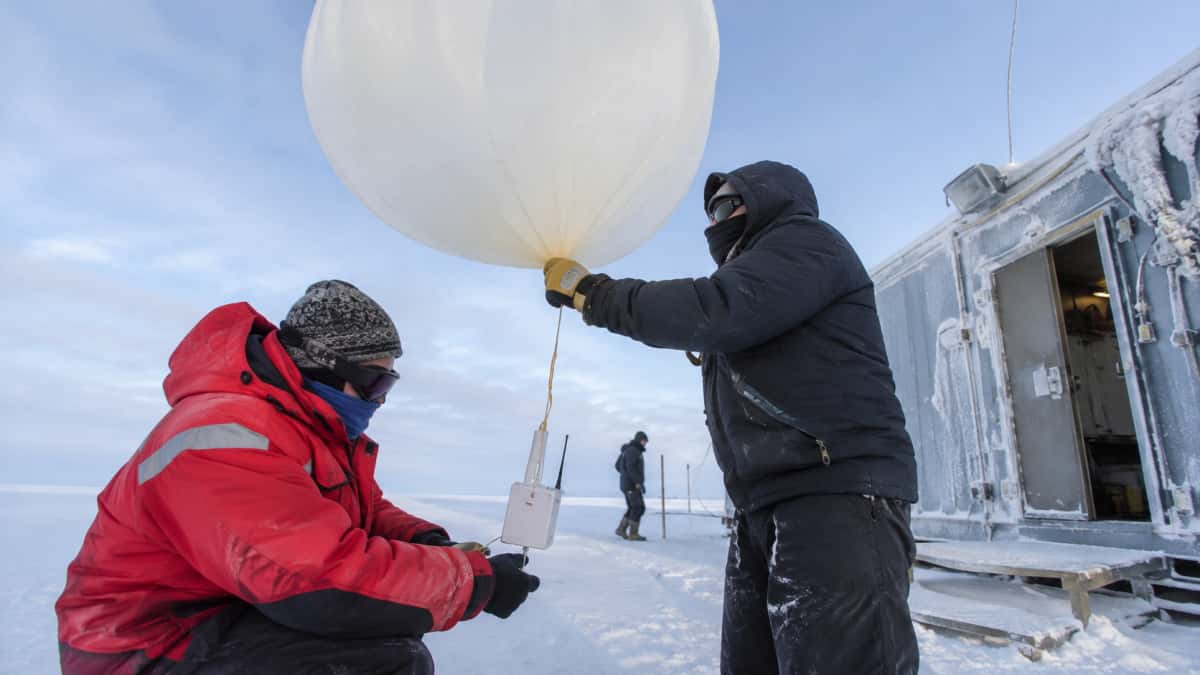
Why it matters: The 2026 expansion shows how weather can intensify seasonal ozone loss even as restrictions on ozone-depleting chemicals support long-term recovery.
27.1 million km² — maximum daily area, recorded on 18 September
25 million km² — average area from 7 September to 13 October
105 Dobson units — minimum ozone measured over the South Pole on 17 October
Seventh-largest — the hole’s area ranking in 48 years of observations
The Antarctic ozone hole reached a maximum daily area of 27.1 million square kilometres on 18 September 2026, making it the seventh-largest in 48 years of observations. Its average area during the main depletion period, from 7 September to 13 October, was about 25 million square kilometres. The expansion followed a strong, persistent polar vortex, but the area covered does not by itself indicate how much ozone was lost.
A strong vortex prolonged the cold conditions
The polar vortex is a circulation of strong winds around Antarctica during the austral winter and spring. In August and September, weaker-than-usual atmospheric disturbances allowed the vortex to persist and keep a large mass of cold air relatively isolated over the continent.
Low stratospheric temperatures favour the formation of polar stratospheric clouds. Their particles support chemical reactions that release chlorine and bromine compounds capable of destroying ozone. When sunlight returns in spring, those reactions accelerate, helping explain why the hole expanded during September and October.
Area and ozone depletion tell different stories
The 2026 area was unusually large compared with much of the past decade, but the minimum ozone reading was not among the most extreme on record. Ozone over the South Pole fell to 105 Dobson units on 17 October. The conventional boundary used to define the ozone hole is below 220 Dobson units; in October 2006, the South Pole measurement reached 92 units.
That difference illustrates why the hole’s surface area cannot be treated as a measure of its depth. The 2026 season covered a vast region, but its lowest recorded concentration was higher than the 2006 minimum.
Montreal Protocol cuts the chemicals behind the loss
The 1987 Montreal Protocol has progressively restricted production and consumption of ozone-depleting substances, including chlorofluorocarbons once used in refrigeration, aerosols and insulating foams. Stratospheric chlorine from these substances has fallen by about one-third from historical peak levels over Antarctica. Many compounds persist in the atmosphere for years, however, so their effects do not disappear as soon as emissions decline.
Updated projections in 2026 point to Antarctic ozone returning to levels comparable with 1980 during the 2060s, while the global average is projected to recover around 2040. These are projections, not guarantees: atmospheric chemistry, weather and interactions with climate change affect the timing, and the hole need not shrink every year for the longer-term recovery to continue.
Southern Chile remains a monitoring priority
Air with low ozone concentrations can sometimes move from Antarctica towards the southern tip of South America, potentially increasing ultraviolet radiation in parts of Magallanes, including Punta Arenas. The size of the 2026 hole does not mean all of Chile experienced unusually high UV levels; local conditions depend on the hole’s position, atmospheric movement and cloud cover.
Chile’s UV-B monitoring network includes stations in Antarctica, Punta Arenas, Coyhaique, Puerto Montt, Valdivia and Temuco, with sensors identified for renewal. Continued satellite and ground-based measurements will help scientists distinguish weather-driven seasonal swings from longer-term changes in ozone levels.
More in Resources
Swiss glaciers lose 19.4% of their ice in five years as summer flows swell
A record stretch of freezing levels above 4,000 metres changed how far summer warmth reached into Alpine ice.
Luca Mining rejects claims of criminal control at Campo Morado in Guerrero
Mexican reports cast doubt on who runs the mine, while Luca says coverage may have confused it with nearby operations.
Taprobane’s 17.6% THM grade is striking, but Sri Lanka’s sands have another test
Taprobane and nearby Mannar show why investors need to look beyond the total heavy-mineral percentage.