
Rockhaven tests Klaza’s no-plant ore route, but commercial returns remain unproven
At Western BRX, oxide material moved from Yukon to overseas processing; sulphide tests and final settlements are still pending.
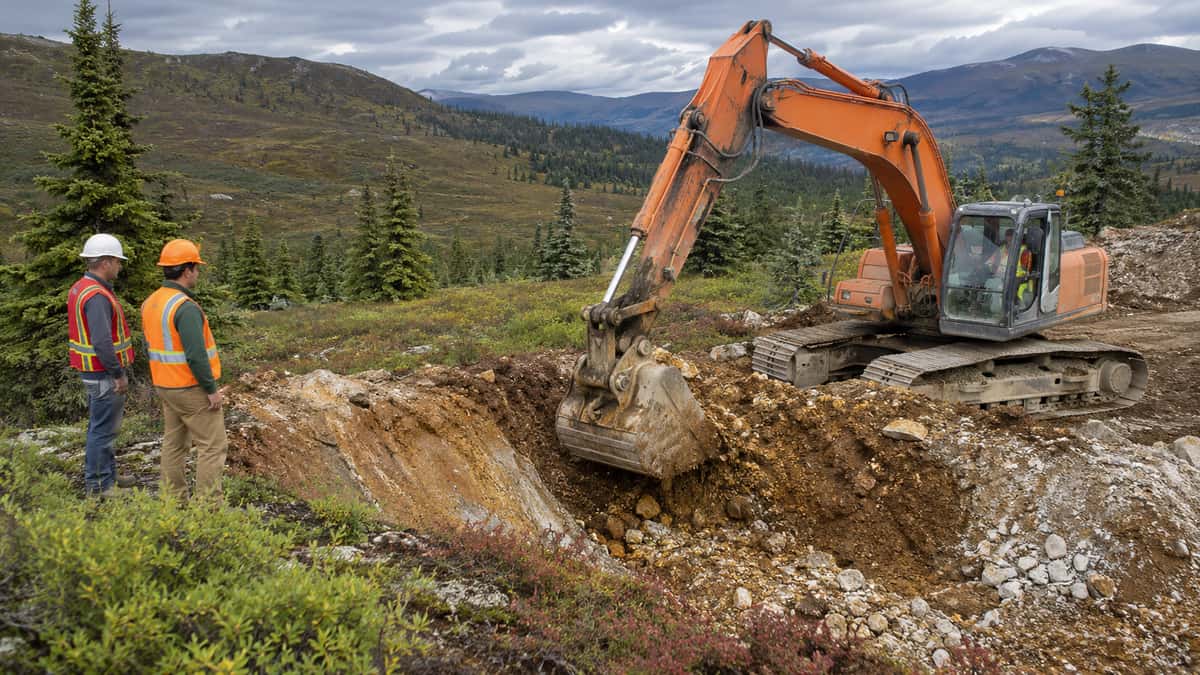
Why it matters: Klaza’s bulk sample tests whether high-grade oxide ore can be sold through external processing before the project has a conventional onsite plant.
2,477 wet tonnes — material extracted and dispatched from Western BRX
34.3 g/t gold and 316 g/t silver — weighted average grades across the campaign
US$6.9 million — provisional payments received for part of the shipments
1,755 wet tonnes — material covered by those provisional payments, or 71% of the total
Rockhaven Resources completed its 2026 bulk-sampling campaign at the Klaza project in Yukon, extracting and dispatching 2,477 wet tonnes of mineralized material grading an average of 34.3 g/t gold and 316 g/t silver. The company received US$6.9 million in provisional payments from international buyer Ocean Partners for part of the material, but final settlements and the project’s commercial economics remain unresolved.
The campaign ran from late June to mid-October at Western BRX, one of 12 identified mineralized structures on the property. Rockhaven said the work tested selective extraction, initial processing and transport logistics, while gathering geological information for a planned pre-feasibility study. Klaza is not yet a continuous commercial operation: the extraction was conducted under an authorized bulk-sampling program.
Western BRX grades varied across four campaigns
The extracted material was oxidized Direct Shipping Oxide (DSO), a type of ore that can be sold for external processing without first building a conventional beneficiation plant at the project. Rockhaven completed four crushing campaigns. Their weighted average grades varied: the first 355 tonnes averaged 44.5 g/t gold and 410 g/t silver, while the fourth 1,012 tonnes averaged 31.0 g/t gold and 278 g/t silver. The second and third campaigns produced 346 tonnes at 36.0 g/t gold and 332 g/t silver, and 764 tonnes at 33.2 g/t gold and 316 g/t silver, respectively.
The company cautioned that these results reflect material from specific parts of Western BRX. They should not be read as a general decline in the deposit’s grade or as a proxy for Klaza’s average mineral-resource grade. The reported averages were weighted by tonnage and based on assays of material prepared for shipment.
Ore moved by truck to Alaska for overseas processing
Because the material was predominantly oxidized, Rockhaven used two excavators and did not use explosives to break the rock. The ore was crushed onsite to less than half an inch, bagged and trucked in loads of about 40 tonnes to the port of Skagway, Alaska, before being shipped to processing facilities overseas under the arrangement with Ocean Partners.
That route allowed the company to evaluate sales of selected high-grade material without first building a full processing plant at Klaza. Whether it can be repeated profitably depends on the availability of similar ore, extraction and transport costs, treatment terms and final commercial settlements.
The US$6.9 million in provisional payments relates to 1,755 wet tonnes, about 71% of the material extracted. The final amount remains subject to dry-weight calculations, buyer-assessed grades and applicable gold and silver prices. The provisional payments are not necessarily equivalent to final sales proceeds or profit; costs for extraction, crushing, transport, treatment and administration also need to be considered.
2027 work targets extensions and deeper sulphide material
Rockhaven plans further bulk sampling at Western BRX in 2027 and is evaluating similar opportunities at other structures. It is also preparing diamond drilling to investigate near-surface mineralization, expand resources and test additional areas. Permits are in place for drilling on the mineralized structures for the next four years, although individual programs remain subject to planning and financing.
The company has identified 12 subparallel gold-silver veins across the wholly controlled property, with more than 10 kilometres of mineralization confirmed by assays. Campaign data on vein widths, structural orientation, faults, mineralogy and continuity will feed into pre-feasibility work. Rockhaven also collected deeper samples with more sulphide content for further pre-concentration and metallurgical recovery tests. Those results, alongside final shipment settlements, will help determine the technical and economic options to be assessed in the study.
More in Resources
Copper falls to US$5.70 as eight-session slide tests 2026 outlook
Physical supply constraints remain a counterweight, but concerns over China’s industrial demand and a stronger US dollar are weighing on the market.
Codelco faces two serious charges that put Ministro Hales’ permit at risk
The missing baghouse is one of two alleged failures; the case also tests how Codelco documented dust controls at the Calama operation.
Chile’s US$111.149bn mining pipeline sets a record, but permits remain a test
Two major lithium projects remain in environmental review, putting the delivery of a large share of the pipeline’s growth to the test.