
Pakistan suspends Khyber Pakhtunkhwa mining after deadly Kohat gold raid
The governor’s claims about gold revenues reaching armed groups remain untested as a judicial commission is planned.
Why it matters: The province-wide halt puts mineral extraction under heightened scrutiny while allegations that illegal gold revenues funded armed groups remain unproven.
About 90 kg a month — gold extraction in Kohat, according to Governor Faisal Karim Kundi
Rs 4.2 billion — monthly value Kundi attributed to that gold
28 deaths — 10 police officers and 18 militants killed in the Kohat incident
Seven days — the deadline for concession holders and contractors to remove heavy machinery
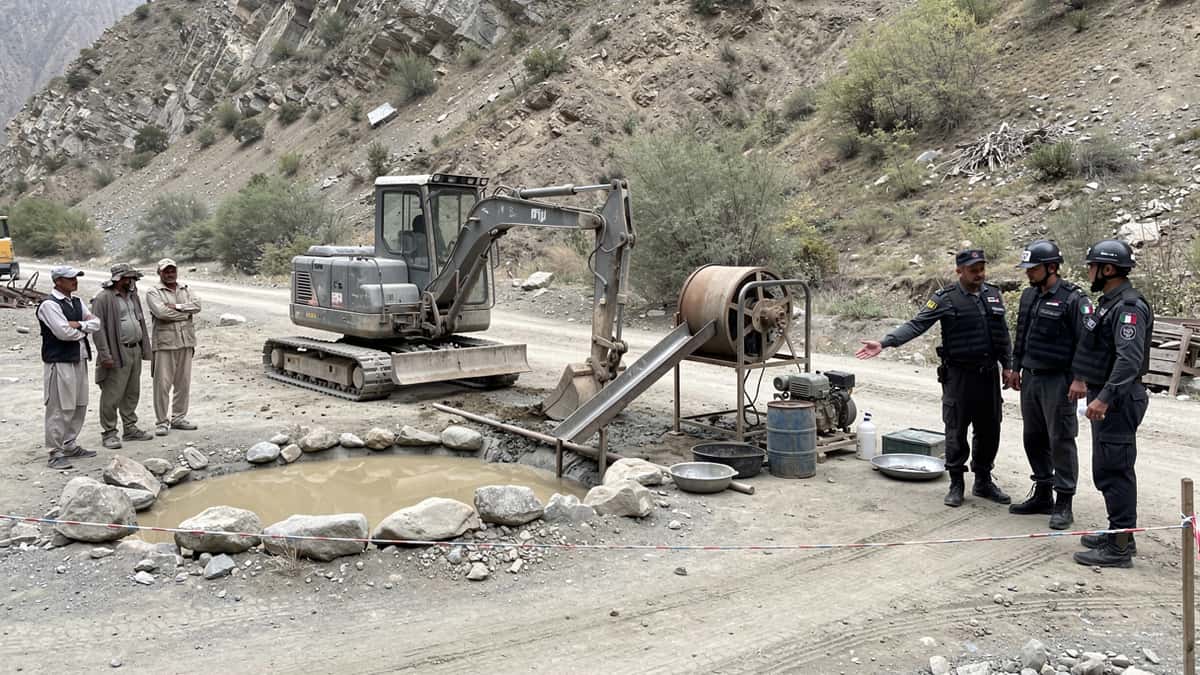
Pakistan’s Khyber Pakhtunkhwa province has suspended mining activities and cancelled gold concessions following a deadly clash during an operation against illegal extraction in Kohat. Governor Faisal Karim Kundi said illegal operators were paying protection money to militant groups and alleged that much of the revenue from Kohat’s gold was going to Afghanistan. Those claims have not been established by a judicial investigation.
Kohat operation preceded the province-wide order
The suspension followed an operation against illegal gold mining at Darabo Kach, near Kohat. According to the available account, militants attacked police as officers returned from the operation. The clash killed 10 police officers and 18 militants.
Kundi ordered concession holders and contractors to remove heavy machinery from mining areas within seven days. The order applies across Khyber Pakhtunkhwa, while the governor’s claims about gold revenue and alleged payments to armed groups concern extraction in Kohat specifically.
Kundi estimated that about 90 kg of gold was being extracted in Kohat each month, with a value of Rs 4.2 billion. He alleged that around 80% of the proceeds went to Afghanistan and that money paid to militant groups was used to finance activities against Pakistan. These are allegations by the governor, not findings of a court or completed investigation.
Concession value and monthly gold estimate are different measures
The governor also questioned the economics of a mining concession awarded for ten years at Rs 4,920 million. He compared that amount with his estimate of Rs 4.2 billion in gold extracted in a single month. The figures refer to different things: the stated value of a ten-year concession and an estimated monthly value of gold production. The comparison does not, by itself, establish the concession’s terms or the actual amount of gold extracted.
Kundi announced plans for a judicial commission to investigate both illegal mining and the Kohat incident. He also approved a special force named after DSP Haidar Zaman, one of the police officers killed in the operation.
The governor alleged that 12 political figures had provided support connected to the incident, naming former provincial minister Aftab Alam, Shehryar Afridi and Khurram Zeeshan. He acknowledged that no police cases had been registered against them.
Mining halt follows an earlier emergency order
In October, Pakistan’s federal government imposed an emergency regime in Khyber Pakhtunkhwa and authorised a military deployment. Islamabad cited deteriorating security and a lack of cooperation in counterterrorism operations. Pakistani observers interpreted the move as an effort to extend military control over the administration and economy of a province with substantial mineral resources.
The announced commission is expected to examine the illegal extraction allegations and the events surrounding the deadly operation; the governor’s claims about revenue flows and political support remain subject to investigation.
More in Resources
Endeavour Silver's Pitarrilla study prices a US$585M build before key permit
The 18-year underground model uses US$50 silver, but its returns change materially across the study's sensitivity cases.
Chile’s geothermal power potential faces a hurdle beyond its reservoirs
Cerro Pabellón was still the country’s only geothermal plant in October 2022, despite estimates pointing to a far larger role for the resource.
Vizsla pushes Pánuco production to 2028 as permits remain pending
Remote engineering continued during the shutdown, but a return to site and federal authorizations remain separate hurdles.