
Osisko expands Gaspé Copper resources, but current drilling is still outside the estimate
The revised pit model uses a lower reporting cut-off, while assays from the active campaign have yet to be incorporated.
canadianminingjournal.com
Why it matters: The updated estimate adds a large underground resource to Gaspé Copper, but the new material remains inferred and the active drilling has not yet been counted.
2.147 billion tonnes — measured and indicated open-pit resources at 0.25% copper and 0.015% molybdenum.
706 million tonnes — inferred underground resources modelled at Porphyry Mountain, grading 0.48% copper and 0.055% molybdenum.
April 2027 — the company’s expected timing for a further resource estimate.
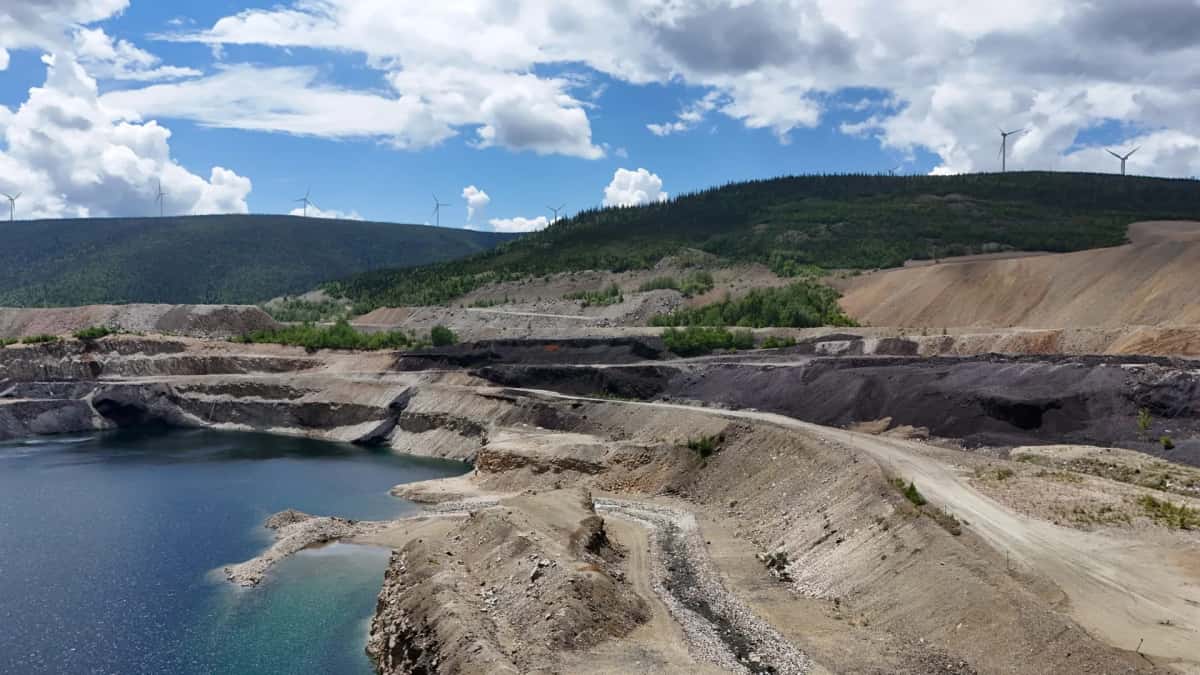
Osisko Metals has expanded the mineral resource estimate for its Gaspé Copper project in eastern Quebec, adding an underground resource at Porphyry Mountain and revising the open-pit model. Effective October 30, 2026, the estimate includes 2.147 billion tonnes of measured and indicated resources and 971 million tonnes of inferred resources.
The estimate does not include results from the company’s ongoing drilling campaign. Osisko said it expects to complete assays from its 2026 core by mid-January 2027 and anticipates another resource estimate in April.
Porphyry Mountain adds an inferred underground component
The measured and indicated category is restricted to the open pit and carries an average copper-equivalent grade of 0.30%. Osisko estimates that material contains 5.26 million tonnes of copper and 323,000 tonnes of molybdenum.
The 971 million tonnes of inferred resources comprise 265 million tonnes in the pit, grading 0.38% copper and 0.015% molybdenum, and 706 million tonnes underground at Porphyry Mountain. The underground component grades 0.48% copper and 0.055% molybdenum, with a 0.66% CuEq grade. Inferred resources as a whole contain an estimated 4.37 million tonnes of copper and 428,000 tonnes of molybdenum.
The underground model covers two stockwork zones: one within a vertical porphyry intrusion and another in surrounding metasedimentary porcellanite and skarn units. It uses the same three-dimensional geological model applied to the Copper Mountain open-pit resource. The estimate assumes bulk extraction by block caving and uses a 0.24% CuEq optimization cut-off, equivalent to a net smelter return of US$19.94 per tonne.
Lower reporting cut-off changes the pit estimate
Osisko revised the open-pit estimate published in spring 2026 and used a 0.12% CuEq reporting cut-off, citing a long-term copper price assumption of US$5 per pound. At a 0.20% CuEq cut-off, the company’s sensitivity analysis shows measured and indicated tonnage declining to 1.517 billion tonnes, while the average copper grade rises from 0.25% to 0.29%.
The pit optimization uses a separate 0.088% CuEq cut-off, based on reference prices of US$4.50 per pound of copper, US$20 per pound of molybdenum and US$45 per ounce of silver. Other assumptions include an 8% discount rate, average processing of 160,000 tonnes per day, average copper recovery of 91% and a 48-degree slope in rock. CuEq incorporates metal prices, recoveries, payables, treatment and refining charges, transport and royalties; it is not a direct copper grade.
Drilling could inform a later update
The pit model draws on historical drilling from 1950 to 2019, 160,000 metres drilled by Osisko from 2022 to 2025, and 2025 metallurgical and comminution test work. Porphyry Mountain modelling used historical drilling from 1994 to 2019 and partial re-assays of available core.
Osisko said ongoing drilling could extend the pit resource south and southwest toward Needle Mountain. In September 2026, it reported an intersection of 256.5 metres grading 0.85% copper, including 28.5 metres at 4.74%, outside the resource model. The company said its 2026 campaign was expected to total about 50,000 metres and plans another 50,000 metres of drilling in the second quarter of 2027, targeting resource conversion and deeper and southern extensions.
The estimate was prepared under Canadian Institute of Mining, Metallurgy and Petroleum definitions and guidelines, with Pierre-Luc Richard of PLR Resources as the independent qualified person. Osisko cautioned that mineral resources are not mineral reserves and that their economic viability has not been demonstrated; the grade and quantity of inferred resources remain uncertain and require further drilling.
More in Resources

Zelenskyy turns to US Congress as 48 Patriot interceptors await approval
Kyiv wants tougher pressure on Moscow, while Russian strikes are widening the demands on Ukraine’s air defences.
CuFe combines Orlando and Gecko in Tennant Creek plan as early feed remains unproven
Historical dumps could supply material before a full mine development, but CuFe still needs to establish their volume and grade.
McLanahan revised an Australian gold plant's HPGR circuit before agglomeration
A bid review found the HPGR discharge was too flake-like for the plant's planned sampling and agglomeration route.