
McLanahan revised an Australian gold plant's HPGR circuit before agglomeration
A bid review found the HPGR discharge was too flake-like for the plant's planned sampling and agglomeration route.
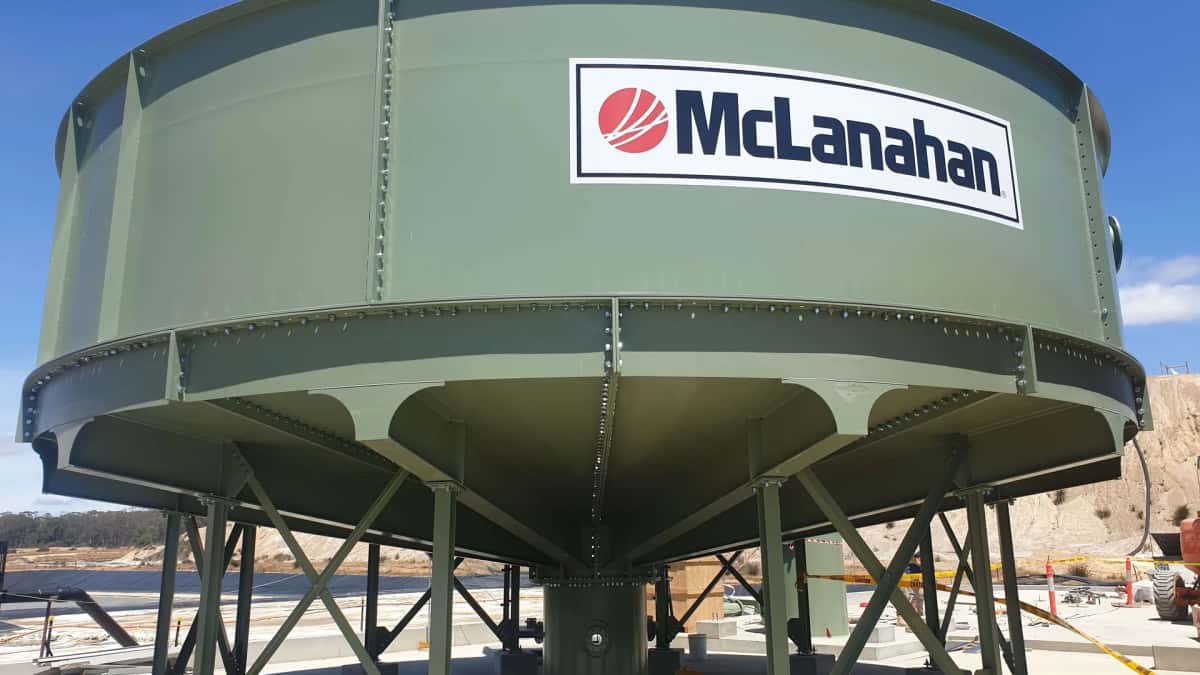
mclanahan.com
Why it matters: Breaking HPGR flakes before sampling gives the plant a chance to assess material size and quality before agglomeration.
1,000 tonnes per hour — Sizer maximum design capacity
2 × 75 kW — electric motors on the Sizer 24×48-T-2×75(IR)
2021 — McLanahan secured the equipment supply contract
Two stages — sampling increments are taken from the Sizer discharge
McLanahan supplied a Sizer crusher and a sampling system to an Australian gold processing plant after a bid-stage review found that compressed flakes from the high-pressure grinding roll (HPGR) needed further treatment before sampling and agglomeration. The company said the revised circuit improved process flow and quality results, but it did not provide post-installation performance figures.
The Sizer breaks flakes before sampling
The plant’s original design called for sampling material directly from the HPGR discharge to assess its size and quality before agglomeration. During the technical review, the gold producer and its engineering, procurement and construction (EPC) contractor identified that the ore was leaving the HPGR in compressed flakes that needed to be broken first.
McLanahan’s engineers proposed adding a Sizer upstream of the sampler. The client accepted the change, and the equipment tender was updated to include both the crusher and sampling system. McLanahan won the supply contract in 2021.
The selected Sizer, model 24×48-T-2×75(IR), was designed for coarse HPGR feed. Its stated maximum design capacity is 1,000 tonnes per hour. Two inward-rotating rolls sit in a reinforced outer frame, with automatic lubrication and two 75 kW electric motors.
The crusher segments use a non-standard tooth pattern with a high proportion of open space. McLanahan designed the pattern for the flaky feed, aiming to use the material’s tendency to fracture and encourage particle-on-particle breakage. The configuration is intended to reduce larger pieces while allowing as much material already within the required size range as possible to pass through.
Two-stage sampling follows the crushing step
After the Sizer, a two-stage falling-stream system takes sample increments from the discharge. It consists of a horizontal, bottom-discharge primary sampler, a vibratory feeder and a second horizontal sampler of the same type. A four-station rotary collector, electrical controls, chutes and sample supports complete the system.
The arrangement places crushing ahead of sampling, rather than taking increments directly from the HPGR discharge as originally planned. The material then continues to the agglomerator. The source material does not specify the plant’s target particle size or report sampling accuracy, throughput achieved, or changes in downstream recovery.
Equipment built in Australia and the United States
McLanahan assembled and tested the Sizer at its Newcastle, New South Wales, facility. The sampling system was manufactured in Pennsylvania. Both units were delivered to the site and installed with supervision and commissioning support from McLanahan’s field service team.
The company said the equipment was adapted to the feed specifications and the site’s limited space. It also said engineering teams in Australia and the United States responded to technical questions during the tender evaluation. No installation date, operating data or quantified comparison with the original circuit was reported.
More in Resources

Zelenskyy turns to US Congress as 48 Patriot interceptors await approval
Kyiv wants tougher pressure on Moscow, while Russian strikes are widening the demands on Ukraine’s air defences.
CuFe combines Orlando and Gecko in Tennant Creek plan as early feed remains unproven
Historical dumps could supply material before a full mine development, but CuFe still needs to establish their volume and grade.
Osisko expands Gaspé Copper resources, but current drilling is still outside the estimate
The revised pit model uses a lower reporting cut-off, while assays from the active campaign have yet to be incorporated.