
Nueva Centinela tests key systems as 2027 start-up approaches
The concentrator, primary crusher and coastal facilities are at different stages of the move from construction to operational readiness.
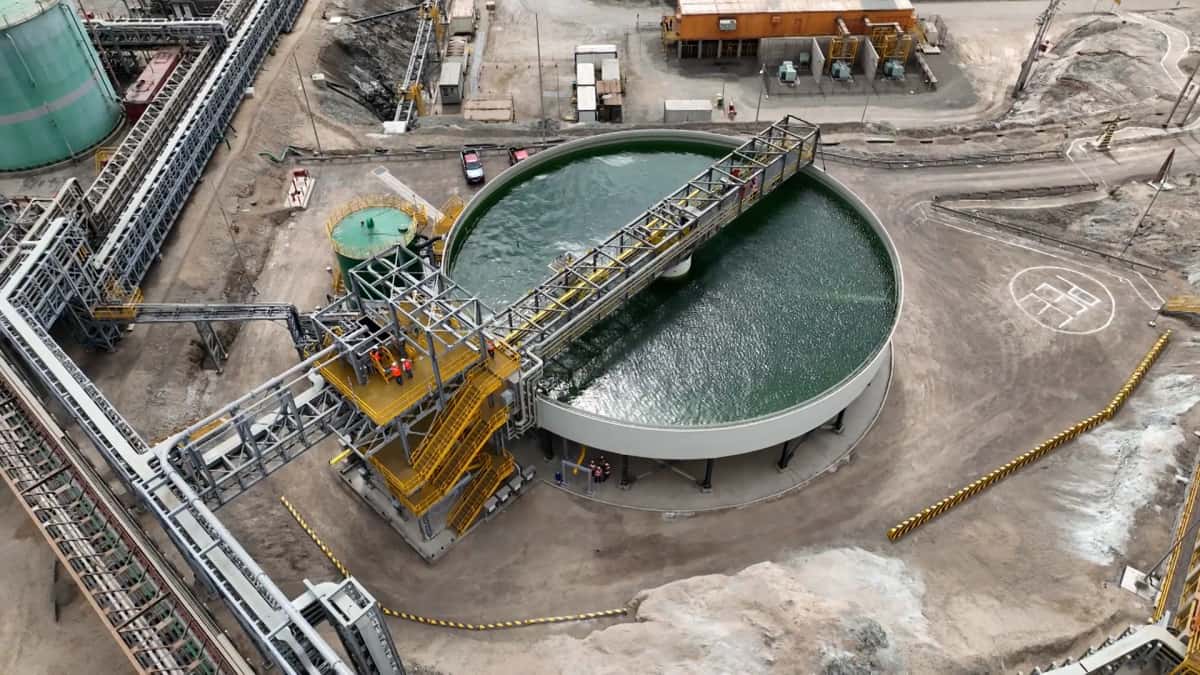
Proyecto de expansión de Minera Centinela realizó exitosas pruebas a equipos clave
Why it matters: The project’s move into equipment testing is a key step toward adding concentrator capacity and extending Minera Centinela’s operating life.
More than 90% — overall construction progress reported for Nueva Centinela
2027 — planned start-up year
30 years — planned extension to the operation’s life
6.8 million m³ — seawater sent to the existing operation through the SIAM II interconnection
Minera Centinela’s Nueva Centinela expansion has passed 90% construction completion, with equipment testing under way at the concentrator and primary crusher ahead of a planned 2027 start-up. The coastal facilities have completed commissioning, while the project’s new ball mill has been energised and turned under no-load conditions.
The company’s general manager, Nicolas Rivera, said the latest work was advancing across several execution fronts, bringing infrastructure, technology and operating systems together for the future operation.
Mill and crusher testing advances
At the new concentrator, Ball Mill No. 1 was energised and completed its first empty rotation. It is the first of two mills planned for the project and a central piece of the grinding circuit. The test marks progress in preparing major equipment for commissioning and eventual operation; it does not itself indicate that the concentrator is ready to start processing ore.
In the dry area, the motors on the high-pressure grinding rolls (HPGR) have been turned. Construction and energisation work there is complete, and the installations have been released for commissioning.
The primary crusher area remains in pre-commissioning. No-load tests are being carried out on the primary crusher, the sacrificial conveyor and the overland conveyor. These checks are part of preparing the equipment and material-handling route before operational use.
Autonomous haulage route mapped
In early November, a manned haul truck travelled to the primary crusher’s discharge area for the first time. The trip was used to map the digital route, enabling the first autonomous truck to reach the area. The activities are intended to connect the expansion with Minera Centinela’s existing autonomous haulage route and prepare the technical systems for ore feeding and transport.
Coastal facilities complete commissioning
At the coast, commissioning has been completed on work at Muelle Centinela. The scope includes a new concentrate thickener, expanded and upgraded equipment in the filter building, a stockpile and a new water-treatment plant. SIAM II, the seawater-pumping system, has sent 6.8 million m³ to the existing operation through the interconnection of SIAM I and II.
The second concentrator is located about 30 kilometres from Sierra Gorda and is intended to extend the operation’s life by 30 years. The project also includes a new thickened tailings deposit, expansion of the Esperanza Sur pit using autonomous trucks and equipment, a new seawater pipeline and an expansion of the molybdenum plant. Minera Centinela reports that local workers account for 30% of project employment, or 3,873 people from communities in the Antofagasta Region. The next operational steps include completing pre-commissioning and commissioning work across the facilities before the planned 2027 start-up.
More in Resources
Mining equipment market growth forecast runs into a diesel-led fleet
Ultra-class machines and connected systems are gaining attention, but mine operators still face the cost and infrastructure burden of replacing established fleets.
China’s copper smelters near a 2026 capacity ceiling as concentrate tightens
A proposed alert system would give authorities a way to manage output as spot treatment charges turn negative, but its trigger remains unspecified.
Guinea jails 202 alleged miners as Siguiri crackdown reaches former officials
Guinea’s effort to protect Siguiri’s rivers and farmland now extends beyond miners, while livelihoods tied to artisanal gold remain at stake.