
Native Mineral lines up 10,000m at Far Fanning as pit plans hinge on geology
The deposit has an inferred resource, but its role in Native Mineral’s 2027 operating plan remains to be tested.
Why it matters: Far Fanning could add a new source of feed for Native Mineral’s Blackjack plant, but drilling must first establish whether its inferred gold resource can support mine planning.
10,000 metres — planned reverse-circulation drilling at Far Fanning
2.3 million tonnes at 1.84 g/t gold — current inferred mineral resource
Approximately 138,000 ounces — contained gold in that resource
45 kilometres — Far Fanning’s approximate distance northeast of Charters Towers
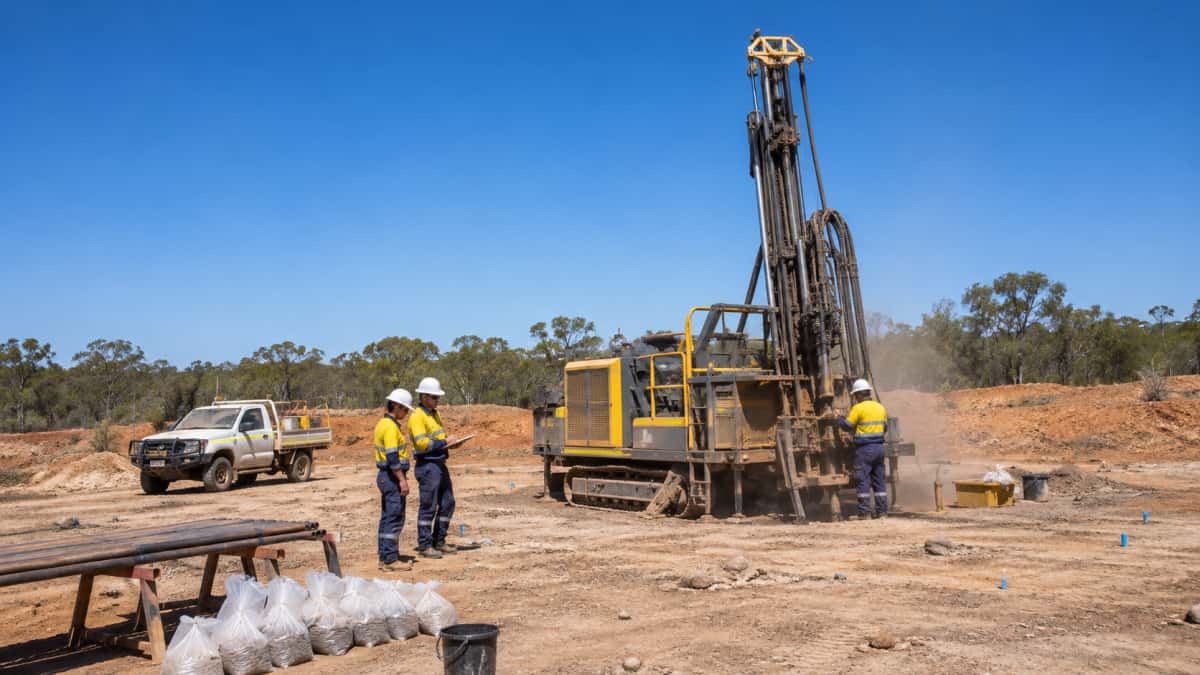
Native Mineral Resources is preparing a 10,000-metre reverse-circulation (RC) drilling campaign at its Far Fanning gold project in Queensland, Australia. The work is scheduled to start between late November and early December 2026 and run for about three months, with the aim of testing resource growth and informing the design of future open pits.
The drilling will not itself add ounces to the project’s resource. The company will need assay results, geological interpretation and an updated estimate to establish whether additional mineralisation can be included in mine planning. The campaign is part of a broader effort to develop new ore sources for the Blackjack processing plant as Native prepares for mining activity at Far Fanning in 2027.
RC drilling to build on 2026 diamond work
The planned campaign follows diamond drilling completed in May 2026. That programme comprised 12 holes for approximately 1,424 metres and formed part of the project’s ongoing geological characterisation.
RC drilling uses air to bring fragmented rock samples to the surface. At Far Fanning, the larger planned programme is intended to expand drilling coverage and provide further information on mineralisation distribution, grade variation and continuity. The results will feed into geological models and may inform changes to pit designs.
Native has previously outlined a programme of about 9,730 metres across approximately 87 holes. Its latest operational planning describes a 10,000-metre campaign, but the final locations of all holes have not been publicly confirmed. The company’s stated aims include testing for resource growth and improving confidence in areas where new data could support a higher resource classification.
Inferred resource is the baseline, not a reserve
Far Fanning’s JORC 2012 inferred resource stands at 2.3 million tonnes grading 1.84 g/t gold, or approximately 138,000 ounces of contained gold. The project comprises five granted mining leases over about 2.6 square kilometres, roughly 45 kilometres northeast of Charters Towers, and includes areas with a history of mining and existing disturbance.
An inferred resource has lower geological confidence than indicated or measured resources and is not equivalent to an economically mineable reserve. The planned drilling must therefore test continuity and support any revised estimate before the company can establish how much material could be incorporated into a mine plan. Even a larger resource would still need to be assessed against extraction, transport and processing costs.
2027 plans depend on site work and approvals
Native is also preparing the site for operations, including earthworks, levelling, removal of old structures, electrical infrastructure and operational facilities. The company’s plan allows about eight weeks for these works, with completion targeted for January 2027. It has identified the existing East Pit for dewatering as part of preparations to resume extraction, with mining activity there planned for January, subject to operational readiness.
Far Fanning has supplied Blackjack with material from historical stockpiles: approximately 23,798 tonnes during the quarter ended September 2026. The plant also processes ore from other areas, including Blackjack and Podosky. Bringing fresh Far Fanning ore into the circuit would depend on drilling outcomes as well as mine design and operating costs.
The company is updating environmental and mine approvals, including rehabilitation and closure planning and applications related to future mining areas and waste facilities. Any new mineralisation would need to be reconciled with those requirements. After drilling, laboratory assays and model updates will determine whether Native can revise the resource and assess additional material for future pit designs.
More in Resources
Copper hits US$5.25/lb as miners lose US$145bn in market value
Chile’s projected 2026 output is set to reach its lowest level since 2003, leaving less room to absorb a weaker market.
Codelco Andina puts remote mine operations on display for Chilean students
The visit puts mining and electrical specialisms alongside the control systems coordinating work in the high Andes.
Candelaria and Caserones put Chile's Mining 5.0 agenda to an operational test
Copiapó's four-day convention will pair digital tools with a question facing mine operators: how do teams turn data into safer, more productive decisions?