
Copper hits US$5.25/lb as miners lose US$145bn in market value
Chile’s projected 2026 output is set to reach its lowest level since 2003, leaving less room to absorb a weaker market.
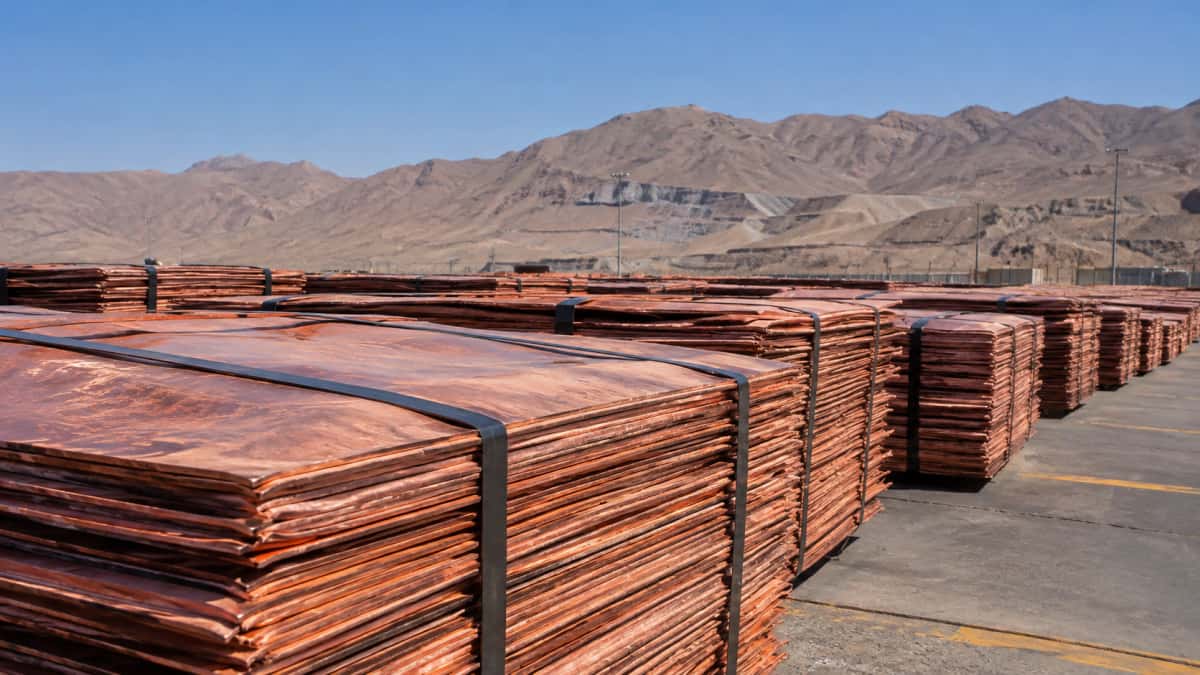
Why it matters: A weaker copper price compounds Chile’s production decline, putting pressure on export income, mine margins and investment decisions.
US$5.25 per pound — December Comex copper contracts on November 25
US$145 billion — market value lost by ten major miners since late October
4.94 million tonnes — Cochilco’s projected Chilean copper output for 2026
US$6.18 per pound — Cochilco’s average copper-price projection for 2026
Copper fell to its lowest level of 2026 on November 25, with December Comex contracts touching US$5.25 per pound as the metal’s November decline approached 19%. The pullback has erased about US$145 billion in market capitalisation across ten major miners since late October, while Chile faces a projected annual production contraction of 8.4%.
The Comex contract reached an intraday low of US$5.222 per pound. From the September 9 record of US$6.889, the price has fallen about 24%; copper is also down 7% for 2026. In London, three-month copper contracts dropped to US$11,596 per tonne. Prices in New York and London have converged after a prolonged period in which US prices carried a premium linked to expectations of import tariffs.
Copper sell-off cuts into miners’ market value
Southern Copper, BHP and Freeport-McMoRan have lost a combined US$86 billion in market value since late October, according to the figures reported. Ivanhoe Mines shares fell 32% in November, Capstone Copper 30%, Freeport-McMoRan and First Quantum Minerals 26% each, Southern Copper 24%, BHP 13% and Rio Tinto 11%.
Those declines are changes in market capitalisation, not operating losses recorded in company financial statements. Diversified miners have been more resilient because their revenues also come from commodities including iron ore and aluminium. Even so, weaker valuations can affect financing terms and companies’ ability to fund investment or acquisitions.
The downturn comes as investors reassess the outlook for US trade policy, inflation and financial assets. A possible 15% US tariff on refined copper imports from 2027 remains unresolved. Expectations of trade restrictions had encouraged inventories to move into the United States, distorting prices and trade flows; a change in those expectations could redirect stocks and temporarily increase supply elsewhere.
Chile’s output decline adds to price pressure
Cochilco projects Chilean copper production of about 4.94 million tonnes in 2026, down 8.4% year on year and the lowest annual level since 2003. From January to September, the country produced 3.63 million tonnes of fine copper, compared with 3.97 million tonnes in the same period of 2025.
Lower output alongside weaker prices could weigh on mining export receipts, tax revenue, Codelco’s operating surpluses and the margins of higher-cost operations. Falling ore grades, rising operating costs and investment requirements leave producers with less room to absorb a downturn. Cochilco’s average-price forecasts remain US$6.18 per pound for 2026 and US$5.95 for 2027, but the latest market move adds uncertainty to that outlook.
Trade policy and demand expectations remain in focus
Investor enthusiasm around artificial intelligence had supported copper expectations earlier in 2026, as data centres, power networks, cooling systems and generation capacity require the metal. Recent technology-stock corrections and a reduction in speculative positions have weakened that financial support, though they do not establish an immediate decline in physical copper consumption.
BMO Capital Markets has identified US$10,000–US$11,000 per tonne as a range where lower prices could begin to constrain mine supply, but it is not a guaranteed floor. The next leg of the market will depend on Chinese industrial consumption, inventories, US trade decisions and broader financial conditions.
More in Resources
Native Mineral lines up 10,000m at Far Fanning as pit plans hinge on geology
The deposit has an inferred resource, but its role in Native Mineral’s 2027 operating plan remains to be tested.

Codelco Andina puts remote mine operations on display for Chilean students
The visit puts mining and electrical specialisms alongside the control systems coordinating work in the high Andes.

Candelaria and Caserones put Chile's Mining 5.0 agenda to an operational test
Copiapó's four-day convention will pair digital tools with a question facing mine operators: how do teams turn data into safer, more productive decisions?