
Namib restarts Redwing gold mine, but expansion hinges on operating performance
Underground ore delivery and plant throughput must work together before Namib can justify a larger Redwing build-out.
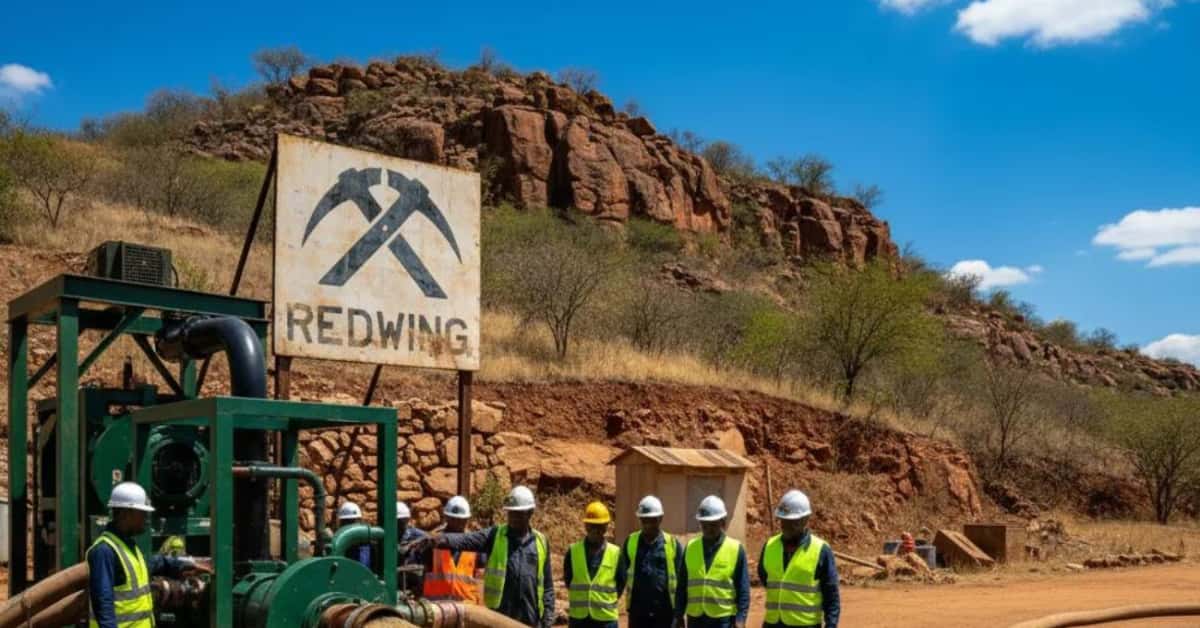
Why it matters: Redwing adds a second producing mine to Namib’s portfolio, but the restart has yet to establish a sustainable operating rate or expansion case.
About 650,000 oz — Redwing’s historical gold production from 1981 to 2023.
Q1 2027 — expected timing for the larger-capacity winch and the company’s 2027 production and cost guidance.
About 300,000 oz/y — Namib’s long-term combined production ambition, not current guidance.
Namib Minerals has poured first gold at Redwing Mine in Zimbabwe, returning the operation to production and making it the company’s second producing asset alongside How Mine. The company did not disclose the volume of the first pour or initial mining and processing rates.
The pour followed an accelerated restart program involving the rehabilitation and commissioning of mining and processing infrastructure. Namib had targeted a return to production in November 2026. Its immediate task is to establish consistent output and gather operating data before setting out a production and cost outlook for 2027.
Redwing must demonstrate a stable mining and processing rhythm
The initial operating phase is intended to test how underground ore supply and the processing plant perform together. Namib said it plans to increase activity in stages, with steady extraction and processing the priority before it attempts to raise capacity.
A larger-capacity winch is central to the next planned step. The company expects to receive the equipment before the end of the first quarter of 2027; it is intended to move more material from underground workings. Namib’s aim is to process more ore and produce more gold during 2027, conditional on the winch being commissioned and on mine, plant and other operating performance.
The company expects to provide 2027 production and cost guidance during the first quarter, once it has enough operating data to support the estimates. It also plans to report on the winch’s delivery, installation and commissioning, and on any demonstrated effect on extraction capacity.
Feasibility work continues alongside production
The restart is separate from the longer-term technical work. The second phase of Redwing’s definitive feasibility study remains funded through completion and is expected to finish in early Q1 2027. Namib has said resource-definition drilling is planned after the study.
The study is intended to redesign the mine and assess a possible increase in long-term production capacity. Any larger expansion remains subject to further studies and approvals. Mine dewatering, the first milestone in the development sequence outlined by Namib, was completed in September 2026 ahead of schedule.
Redwing produced about 650,000 ounces of gold between 1981 and 2023. That history provides context for the asset, but does not establish future output; the current mine plan, resources, technical studies and project economics require separate assessment.
Two operating mines broaden Namib’s production base
With How Mine operating and Redwing back in production, Namib now has two producing assets. The company says this reduces its reliance on a single mine while it also assesses development potential at Mazowe and elsewhere in its portfolio.
Namib’s long-term ambition is combined production of approximately 300,000 ounces a year. That figure is a strategic target, not current production guidance, and depends on technical studies, permits, financing and development decisions, as well as execution. The company has also identified risks including changes in ore grade and metallurgical recovery, equipment delays, input costs and Zimbabwe’s political, economic, regulatory and currency conditions. Redwing’s operating data and the expected feasibility study completion are the next stated milestones.
More in Resources

Hungary’s forint rebounds, but December rate cuts remain uncertain
A week of selling erased the currency’s gains since April’s election, leaving the central bank to weigh exchange-rate pressure against room to ease.

Trump keeps Iran war restart on table as nuclear and naval disputes stall talks
Tehran wants the naval blockade lifted before formal talks, while Washington is seeking further limits on Iran’s nuclear programme.
Mozambique plans five settling dams for Lupilichi gold pollution, but sites are unknown
Wastewater from artisanal gold processing threatens streams feeding the Rovuma, a river shared with Tanzania.