
Meta’s AI expansion lifts emissions 45% as its 2030 net-zero target comes under review
Renewable-power contracts match annual electricity use, but they do not cover the emissions embedded in servers, equipment and construction.
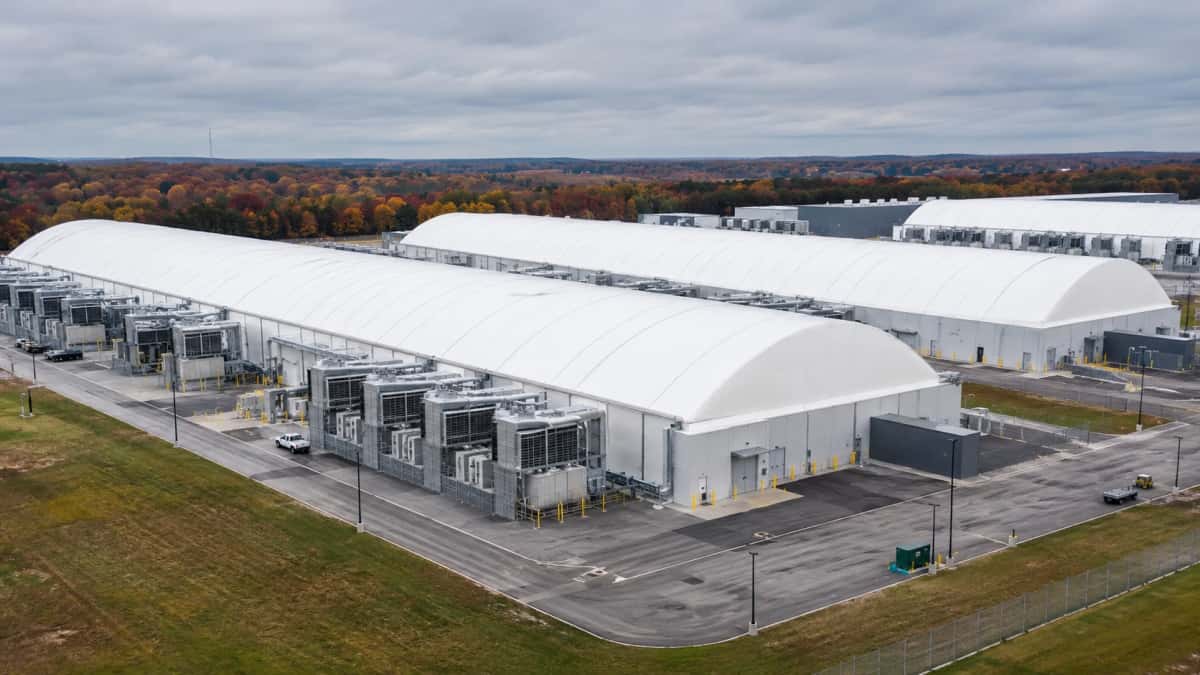
Why it matters: Meta’s rising footprint shows how demand for digital infrastructure can drive emissions through power use and the materials and equipment behind new data centres.
11.82 million tonnes — Meta’s net greenhouse-gas emissions in 2025, up 45% year on year.
24.85 TWh — the company’s electricity consumption, 35% higher than in 2024.
99% — the share of emissions before carbon removals attributed to its value chain.
More than 30 GW — generation capacity covered by Meta’s clean-energy agreements.
Meta’s net greenhouse-gas emissions rose 45% in 2025 to 11.82 million tonnes of carbon-dioxide equivalent as it expanded data-centre infrastructure for artificial intelligence. The increase has prompted the company to review the timing and interim targets of its commitment to reach net zero across its value chain by 2030.
The figures, published on 19 November 2026, show emissions rising from about 8.16 million tonnes in 2024—an increase of more than 3.6 million tonnes in a year. Meta’s electricity use also climbed 35%, from approximately 18.42 TWh to 24.85 TWh.
Supply-chain emissions dominate Meta’s footprint
Most of the reported emissions were outside Meta’s direct operations. The company attributed 99% of emissions counted before carbon removals to Scope 3, which covers its value chain. Capital goods, including equipment and infrastructure, accounted for 8.73 million tonnes; purchased goods and services contributed another 2.62 million tonnes.
Those categories point to a footprint that extends beyond the electricity used to run servers. Building and equipping data centres involves manufacturing semiconductors and other electronic components, as well as constructing facilities and installing electrical systems. Meta’s reported location-based emissions, before contractual adjustments, were approximately 21.75 million tonnes of CO₂ equivalent in 2025.
The distinction matters because a company’s net accounting figure, its estimated emissions tied to where it operates, and the emissions embedded in purchased goods do not measure the same thing. Renewable-power contracts can address electricity procurement, but they do not remove emissions from manufacturing equipment or building infrastructure.
Renewable contracts do not cover every hour or every input
Meta said its clean-energy agreements cover the equivalent of 100% of its annual electricity consumption. The company has agreements associated with more than 30 GW of generation capacity, including more than 10 GW contracted during 2025.
That annual matching does not mean its data centres use only emissions-free electricity at every hour. Facilities operate continuously, while solar and wind output varies with weather. Meta’s contracts therefore do not, by themselves, establish that all power consumed at each site is physically supplied by low-emissions generation at the time it is needed.
The build-out also creates demand for grid connections, substations and transmission capacity. Delays in those projects can constrain how quickly new facilities gain access to lower-emissions electricity, while equipment and construction remain sources of value-chain emissions.
Data-centre growth adds a materials demand signal
The expansion has implications for mining and power infrastructure as well as technology companies. Copper is used in cables, transformers, electrical distribution equipment and transmission networks, including systems needed to supply data centres and renewable generation. The growth in Meta’s emissions, however, does not quantify how much additional copper the wider industry will require; that depends on the scale, design and location of future projects.
Meta established its 2030 net-zero commitment in 2020. Its strategy includes emissions reductions, clean electricity, efficiency improvements, supplier engagement and carbon-removal projects. The company has begun reviewing the strategy’s timelines, stages and interim targets as its infrastructure needs change. Future environmental disclosures will show how its reported emissions and progress against those targets develop alongside the AI build-out.
More in Resources
Chile's copper output could rebound in 2027, but 2026 losses loom large
Three major operations drove most of the nine-month decline, while falling ore grades add pressure beyond this year's disruptions.
BHP maps up to US$17.4bn for South Australia copper growth, but key gates remain
The staged mine and smelter build depends on water and power projects that must advance alongside the expansion.

Bank of America sees Chilean peso recovery in 2027, but sets no target
The dollar recently traded near $1,020 in Chile, while the bank’s thesis depends on a reversal in copper and oil conditions.