
Koryx's Haib study lifts copper output, but a US$2.06bn build remains unapproved
The revised design drops heap leaching for a single sulfide route, while permits, funding and a definitive study still stand between the plan and construction.
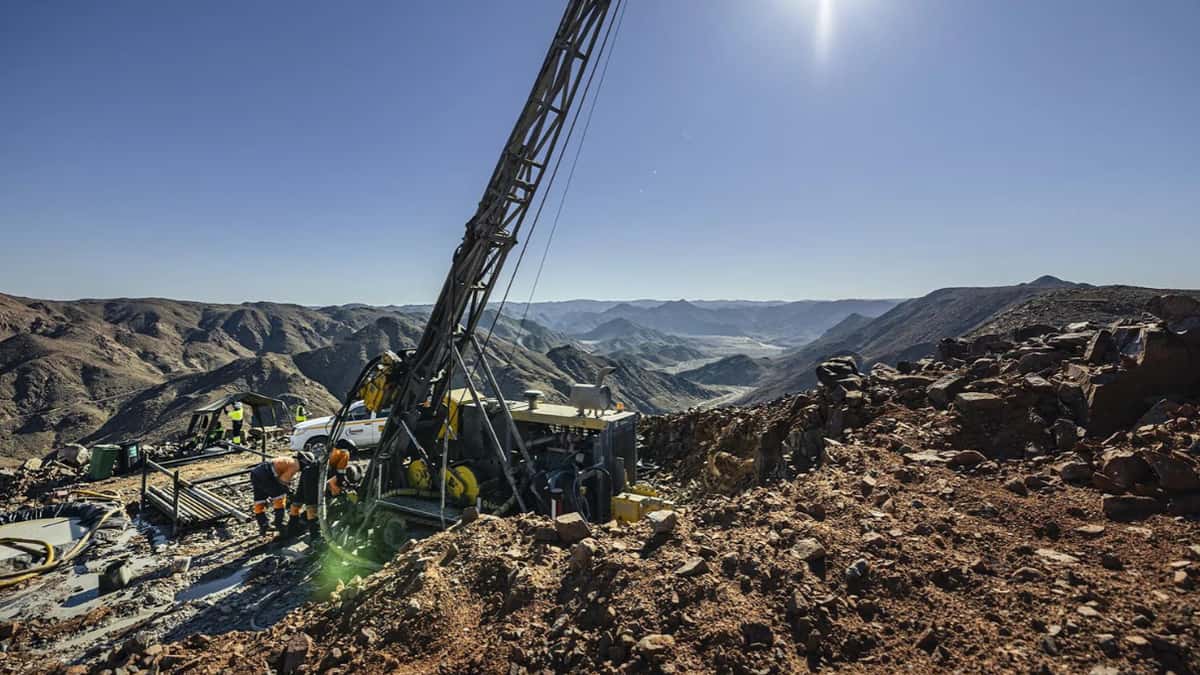
Why it matters: Haib's proposed scale could make it a major new source of copper, but its capital needs and permitting requirements remain substantial hurdles to development.
130,000 tonnes a year — projected average payable copper production in the first 10 years.
US$2.06 billion — estimated initial capital for the proposed operation.
48 million tonnes a year — planned processing capacity under the revised design.
89.5% — estimated average copper recovery during the first decade.
Koryx Copper's pre-feasibility study for the Haib project in southern Namibia outlines an open-pit mine with average payable copper production of about 130,000 tonnes a year over its first 10 years and initial capital of approximately US$2.06 billion. The plan replaces the previous heap-leach component with a processing route focused on grinding and flotation. It is not yet a construction decision: Koryx still needs to complete a definitive feasibility study, secure financing and obtain key permits.
The study, published on November 17, 2026, envisages 24 years of processing. It projects average production of 135,000 tonnes of copper contained in concentrate annually during the first decade, of which about 130,000 tonnes would be payable. Across the full processing period, average payable output is forecast to fall to about 105,000 tonnes a year. Mining is planned for 15 years, followed by nine years of processing that would mainly treat lower-grade stockpiled ore.
Haib's larger plan relies on a revised resource base
The new configuration increases projected first-decade payable production from 92,000 tonnes a year in Koryx's September 2025 preliminary economic assessment, a rise of about 41%. Initial capital has also increased from approximately US$1.559 billion. The studies have different technical scopes, and the company attributes the larger design partly to an updated geological model incorporating additional drilling and a larger resource base.
Koryx reports mineral resources containing approximately 4.35 million tonnes of copper and a first estimate of about 3 million tonnes of contained copper in probable reserves. The mine plan would process approximately 1.119 billion tonnes of ore at an average copper grade of 0.27%. It prioritises higher-grade areas in the early years, according to the company.
Flotation replaces the heap-leach circuit
The 2025 assessment proposed processing 28 million tonnes a year through grinding and flotation and another 7 million tonnes through heap leaching. The pre-feasibility study instead proposes a single main route for sulfide ore, with plant feed capacity of 48 million tonnes a year. That removes the planned production of additional cathode copper through leaching, solvent extraction and electrowinning.
The revised plant includes coarse-particle flotation, which Koryx says could reject about 25% of feed mass—roughly 12 million tonnes a year—before conventional flotation. The design also combines Jameson cells with conventional flotation equipment. Koryx estimates average copper recovery of 89.5% in the first decade, but says further test work and engineering studies are needed to confirm aspects of the process.
Capital, infrastructure and permits remain outstanding
Koryx estimates another US$639 million in sustaining capital over the project's life. The study calculates an after-tax net present value of about US$2.538 billion at an 8% discount rate and an internal rate of return of approximately 25%, using a base copper price of US$5 per pound. These are estimates based on the study's production, recovery, cost and marketing assumptions.
The proposed infrastructure includes about 20 million cubic metres of water a year from the Orange River and a power system combining grid connection, 417 MWp of solar generation and 361 MWh of storage. The company estimates that renewable facilities could supply about 45% of cumulative power requirements over the processing life.
Koryx aims to complete the definitive feasibility study during 2027, pursue financing and advance permitting. It is targeting key permits by mid-2027, early works before the end of that year and main construction in the first quarter of 2028. The schedule remains subject to approvals, financing and the definitive study; the company still needs a mining licence as well as environmental and other sectoral authorisations.
More in Resources
Vicuña awards San Juan camps, but North Corridor logistics remain unfinished
The sites will support a 220-kilometre access route, but each camp must also operate its own power and water systems.
Guinea approves PDI Gold’s Bankan mine after nearly two years of delay
Bankan’s construction schedule depends on a project that spent nearly two years waiting on Guinea’s licensing process.
Guinea’s gold-export rules strand miners’ inventories as local refining starts
The local-processing mandate is colliding with export approvals, insurance costs and the rollout of domestic refining capacity.