
Guinea approves PDI Gold’s Bankan mine after nearly two years of delay
Bankan’s construction schedule depends on a project that spent nearly two years waiting on Guinea’s licensing process.
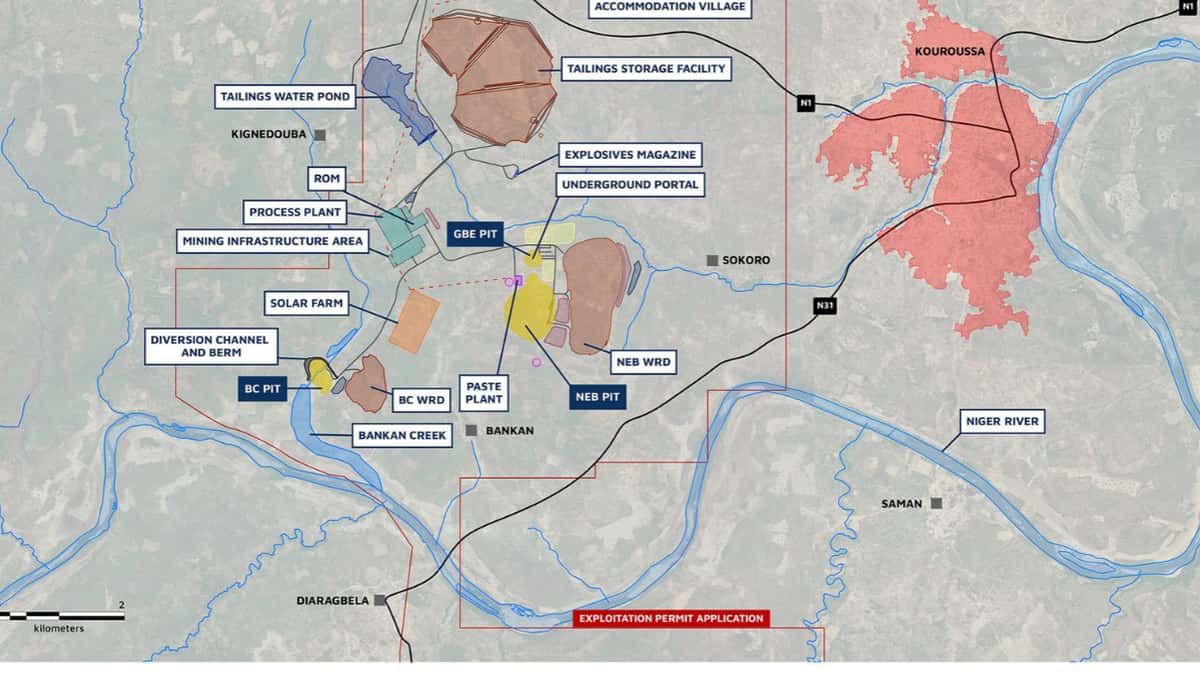
Why it matters: Bankan could add a major gold operation to Guinea’s pipeline, while its execution will test whether stalled permits can give way to mine construction.
US$463 million — estimated initial capital cost
250,000 ounces a year — projected average gold production
2.95 million ounces — probable mineral reserves
12 years — planned mine life in the feasibility study
Guinea has granted PDI Gold an exploitation permit for its Bankan gold project, clearing the principal regulatory hurdle to a planned US$463 million development. The permit was issued by presidential decree on November 16, 2026, and announced by the company the following day, after nearly two years of waiting.
PDI Gold chief executive Matthew Wilcox said the company has financing in place and expects construction to begin within four to six weeks. The company estimates first gold production could follow about 18 months after work starts; it has also projected a first pour around mid-2028. Both dates depend on construction proceeding to schedule.
Bankan’s feasibility study outlines a 12-year mine
PDI Gold’s definitive feasibility study, submitted in June 2025, projects average production of approximately 250,000 ounces of gold a year over a 12-year mine life. The study reports probable mineral reserves of 2.95 million ounces and combined indicated and inferred mineral resources of about 5.37 million ounces.
The US$463 million figure is the estimated initial capital cost to develop the operation, not a valuation of the deposit. PDI Gold says it is progressing detailed engineering, equipment procurement and infrastructure work. It is also preparing an update to the project schedule, capital costs and production profile, which it expects to present in early 2027.
The permit, issued to PDI Gold subsidiary Hamana Gold SA, covers 98.6 square kilometres and has an initial term of 15 years. The company says it completes the main regulatory requirements needed to start construction.
Approval follows wider delays in Guinea’s mining permits
The decision comes as Guinea seeks to strengthen its position as a destination for investment in gold, bauxite and iron ore. Industry executives and a mining lawyer have described prolonged delays in approvals, with some applications pending since 2021. They say the holdups have affected investment decisions and, in some cases, led operating companies to change mine plans, process lower-grade material or reduce production rates.
Mining Minister Bouna Sylla has acknowledged delays in authorization procedures and said the government is working through outstanding cases. Bankan’s permit removes a barrier for this project, but further approvals and implementation will be needed to show whether the wider process has become more predictable.
The government has also granted exploitation permits for the Mansounia deposit, which PDI Gold says could expand the potential ore supply for its Kiniéro operation. The company expects Bankan and these assets to support a gold production hub exceeding 400,000 ounces a year once Bankan reaches full operation. That figure is a company projection, dependent on development and operating performance.
PDI Gold estimates that Bankan could employ about 2,000 people during construction and 1,000 in permanent operating roles. Those jobs, as well as opportunities for local suppliers and tax revenue, depend on the project being built and reaching its planned production levels. The company’s next stated milestone is an updated schedule, capital-cost estimate and production profile expected in early 2027.
More in Resources
Vicuña awards San Juan camps, but North Corridor logistics remain unfinished
The sites will support a 220-kilometre access route, but each camp must also operate its own power and water systems.
Koryx's Haib study lifts copper output, but a US$2.06bn build remains unapproved
The revised design drops heap leaching for a single sulfide route, while permits, funding and a definitive study still stand between the plan and construction.
Guinea’s gold-export rules strand miners’ inventories as local refining starts
The local-processing mandate is colliding with export approvals, insurance costs and the rollout of domestic refining capacity.