
Indonesia searches for 17 after Bogor gold-mine flood leaves shaft submerged
The alert came about 16 hours after the Ciseureuh River overflowed, while water continued entering the underground workings.
nytimes.com
Why it matters: The disaster highlights the safety risks of unauthorized gold mining and the difficulty of mounting a rescue when flooding blocks access.
9 people — found dead at depths of 30 to 70 metres
17 miners — still being sought; their location and condition were unconfirmed
325 people — involved in the search and rescue operation
About 16 hours — elapsed before police received the first reports of trapped workers
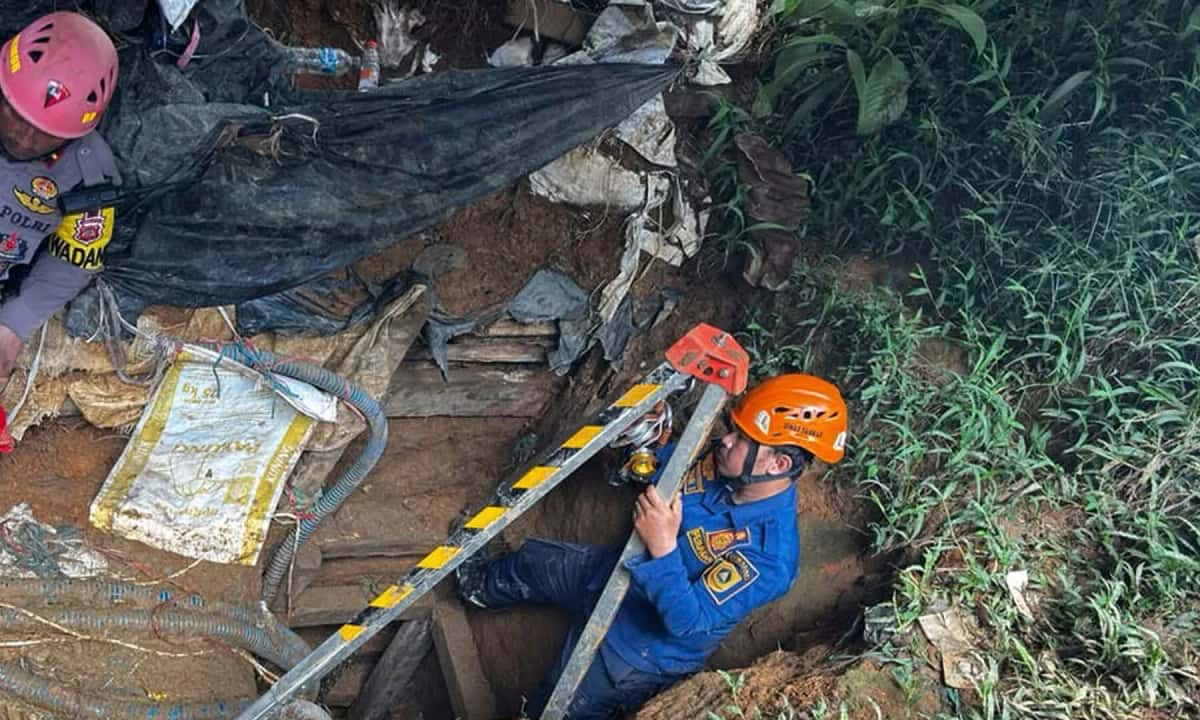
Rescuers in Bogor, West Java, were searching for 17 miners after a flood inundated an unauthorized gold-mine shaft, killing nine people. The Ciseureuh River overflowed during heavy rain as workers were extracting gold on Monday night. Authorities said the shaft was about 100 metres deep, and the water level had not fallen as the search continued.
Eleven workers managed to leave part of the excavation before water filled the shaft, West Java police spokesperson Hendra Rochmawan said. The remaining 17 were presumed to be trapped, but officials had not confirmed their location or condition.
Floodwater and difficult access slow the search
Rescuers recovered the first body shortly after midday on Wednesday. Two more were found about an hour later, and six others were retrieved by night from two adjacent shafts, Jakarta Search and Rescue Agency chief Desiana Kartika Bahari said. The nine victims were found between 30 and 70 metres underground.
The operation involved 325 people, including rescue personnel, police, military, medical staff and volunteers. Teams deployed submersible pumps and tried to block points where groundwater continued to enter. Bahari said the water level inside the shaft had not dropped and drainage would take time.
Narrow access, slippery ground, poor lighting and high water levels further complicated the work. Local miners and residents initially tried to pump out the water but could not control the flooding.
Illegal operation delayed notification
Authorities were not alerted immediately because the gold extraction was unauthorized, Bogor disaster agency emergency and logistics chief Muhammad Adam Hamdani said. Police received the first reports of trapped workers about 16 hours after the flood, according to Rochmawan.
After an initial assessment involving local authorities and firefighters, state-owned miner PT Antam sent a formal report to the Jakarta search and rescue agency shortly after midnight on Wednesday. That led to the larger-scale operation.
Antam says its Pongkor operations are unaffected
The flooded shaft is near PT Antam’s Pongkor gold unit. The company said the incident involved unauthorized mining and was unrelated to its operations; it reported that all its workers were safe and its mines continued operating normally.
Antam said it had closed access points to illegal mining sites in the area and used patrols, drones and surveillance cameras to deter the activity. Spokesperson Wisnu Danandi Haryanto said the company was supporting the search and evacuation on humanitarian grounds.
Informal mining is common in Indonesia and provides income for thousands of people, but can expose workers to flooding, ground failures and tunnel collapses. Gold-ore processing often involves mercury and cyanide, while miners may have little or no protective equipment. Rescue teams continued pumping water and searching the shafts, with the high water level remaining a constraint.
More in Resources
Jaguar Uranium's Berlin resource covers 2.9 km of a 10.5 km trend
The northern extension remains open, but sampling gaps on the eastern flank still constrain confidence in the model.

Código Futuro takes Antofagasta students from coding toward mining careers
The curriculum covers Python, AI and data science, while technical visits and vocational training offer a second route into the industry.
Angola’s small-scale gold mining plan leaves foreign access unresolved
The proposal coincides with the presentation of a state-owned refinery, putting small-scale mining and a new gold-processing asset on the same policy agenda.