
Jaguar Uranium's Berlin resource covers 2.9 km of a 10.5 km trend
The northern extension remains open, but sampling gaps on the eastern flank still constrain confidence in the model.
investingnews.com
Why it matters: Berlin combines uranium with several potential by-product metals, but the estimate covers only a portion of the interpreted trend and does not establish economic viability.
15.3 million lb U₃O₈ — combined Indicated and Inferred resources
2.9 km — the southern section included in the estimate, within a 10.5 km trend
US$245/t NSR cut-off — the threshold used to report resource blocks
96.1% — assumed metallurgical recovery for uranium
Jaguar Uranium's first mineral resource estimate for its Berlin project in Colombia reports 15.3 million lb of U₃O₈ in Indicated and Inferred categories. The estimate, prepared by SLR International Corporation with an effective date of November 5, 2026, covers 2.9 km of a 10.5 km interpreted mineralized trend in Caldas department.
The Indicated resource is 937,000 tonnes grading 561 ppm U₃O₈, containing 1.2 million lb. The Inferred resource totals 11,343 kt at 562 ppm, containing 14.1 million lb. Inferred resources have a lower level of confidence and cannot be converted directly into reserves.
NSR model includes multiple metals
The estimate reports blocks above a net smelter return (NSR) cut-off of US$245 per tonne. That threshold incorporates assumed metallurgical recoveries and transportation, smelting and refining charges. The model uses reference prices including US$105 per pound of U₃O₈ and US$139 per kilogram of Nd₂O₃.
The resource also includes vanadium pentoxide, phosphate, yttrium oxide and neodymium, dysprosium and terbium, as well as nickel, zinc and molybdenum. For the Inferred category, the estimate records 53,405 ppm P₂O₅, 3,081 ppm V₂O₅ and 309 ppm Y₂O₃. Assumed recoveries vary by element: 96.1% for uranium, 48.6% for Nd, Dy and Tb, and 83.5% for yttrium oxide.
Jaguar says these by-products contribute to contained metal value. However, the resources are reported in situ, no mineral reserves were estimated, and the NSR model does not demonstrate that extraction would be economically viable. The assessment used conceptual underground mining shapes and a long-hole stoping scenario.
Mineralized layer extends beyond the estimate
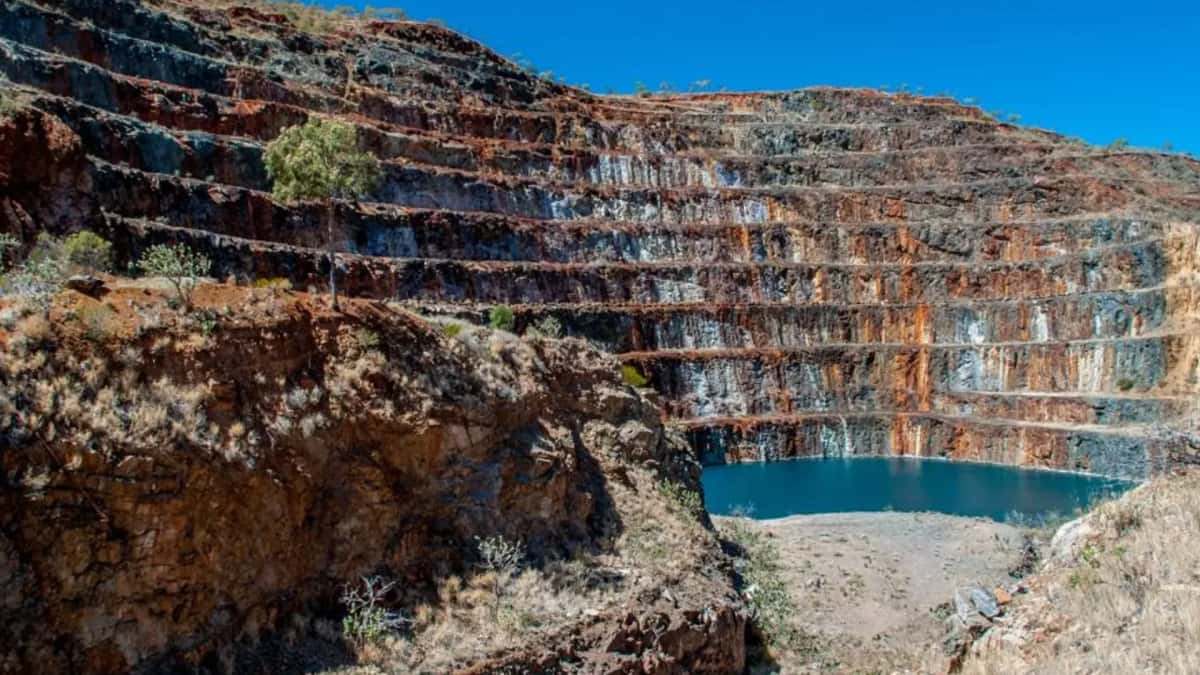
Berlin lies in Colombia's Central Cordillera, where mineralization occurs in a carbonaceous packstone sedimentary unit between one and eight metres thick. The unit follows a folded structure across a trend with variable lateral extent of 200 to 800 metres.
The estimate covers the southern 2.9 km. Jaguar's geological interpretation extends the horizon north for another 7.6 km, where it remains open. The company also identified sampling gaps within parts of the model, particularly on the eastern flank; further drilling is needed there to improve geological continuity and resource confidence.
Near-surface laterite to about 25 metres depth was excluded. Its potential extraction would require assessment using open-pit mining and different technical and economic parameters.
Jaguar is preparing northern extension drilling and an infill programme to address gaps and assess whether some Inferred material can be upgraded. The company is also considering further metallurgical and geotechnical work. It raised US$25 million gross in a February 2026 IPO to fund exploration and development of its assets.
More in Resources

Código Futuro takes Antofagasta students from coding toward mining careers
The curriculum covers Python, AI and data science, while technical visits and vocational training offer a second route into the industry.
Angola’s small-scale gold mining plan leaves foreign access unresolved
The proposal coincides with the presentation of a state-owned refinery, putting small-scale mining and a new gold-processing asset on the same policy agenda.

Gold falls below US$3,500 as stronger US growth shifts the Fed rate outlook
A 0.9-point GDP revision landed alongside inflation readings that moved in different directions, complicating the rate signal for bullion.