
Flexicon automates bulk-bag conditioning, but forklift transfer remains
The sequence links bag conditioning with downstream discharge for high-demand lines, while leaving one handoff outside the automated chain.
canadianminingjournal.com
Why it matters: Automating the feed sequence can reduce idle time between bulk-bag cycles, but the remaining forklift transfer is still part of the process.
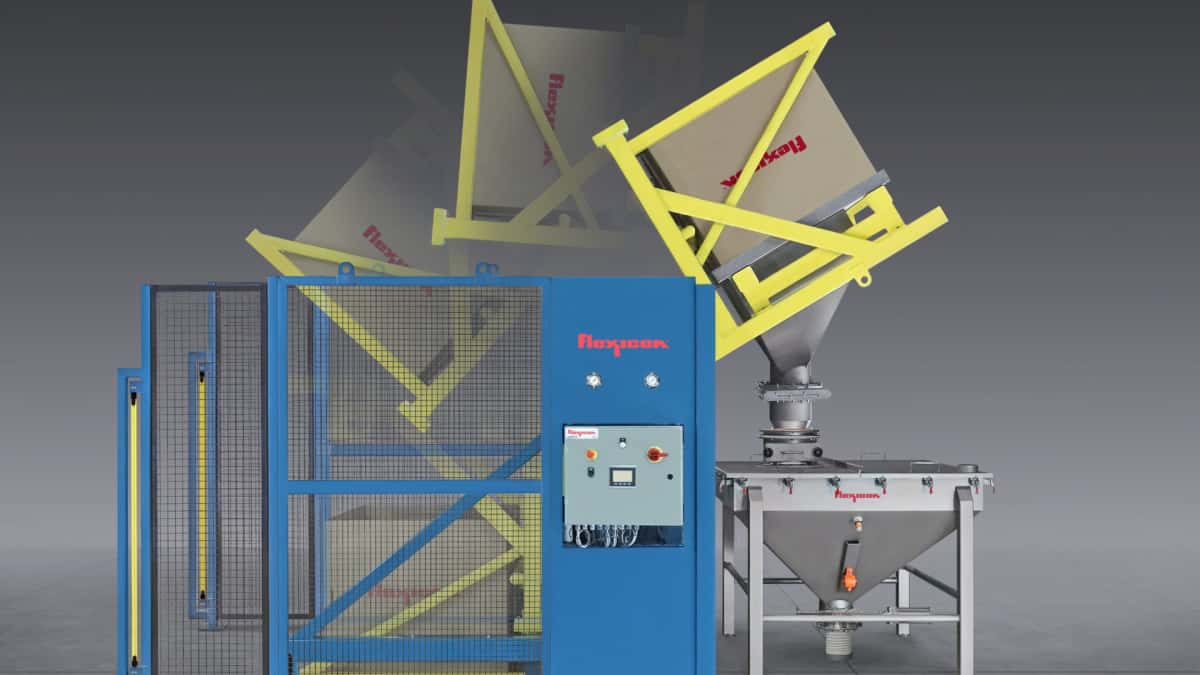
Flexicon has presented a bulk-bag handling configuration that automates bag conditioning and feed sequencing for high-demand processes, while retaining a forklift move before discharge. The system coordinates motorized and accumulation conveyors, photoelectric sensors, a BLOCK-BUSTER conditioner and a bag-dumping station.
Sensors sequence bags through conditioning
Full bags are placed on a motorized roller conveyor, which feeds them one at a time into the BLOCK-BUSTER. The conditioner presses the sides of each bag to loosen compacted material inside, preparing it for discharge. Flexicon did not specify the material being handled or the system's operating parameters.
After conditioning, each bag moves onto an accumulation conveyor. Photoelectric sensors detect its position and reactivate the roller conveyor to feed the next bag into the conditioner. This automates the sequence between those stages, reducing reliance on manual intervention to restart the feed after each cycle.
The system's automation is therefore concentrated on feeding and positioning bags for conditioning. It does not carry them all the way to the discharge station.
Forklift moves each bag to the discharge station
After conditioning, a forklift removes each bag from the accumulation conveyor and places it on the bag-dumping station. Lowering the bag onto the station drives blades through its base to begin discharge. A rubber seal is intended to limit spillage as material falls into a flexible screw conveyor, which carries it to the next process stage.
Flexicon says the sequence is designed to reduce waits between cycles and maintain a steady material flow without continuous operator supervision. The company did not provide cycle times, throughput figures or a comparison with manual operation. It also did not specify compatible materials, system capacity or the level of operator oversight needed for the forklift maneuver.
The described setup combines automated feed and positioning with a manual-equipment transfer before discharge. Its actual productivity and supervision requirements are not quantified.
More in Resources

Cameco and Energy Fuels rally with Nvidia as uranium stocks track AI swings
A 57% slide in uranium miners had diverged from a rising long-term uranium price before Monday’s reversal.
Bolivia gold mining shrinks Inti tanager habitat as researchers lose access
The newly described endemic depends on dry forest in a narrow valley where fieldwork relies on access to areas affected by extractive activity.
Newmont Ghana jobs span mine roles, but applicants face a recruitment scam warning
The official listings cover Ahafo’s operating sites, while outside offers also claim a route into Newmont hiring.