
Bolivia gold mining shrinks Inti tanager habitat as researchers lose access
The newly described endemic depends on dry forest in a narrow valley where fieldwork relies on access to areas affected by extractive activity.
ojo-publico.com
Why it matters: Habitat loss and restricted access leave conservation teams with less ability to assess the risks facing a bird found in a small part of Bolivia.
About 50 km² — breeding habitat lost over five years, according to Armonía.
6.8% — the share of the species’ breeding area represented by that loss.
1,360–2,859 birds — the population range estimated in a 2023 census.
More than 10% — potential decline in the mature population over the next decade if threats continue, Armonía estimates.
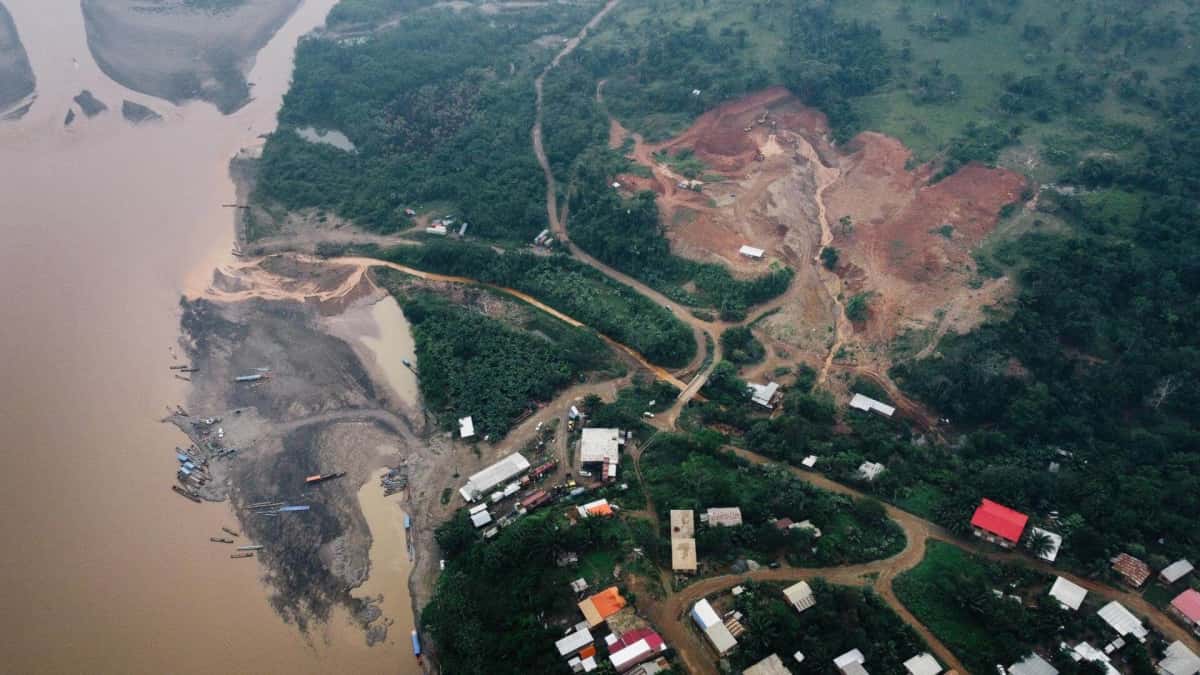
The Inti tanager has lost about 50 km² of breeding habitat in Bolivia over five years, a decline attributed to deforestation associated with gold mining, conservation organisation Armonía said. Researchers and park rangers have also faced barriers to reaching areas where they previously worked, limiting efforts to complete surveys of the endemic bird.
The species’ known range covers about 730 km² in the Tuichi and Machariapo river basins, in the municipality of Apolo, La Paz department. Its habitat includes dry forest and vegetation such as bamboo of the genus Guadua, which Armonía identifies as important to its survival. Gold mining and expanding cattle ranching are among the pressures affecting those environments.
A narrow range and an uncertain population count
The Inti tanager was scientifically described in 2021 as the sole member of the genus Heliothraupis, although it had been sighted more than two decades earlier. It is found mainly in a limited area of the Machariapo Valley and is thought to move occasionally south into Peru to find food.
A 2023 census estimated a population of between 1,360 and 2,859 individuals. That range reflects an estimate rather than a precise count, and Armonía says habitat loss and access restrictions make it harder to establish the bird’s full distribution and population status.
The loss of around 50 km² amounts to 6.8% of its breeding area, according to the organisation. Armonía estimates that, if current threats persist, the mature population could fall by more than 10% over the next decade. That is a conditional projection, not a decline already recorded.
Access barriers complicate surveys in the Tuichi basin
Researcher Miguel Ángel Aponte said the team found access blocked in 2023 to areas where it had previously worked with community permissions. Park rangers have encountered similar difficulties in parts of the Tuichi basin. Without regular access, researchers face constraints in collecting the data needed to refine estimates of the species’ status.
Apolo mayor Agustín Mamani Peña acknowledged mining occupation in the area and cited the risk of social conflict. Armonía has called for authorities to oversee mining operations and protect both the territory and people conducting research. The information available does not detail enforcement measures already implemented or their results.
Conservation assessments differ: Bolivia’s 2026 Red Book lists the Inti tanager as Vulnerable, while the current international assessment classifies it as Least Concern. The limited survey data and continuing difficulty reaching affected areas are relevant to understanding those differing assessments.
Armonía calls for community-led forest protection
Armonía proposes working with the communities of Siphia, Suyo Suyo and Asariamas on land management, forest protection and economic activities that avoid further deforestation. It also identifies birdwatching tourism as a possible alternative, dependent on investment in infrastructure and services for local communities.
The organisation has called for stronger protection of Madidi and surrounding areas, arguing that protected-area designation alone has not stopped mining expansion. The next step for a more complete population assessment depends in part on whether researchers and park rangers can regain sustained access to the affected survey areas.
More in Resources

Cameco and Energy Fuels rally with Nvidia as uranium stocks track AI swings
A 57% slide in uranium miners had diverged from a rising long-term uranium price before Monday’s reversal.

Newmont Ghana jobs span mine roles, but applicants face a recruitment scam warning
The official listings cover Ahafo’s operating sites, while outside offers also claim a route into Newmont hiring.

Gold rebound lifts miners, but Coeur Mining remains well below its 2026 peak
The metal bounced after its steepest weekly decline since March, as broader markets also recovered.