
COP31 ends without fossil-fuel deal as Chile’s mining power needs climb
Chile’s copper sector expects electricity use to rise faster than output, while governments remain divided over how to cut emissions.
Why it matters: Without a shared global framework, mining companies must plan around national energy policies as their electricity needs grow.
33.2 TWh — projected electricity use by Chile’s copper mining sector in 2034.
20.2% — projected increase in Chilean copper mining electricity consumption from 2025 to 2034.
35% by 2035 — proposed target for electricity’s share of final energy consumption, not adopted as a universal obligation.
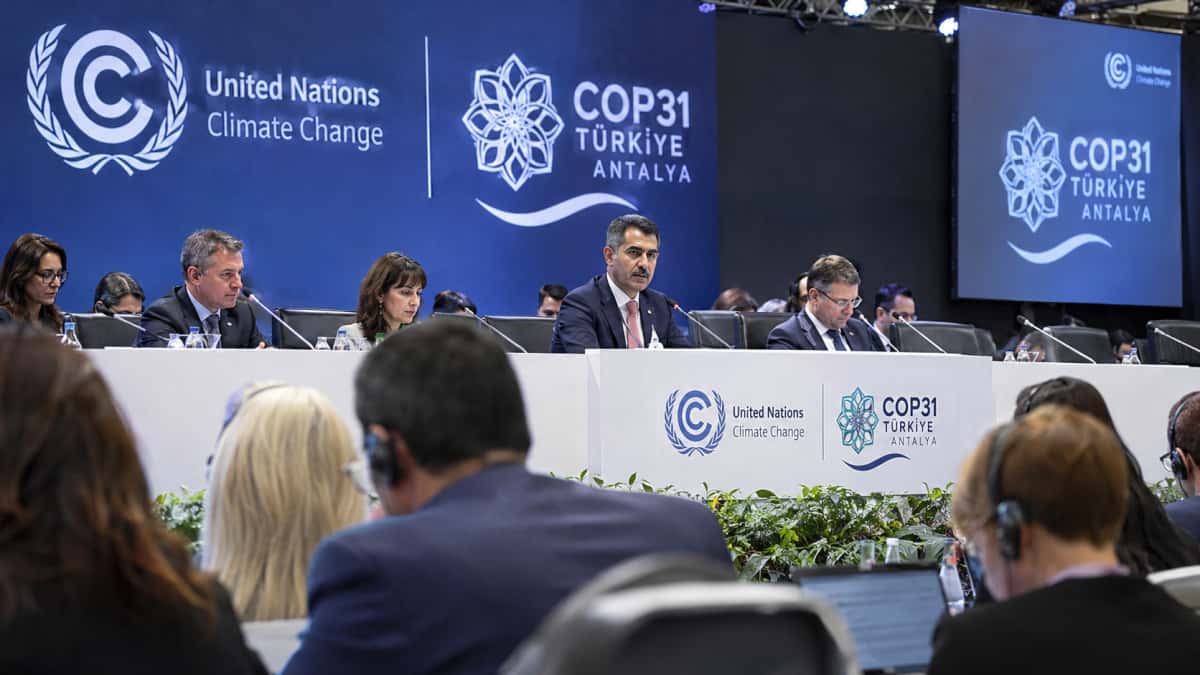
COP31 ended in Antalya, Turkey, on 22 November without a consensus political declaration, after governments failed to agree on how to address oil, natural gas and coal. The European Union and other countries sought explicit language on reducing dependence on fossil fuels, while Saudi Arabia and Russia opposed including new references in the central text.
The deadlock leaves the pace of the energy transition dependent on national decisions and investments. It also has implications for mining, where electricity supply, cost and emissions rules shape project economics and operating plans.
Fossil-fuel language blocked a shared declaration
The dispute centred on whether the final document should explicitly call for a transition away from fossil fuels. The European Union rejected a text without such language; Saudi Arabia and Russia resisted adding it. After two weeks of negotiations and talks that ran beyond schedule, governments did not reach agreement on a general political statement.
The impasse followed the COP28 decision in Dubai in 2023, which recognised the need to transition energy systems away from fossil fuels but set no binding global timetable for eliminating oil, gas or coal. COP31 did not overturn that commitment, but it failed to turn the earlier direction into more specific shared action.
Financing also remained contentious. Developing countries sought greater certainty on funding for adaptation to droughts, floods and other climate impacts. Negotiators discussed expanding financial support, but differences over commitments and delivery mechanisms persisted.
Electrification proposals did not become universal commitments
A COP31 initiative proposed raising electricity’s share of final energy consumption to 35% by 2035, from about one-fifth currently. Numerous countries backed the proposal through parallel commitments, but it was not made a universal obligation in a political declaration.
Governments also differed over carbon capture and storage. Some view the technology as a way to retain certain hydrocarbon-linked activities while reducing emissions; others argue it should supplement, not replace, direct emissions cuts. The talks did not resolve that disagreement.
Chile’s copper mines face rising power demand
The policy uncertainty is relevant to Chile, where copper mining needs electricity for concentrators, pumping, industrial equipment and mineral processing. Sector projections put consumption at 27.6 TWh in 2025, rising to 33.2 TWh in 2034, while projected copper production grows by 8.3% over the same period.
The gap reflects increasing energy requirements associated with factors including lower-grade ore, greater processing needs and rising use of seawater. Chile will need more electricity infrastructure and transmission capacity to supply mines operating around the clock. COP31’s outcome does not itself change Chilean regulations or halt mining and energy projects, but it leaves international climate expectations unsettled.
Copper is needed for power grids, motors and renewable energy systems; lithium and other critical minerals are used in batteries and electrification technologies. The absence of a global agreement does not, by itself, determine demand for those commodities. Investment and demand will also depend on national policies, technology and decisions by major industrial consumers.
The next round of climate negotiations is scheduled for COP32 in Addis Ababa, Ethiopia, in November 2027. In the meantime, mining companies will continue to face energy and emissions conditions shaped by domestic policy and investment decisions.
More in Resources

Chile heat alert covers seven regions, but Santiago’s peak may come later
The three-day notice spans coastal and inland zones, where geography will shape how sharply temperatures diverge.
Agrumin urged Chile to halt Maule mining-claim auctions as patent reform advanced
Maule concessions were moving toward auction before lawmakers settled who qualified for lower fees.
Chile tribunal pauses Barrick's El Alto drilling as Pascua Lama link is contested
Sernageomin places the project within Pascua Lama's closed area, while the court weighs what deep drilling could encounter beneath the platforms.