
Chile tribunal pauses Barrick's El Alto drilling as Pascua Lama link is contested
Sernageomin places the project within Pascua Lama's closed area, while the court weighs what deep drilling could encounter beneath the platforms.
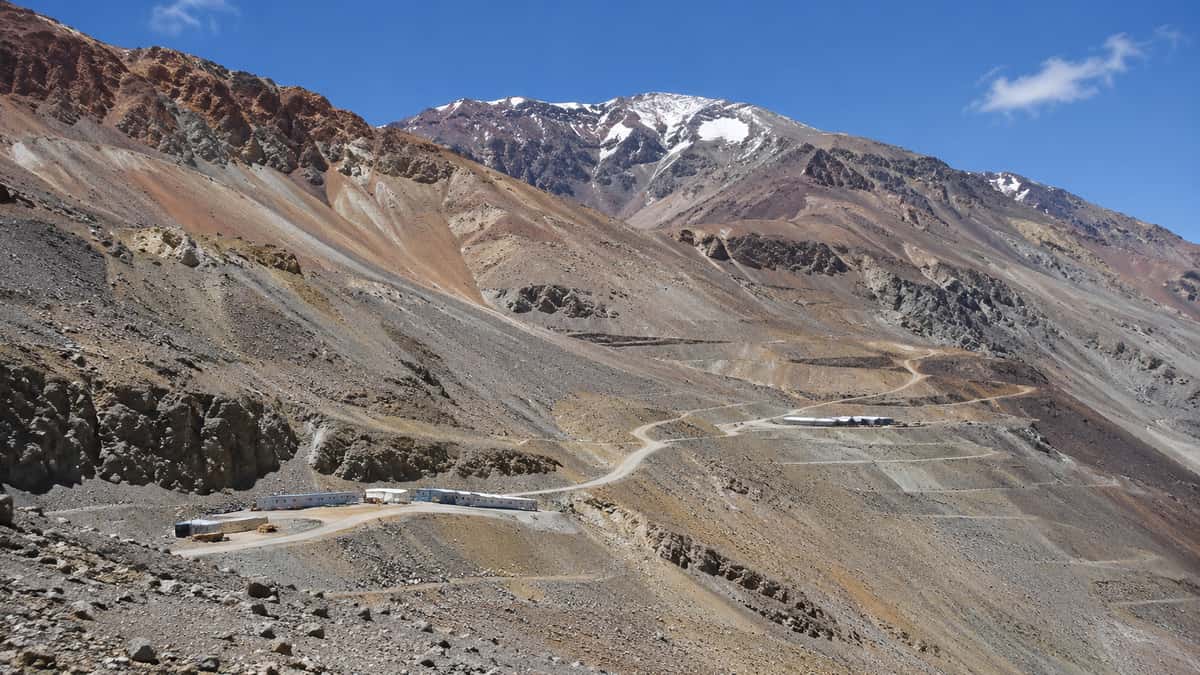
Why it matters: The temporary halt puts a proposed high-altitude drilling campaign on hold while judges assess whether its subsurface risks warrant intervention before the work is completed.
US$35 million — planned investment in the El Alto project.
62 holes — diamond drill holes planned, each up to 700 metres deep.
43 platforms — proposed at about 4,000 metres above sea level.
30 days — the period for which the court suspended the effects of the environmental approval.
Chile's Second Environmental Court suspended for 30 days the effects of the environmental approval for Prospección Minera El Alto, a project of Barrick Gold subsidiary Compañía Minera Nevada SpA in Alto del Carmen, Atacama Region. The two-to-one ruling temporarily halts the drilling campaign while the court considers challenges to the project. Barrick said it will ask the court to reconsider the measure.
The project has an estimated investment of US$35 million and proposes 62 diamond drill holes, up to 700 metres deep, from 43 platforms at roughly 4,000 metres above sea level. The campaign was planned across two consecutive summer seasons. The court’s 9 November decision granted three of four precautionary requests; it does not decide the merits of the underlying claims.
Permafrost and nearby glaciers shaped the majority ruling
The majority said an interim measure does not require scientific certainty that environmental harm will occur. It considered a “minimally verifiable suspicion” sufficient where there is a possibility of irreversible damage.
Among the evidence was a report from Chile’s National Geology and Mining Service (Sernageomin), which located El Alto within Pascua Lama’s open-pit mining zone and closed area. The assessment for El Alto found that its platforms would not be located on glaciers, but acknowledged permafrost in the area. The majority said that conclusion could not be treated as settled in advance, given the platforms’ proximity to the Toro 1, Toro 2 and Esperanza glaciers. It also noted that permafrost can be difficult to identify beforehand in the subsurface that drilling up to 700 metres would penetrate.
The campaign’s short schedule also factored into the ruling. Because work was planned for only two summer seasons, it could finish before a final judgment, the majority said. In June 2026, the First Environmental Court extended by two years the restoration plan for the Altoandino wetlands associated with environmental damage at Pascua Lama.
Substitute judge Cristián López Montecinos dissented. He said whether El Alto was the same project as Pascua Lama, and how a 2022 Supreme Court ruling on drilling applied, required a full merits review. In his view, the earlier ruling turned on the use of Pascua Lama infrastructure; El Alto’s environmental assessment found its platforms were pre-existing and the prospecting campaign autonomous. He also considered the temporary activity did not present urgency warranting a halt.
Barrick says the campaign is separate from Pascua Lama
Barrick said the Atacama Environmental Assessment Commission approved El Alto’s environmental permit in January 2026 after an evaluation that, in the company’s view, complied with current regulations. It said the approval remains in force and has been reviewed through administrative and judicial processes.
The company said El Alto has its own camp and water supply, does not use Pascua Lama infrastructure and will not interfere with the mine’s closure. Those are Barrick’s statements; the precautionary ruling did not decide whether the permit is legally sound or whether the projects are independent.
The proceedings were delayed by judicial recusals. The precautionary requests were first filed at the First Environmental Court, where the three regular judges recused themselves after an erroneous news item reported that the requests had been rejected before a formal decision existed. After the cases moved to the Second Environmental Court, they remained without a quorum for more than a month. The Supreme Court’s president ordered the matter brought before the full court on 30 October after machinery was reported entering the site; substitute judges enabled the court to convene on 5 November.
The court separately rejected a request to suspend the Indigenous consultation for the environmental impact study on the “Pascua Lama Closure Phase Modification.” It said that consultation belongs to a different administrative process, which remains under environmental review and was not the subject of the cases before it. Barrick’s request for reconsideration and the court’s review of the El Alto challenges remain pending.
More in Resources
Chile heat alert covers seven regions, but Santiago’s peak may come later
The three-day notice spans coastal and inland zones, where geography will shape how sharply temperatures diverge.
COP31 ends without fossil-fuel deal as Chile’s mining power needs climb
Chile’s copper sector expects electricity use to rise faster than output, while governments remain divided over how to cut emissions.
Agrumin urged Chile to halt Maule mining-claim auctions as patent reform advanced
Maule concessions were moving toward auction before lawmakers settled who qualified for lower fees.