
Codelco’s project pipeline faces a production test as output slips
Rajo Inca is nearing its design ramp-up, while operating and geotechnical constraints remain across Codelco’s largest divisions.
Why it matters: Codelco’s ability to turn a costly renewal programme into reliable production will shape the state miner’s output and operating costs.
853,000 tonnes — Codelco’s own copper production in January–September 2026, down 9% year on year.
US$4.82 billion — asset impairment recognised by the company, concentrated in Chuquicamata, Salvador and Gabriela Mistral.
97% — Rajo Inca’s physical progress at the end of June 2026.
US$2.379 per pound — Codelco’s C1 direct cost at the end of September, up 10.1%.
Codelco’s own copper production fell 9% year on year to 853,000 tonnes in the first nine months of 2026, putting pressure on a portfolio of structural projects intended to extend the life of its main divisions. The state-owned miner also recognised a US$4.82 billion asset impairment, while construction progress and operational performance diverged across its key developments.
The projects are meant to sustain output over coming decades, but several face delays, cost pressures or technical reviews. Rajo Inca is advancing towards its planned operating capacity; Chuquicamata Subterránea is still working to stabilise its production systems; and work at El Teniente has been disrupted by seismic findings.
Rajo Inca nears capacity ramp-up as Salvador output lags
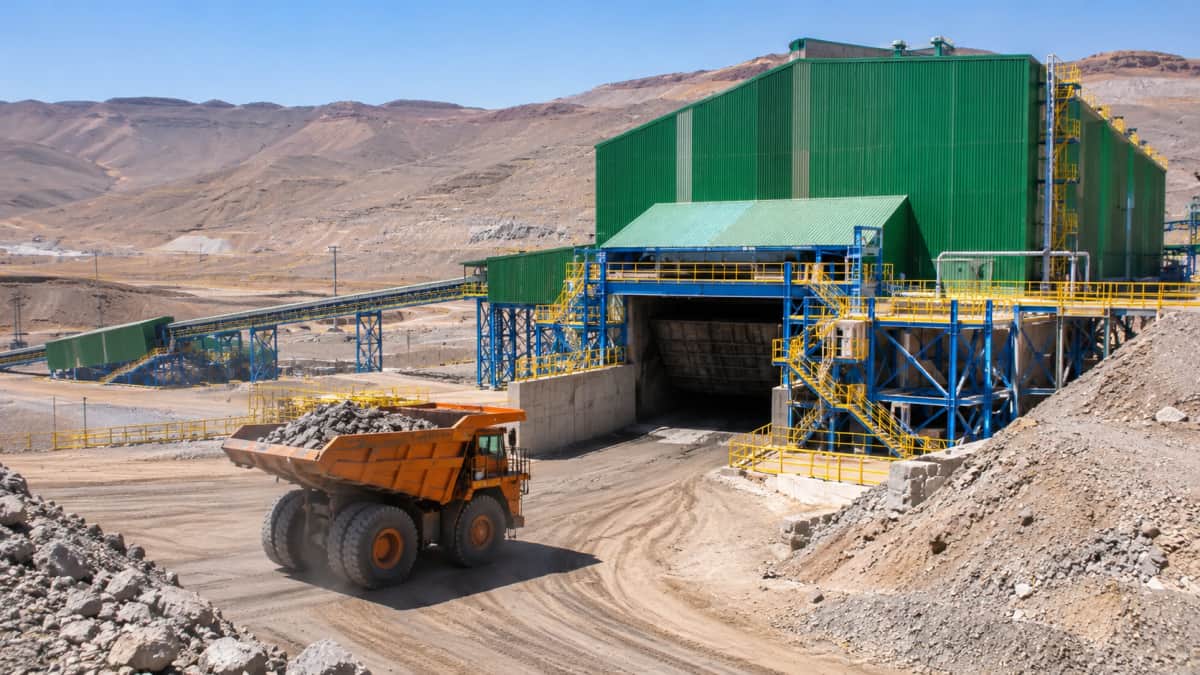
Rajo Inca, in Chile’s Atacama Region, is designed to extend the life of the Indio Muerto deposit by about 47 years through open-pit mining of resources previously worked underground. The project began producing in December 2024 and reached 97% physical progress by June 2026, up from 94% at the end of 2025.
Its concentrator is designed to process 37,000 tonnes of ore per day, a level Codelco expects to reach during 2027. Salvador increased average ore throughput in the first nine months of 2026, but copper production growth remained limited. Delays in the mining sequence and the treatment of lower-grade stockpiled ore constrained the contribution. Salvador also recorded a US$1.598 billion asset impairment, linked to higher costs and changed economic assumptions.
Chuquicamata transition still faces operating constraints
Chuquicamata Subterránea is intended to extend the deposit’s productive life by at least 40 years through block caving. The first phase of its Level 1 continuity infrastructure reached 94% physical progress in the first half of 2026, but the division’s copper production fell by 21,000 tonnes, or 12.4%, year on year through September.
Major maintenance on the ore transport system, including conveyor replacement, reduced feed to the concentrator. Filter-plant and smelter difficulties also affected operations. Chuquicamata accounted for US$3.024 billion of Codelco’s impairment. The immediate operational task is to improve the reliability of extraction, transport and processing systems as the underground operation consolidates.
El Teniente’s development plan faces technical review
El Teniente’s Andes Norte, Diamante and Andesita projects were designed to add about 2 billion tonnes of mineral reserves grading an average 0.86% copper and support the division for more than 50 years. The division’s production fell by 40,100 tonnes, or 17.1%, in the first nine months of 2026.
Andes Norte was 81% complete at the end of 2025, but Codelco suspended development and construction on August 4 after new information on deep seismic behaviour prompted further geomechanical studies. Diamante continued advancing, reaching 59% by the end of the first half of 2026. Andesita, which had reached 80% progress before its works were halted in 2025, remains under technical review, with activity focused on critical maintenance.
Codelco’s next stated milestones are to stabilise Chuquicamata Subterránea, ramp up Rajo Inca towards its design capacity in 2027 and determine the technical conditions for advancing El Teniente’s projects.
More in Resources
Peru’s copper base expands as La Granja’s processing economics remain unresolved
La Granja’s scale is clear, but metallurgy, power and infrastructure must still support a viable operation.
China’s 600 MW compressed-air expander clears tests, but plant performance remains unproven
The machine is twice the scale of equipment at operating projects, but its power rating alone does not show how long it can discharge.
Nueva Centinela nears startup as Antofagasta’s copper recovery lags 2025
At the US$4.4 billion project, equipment trials are under way as the group advances separate water and infrastructure work elsewhere in Chile.